 Audi tenebras inter cortices
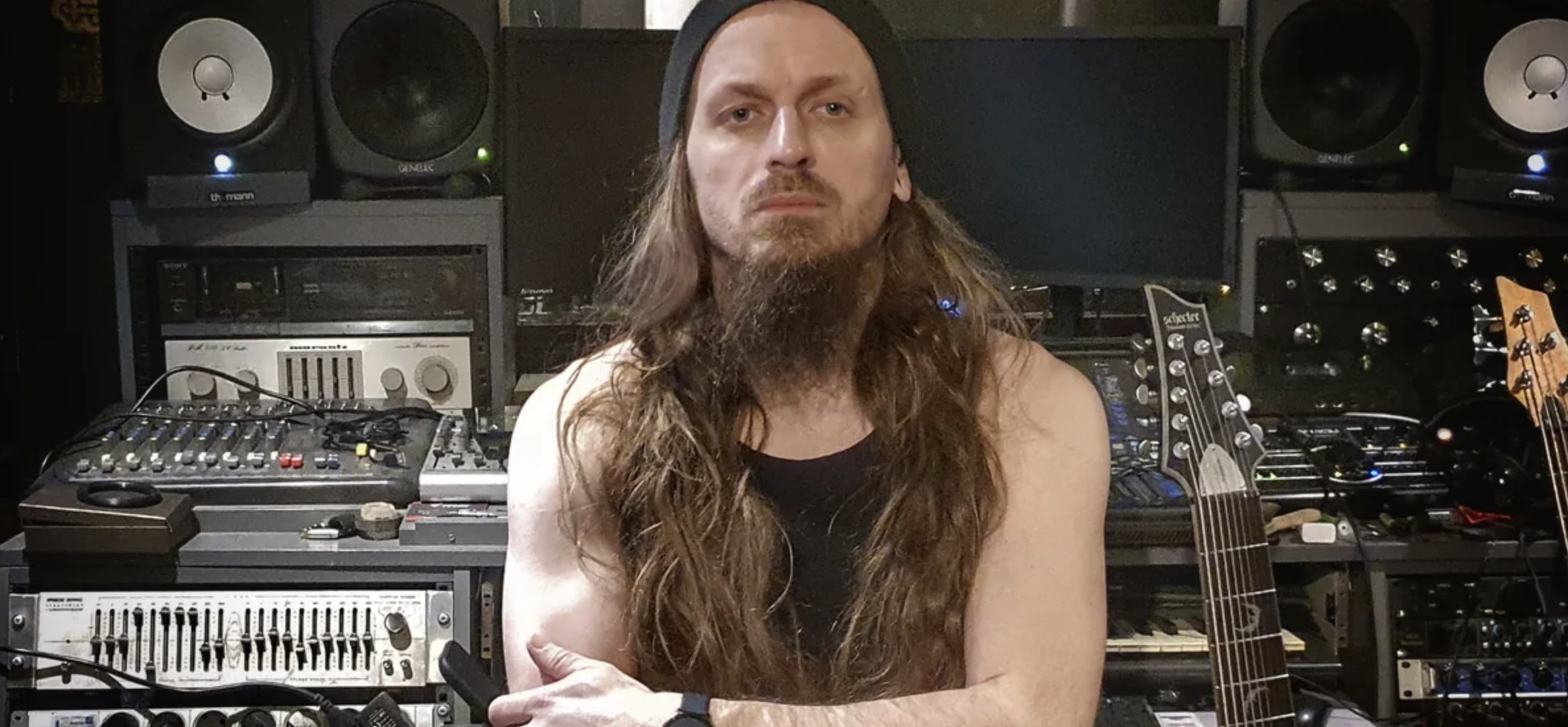
In the spring of 2015 Krzysztof Drabikowski was listening to Orthodox church hymns on YouTube when he saw a comment under one of the videos: God's hymns were more metal than all of satanic black metal. Drabikowski read it as a challenge: he would make the darkest black metal possible using the church's own language and music. On 12 March 2015 he opened a new folder on his computer and named it Batushka. The word means "little father", the form of address used for a priest in the Orthodox church. For the next ten years the folder would be evidence in a court case.
Batushka's story is usually told as a fight: two men, one name, two separate bands. Yet the story turns, before any fight, on a question of authorship. On 29 May 2024 the court in Warsaw closed that question and ruled that the Batushka name belonged to Drabikowski. This piece tells the story from his side, as far as the documents and his own account allow.
The album made alone
By Drabikowski's account, Batushka was a studio project from the start, not a band. At first his friend Lech was to sing; the two of them had come up with the name in conversation. When Lech struggled to write lyrics in Church Slavonic and withdrew from the project, Drabikowski wrote the lyrics himself and carried on with it as a solo project. He recorded bass, guitar and drums in his own home studio. Drummer Marcin Bielemiuk later replayed the drum parts Drabikowski had written.
By July 2015 all the songs had been recorded. Around then Drabikowski ran into an old acquaintance in a club in Białystok, someone he had not seen for a long time: Bartłomiej Krysiuk, vocalist of the band Hermh and owner of the label Witching Hour Productions. With Lech gone, he needed another voice. He sat Krysiuk down in a car, played him the recordings and asked him to sing on the album as a guest. Krysiuk agreed and offered to release the album on his own label.
Drabikowski also had the album's physical form clear in his mind from the beginning. He wanted the cover to be wooden and to look like an icon; the first edition would come out in a small run, in a wooden box. He painted the album's artwork himself. Litourgiya came out on Witching Hour in December 2015. The song titles came from the ektenia, the series of prayers read on behalf of the congregation in the Orthodox liturgy: eight parts, from "Yekteniya I" to "Yekteniya VIII". The album became one of the most praised metal records of its time and led to a deal with Metal Blade.
Robes, candelabra and eight strings
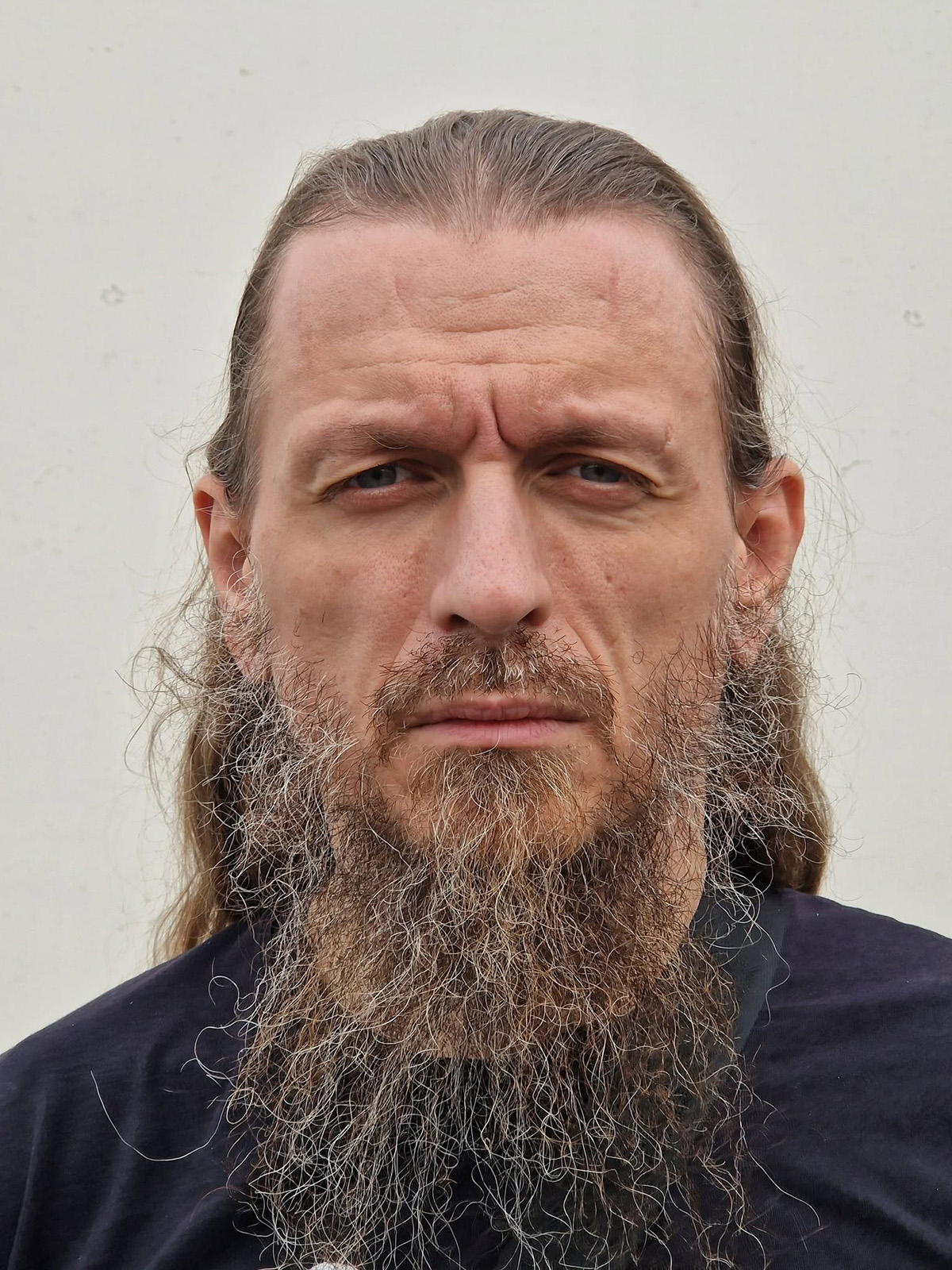
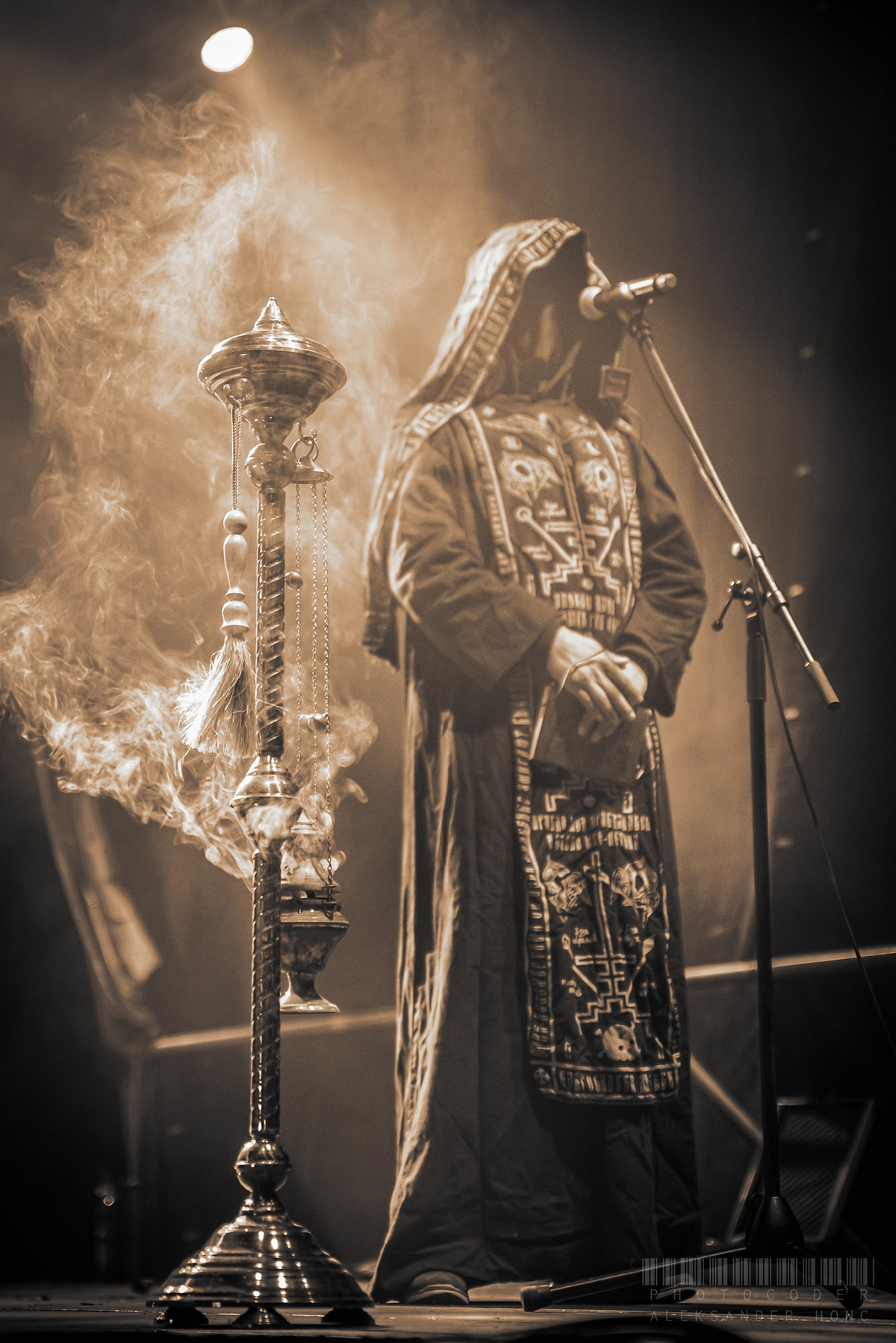
Once the album drew attention, concert offers followed. Drabikowski wanted to stay anonymous; to him, a veil of mystery suited this music. He devised the stage set-up himself too: the icon from the album cover in the centre, the vocalist behind it, and on either side candelabra full of thin candles like those in a church. He made the candelabra with his own hands. The musicians would wear clothes resembling the great schema robes of Orthodox monks and use pseudonyms written in the Cyrillic alphabet. Drabikowski became Hristofor, Krysiuk Varfolomey. On stage they used eight-string guitars, an unusual choice in black metal.
This imagery had a logic that reached into the lyrics as well. An academic study published at the University of Alcalá in Spain reads Litourgiya as a "postsatanic" black metal record. According to the study, the figure of Satan barely appears in the album's lyrics; they draw directly on the texts and hymns of the Orthodox liturgy. Rather than inverting the sacred, Batushka took it as it was and drew the darkness out of the sacred itself.
The line-up changed constantly for concerts. As Drabikowski tells it, most of the musicians were friends who worked other jobs by day and played in Batushka in the evenings. Two people were always on stage: himself and the vocalist. This was how Batushka toured with Behemoth.
A concert announcement
In December 2018, after a busy year of touring, Drabikowski decided to take a break from concerts to work on the second album. By his own account he told Krysiuk not to book any concerts for 2019. At the end of the month he saw an announcement online for a Batushka concert. He thought it was a mistake and called Krysiuk; there was no answer. Krysiuk replied by message that it was no mistake, that he had booked other concerts too, and that he would release Batushka's new album without Drabikowski. The album had already been recorded with musicians Krysiuk had hired, Paweł Jaroszewicz and Artur Rumiński.
On 23 December 2018 Drabikowski announced on the band's Instagram account that he had parted ways with Krysiuk. A week later the post was deleted and replaced with a new statement saying that Drabikowski would not take part in Batushka's activities in 2019. Krysiuk now controlled the social media accounts. Drabikowski had to upload a video to YouTube to make his own statement. Krysiuk, meanwhile, had registered the Batushka name as a trademark in his own name.
In interviews at the time, Drabikowski said that files showing every stage of the first album had been secured by a notary and submitted as evidence in the case. In the same interviews he also made serious financial accusations against Krysiuk. These remained his own claims; the court's ruling concerned the name and the copyright.
Panihida and Hospodi
In the spring of 2019 two separate Batushkas were preparing two separate albums. Drabikowski's came first. He played every instrument on Panihida, released at the end of May 2019; he composed, recorded, produced and mastered the album at Sphieratz, his own studio in Sobolewo. The vocals were his own and those of his closest friends. The album's title comes from the memorial service for the dead in the Orthodox church. The songs are titled simply "Pesn", a section of a hymn, and a number: one to eight. On the cover a figure in a blue robe stands against a gold ground, a halo behind the head; a dark red trail runs down from the face. The icon idea of the first album continues here; this time the icon's face bleeds.
Krysiuk's Hospodi came out on Metal Blade on 12 July 2019. It was a concept album built on the Orthodox funeral rite, and in place of Litourgiya's raw sound it had a brighter, more accessible production. Reviews were mixed. Krysiuk's band, managed by 5B, who manage Slipknot and Lamb of God, played major festivals; but its North American and Australian tours at the end of that year were cancelled. Metal Blade closed the videos on its YouTube channel to comments after a backlash from listeners who backed Drabikowski. It is also on record that when Krysiuk's band played in Poland, part of the audience shouted "Krzysztof!" throughout the concert.
On 9 November 2019 Drabikowski played Panihida from start to finish with a new line-up at the MonteRay club in Kyiv. Tickets sold out.
A five-year case
The legal process moved slowly. On 18 April 2019 the Białystok Regional Court issued an injunction barring Krysiuk from releasing albums and playing concerts under the Batushka name for as long as the case lasted. Krysiuk announced he would not comply and appealed; a month later the part of the injunction covering concerts and merchandise sales was lifted on appeal. In 2020 Drabikowski described how the court had first sent them to mediation, how he kept that process going for a while so that it would not stand in the way of the Kyiv concert, and how he then ended the mediation so that the case would move faster.
The ruling came in Warsaw on 29 May 2024. The court barred Krysiuk from using the name Batushka or Батюшка in his musical activities without Drabikowski's permission, and from claiming that the name belonged to him alone. Krysiuk announced that he would appeal, but within a few months he changed his band's name to Patriarkh.
The bleeding icon
Today Batushka is once again in the hands of one person, the one who started it. Drabikowski's band goes on playing concerts in Europe; on 27 September 2025 it was in Sofia. Panihida is still its only album. Seven years on, no new album has followed it.
Listening to Batushka, you hear something other than black metal's habit of attacking the sacred. The Norwegian scene of the nineties had burned churches; rather than burning the church, Batushka goes inside it. The face in an icon does not carry the psychological depth of the modern portrait; its gaze is fixed, its expression withdrawn, its body cut loose from time. Batushka's robes and pseudonyms erase the musician's face in the same way. Orthodox chant turns the melody around the same centre and draws it out rather than carrying it forward; Batushka's tremolo riffs and unbroken drumming likewise keep the song inside a closed time rather than moving it forward like a story. What is borrowed is not faith; it is the icon's gaze, the cycle of the chant and the way incense makes the air heavy.
A court ruling answered the question of who built this aesthetic. But the real proof of the answer lies in that folder dated 12 March 2015 and on the cover of Panihida: a figure in a blue robe on a gold ground, with blood running from its face.
- Drabikowski's account
- Dark Art Conspiracy, interview by Carina Lawrence (12 April 2019)
- Dark Art Conspiracy update as reported by Metal Insider (2020)
- Formation, stage and pseudonyms
- Revolver (October 2019)
- The court case
- Noizr (May 2019): the Białystok injunction
- Wikipedia: Batushka and Patriarkh entries
- Metal Injection and MetalSucks (June and September 2024): the Warsaw ruling and the change to Patriarkh
- Discography
- Metal Storm: Panihida credits
- MetalSucks (February 2020): tour cancellations and 5B detail
- Academic source
- Universidad de Alcalá, "Hacia un black metal postsatánico: La deconstrucción del binario divino/demoníaco en Litourgiya de Batushka"
- Quotations (all from English)
- Drabikowski's words and the content of the court ruling.