 Audi tenebras inter cortices
The Dark Side of Classical Music: Twenty-two works from three centuries
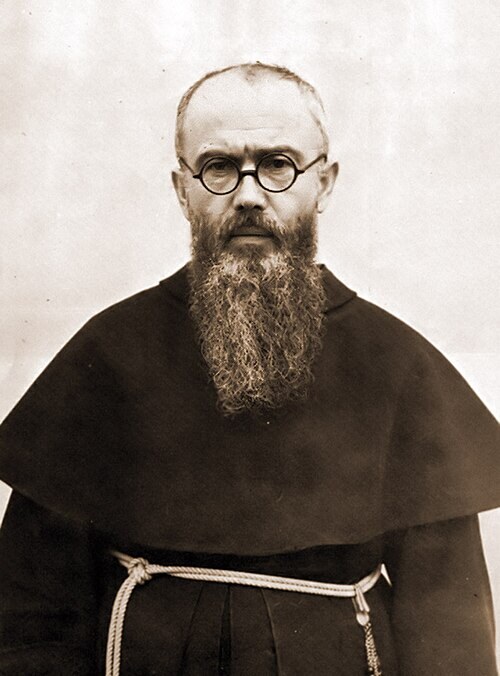
When the lights went down at Watain's concert in Istanbul, the first sound to fill the hall was not a guitar. Wojciech Kilar's Requiem pour le Père Kolbe was rising from the speakers. The piece grew out of the story of Maksymilian Kolbe, the Franciscan priest who in 1941 agreed to die at Auschwitz in place of another prisoner. A Swedish black metal band taking the stage to the lament of a Catholic martyr looks like a strange match on paper; in the hall it did not seem strange at all. The band was not borrowing the music's theology. It was borrowing that slow, irreversible progression which places the listener inside a ceremony before the concert begins.
The metal scene has used this door for a long time. In 1991 Bathory built "Hammerheart", from the album Twilight of the Gods, on a hymn theme taken from Holst's "Jupiter". In 1996 Satyricon opened the video for Mother North with "Montagues and Capulets" from Prokofiev's ballet Romeo and Juliet. In 2003 Marduk put an arrangement of the funeral march Purcell wrote for Queen Mary on the album World Funeral. There is a trained ear behind these choices. These musicians knew that the weight which comes before the noise had been written into the classical repertoire for centuries.
This selection trusts that ear, but it does not stay within the metal scene. The darkness here is not defined by a minor key or a slow tempo. The works chosen either take death, fear, ritual and violence as their subject or set out to unsettle the listener with sound itself. The list opens with a funeral march played in Westminster Abbey in 1695 and closes with a Polish requiem written in 1994.
The works in between come, roughly, from three veins. The first is the Romantic and early twentieth-century imagery of death and war: Chopin's march, Wagner's Valkyries, Rachmaninov's symphonic poem after Böcklin and Holst's Mars. The second is the avant-garde music written in Eastern and Western Europe from the 1960s onwards. Penderecki, Ligeti, Scelsi, Ustvolskaya and Schnittke pushed harmony into the background and thought of sound as mass and pressure. The third vein is cinema. Kubrick and Friedkin placed these avant-garde works in 2001: A Space Odyssey, The Exorcist and The Shining, and carried music that had reached a small audience in the concert hall into a memory of horror shared by millions. Goldsmith, Komeda and Kilar wrote directly for the screen.
One melody also holds the selection together. The Dies irae, the "Day of Wrath" from the medieval Mass for the dead, will come up again and again on this page. Rachmaninov gives it to the brass, Wendy Carlos and Rachel Elkind carry it onto the synthesiser, Crumb sets it into his work as a quotation, and Ustvolskaya and Penderecki give their works its name. Since Berlioz's Symphonie fantastique, the first notes of this chant have been Western music's shortest way of summoning death.
The link under each work goes to a recording of that work alone, or of the movement the text discusses. In works with several movements the movement is named, so that the part the text describes can be heard instead of a whole half-hour requiem. The works are arranged in order of composition.
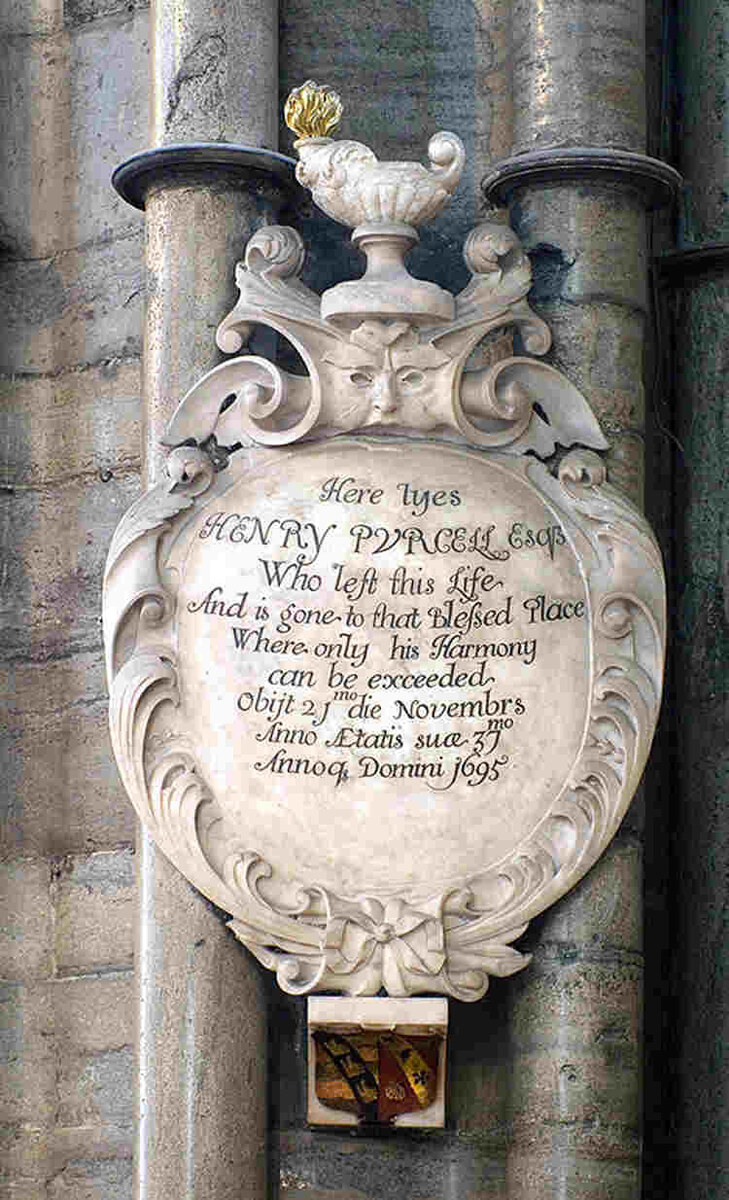
1. Henry Purcell: Music for the Funeral of Queen Mary, March (1695)
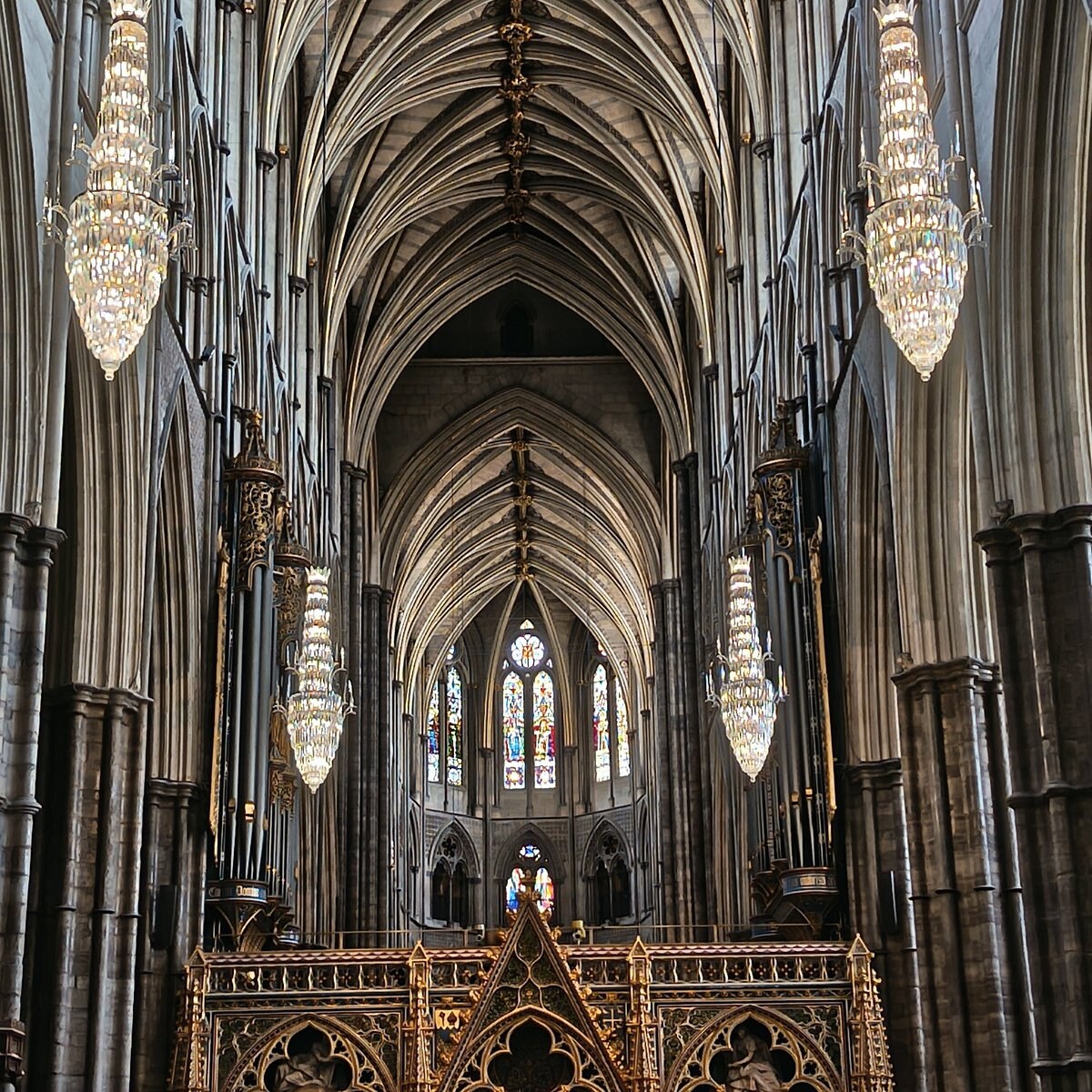
Listen: March, conducted by Martin Neary ↗The funeral of Queen Mary II took place in Westminster Abbey on 5 March 1695. Purcell wrote a march, a canzona and the anthem "Thou knowest, Lord" for the ceremony. The march owes its darkness to the choice of instruments. Purcell wrote it for four "flatt trumpets", that is, slide trumpets. The natural trumpets of the day could not play notes outside the harmonic series. The slide overcame that limit and let the trumpets play in C minor, a key of mourning. "Thou knowest, Lord" was sung at Purcell's own funeral in November of the same year. In 1971 Wendy Carlos adapted the march for synthesiser for A Clockwork Orange.
Metal connection: "Blackcrowned", the instrumental on Marduk's World Funeral (2003), is an arrangement of this march.
2. Frédéric Chopin: Piano Sonata No. 2, Op. 35, III. Marche funèbre (1837–1839)
Listen: III. Marche funèbre, Samson François ↗Chopin wrote the march first, most probably in 1837. In an 1839 letter to Julian Fontana he says that the B flat minor sonata he is writing will contain "my march which you already know". The march moves over a left-hand ostinato that rocks between two chords, and in the middle it opens into a much calmer section in D flat major. It was played at Chopin's own funeral on 30 October 1849, in Henri Reber's orchestration. It then became the music of state funerals, from Kennedy to Churchill and Elizabeth II. Listen, too, to the finale that follows: a one-minute presto in which the two hands play the same line an octave apart and the key barely shows itself. Anton Rubinstein described it as "night winds sweeping over churchyard graves".
3. Richard Wagner: Die Walküre, Act III, "Walkürenritt" (1854–1856, first staged 1870)
Listen: Walkürenritt, conducted by Fabio Luisi ↗Die Walküre is the second opera of Wagner's Ring cycle, Der Ring des Nibelungen. It was first staged in Munich on 26 June 1870. The third act opens as Wotan's daughters, the Valkyries, meet on a rocky summit to carry the dead heroes they have gathered from the battlefields to Valhalla. In this opening, often played on its own in concert, trills in the strings and rising figures in the woodwind lay down a ground. Over it the brass carry the main theme in dotted rhythm. In Wagner's system of leitmotifs the theme stands for the Valkyries themselves. The association the music carries today dates from 1979. Francis Ford Coppola shot the scene in Apocalypse Now in which American helicopters attack a Vietnamese village to this music.
4. Sergei Rachmaninov: The Isle of the Dead, Op. 29 (1909)
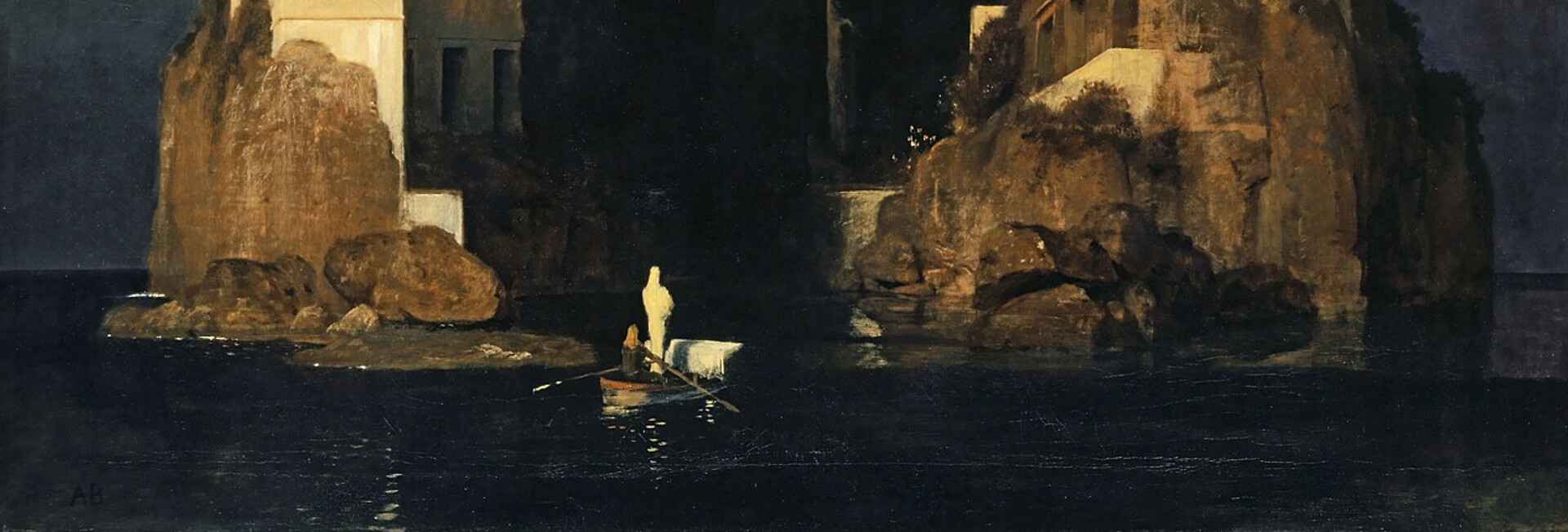
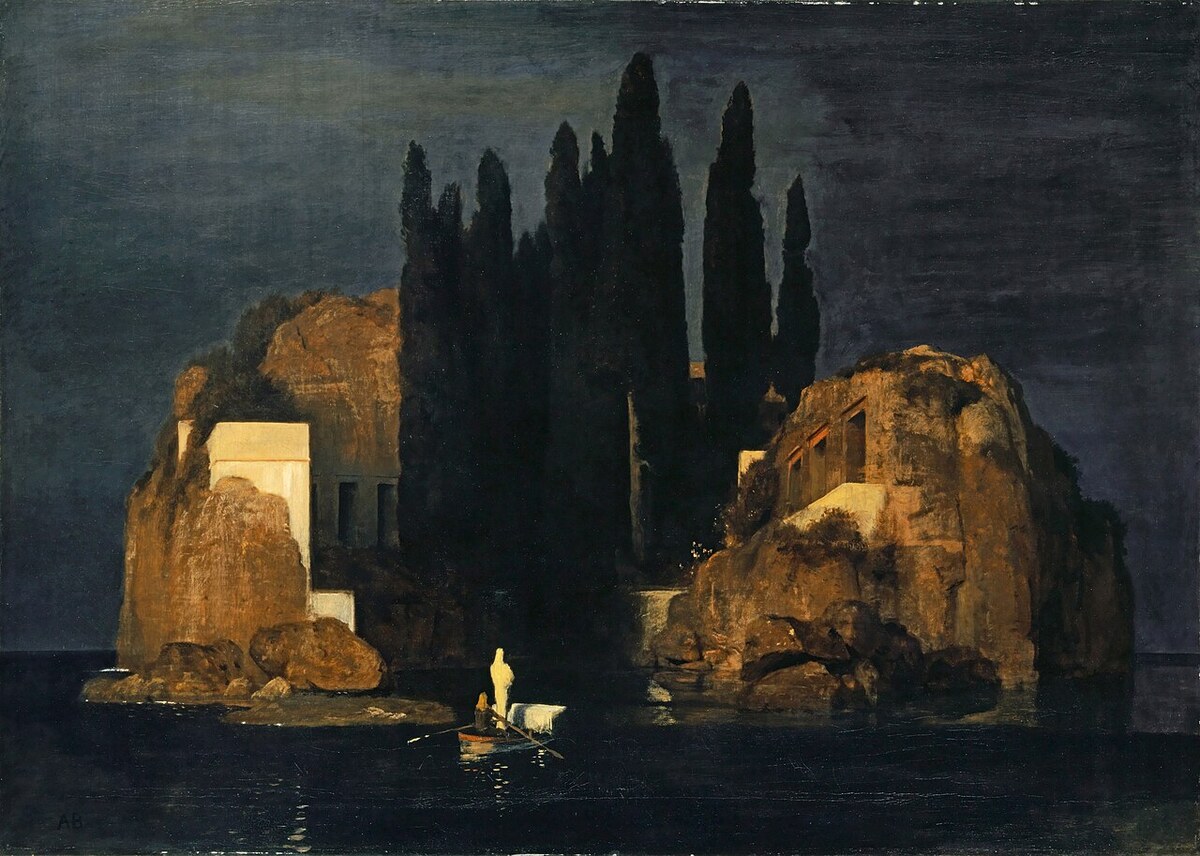
Listen: The Isle of the Dead, Berliner Philharmoniker ↗Rachmaninov saw Arnold Böcklin's painting of the same name in Paris, most probably as a black-and-white reproduction, perhaps Max Klinger's engraving. In the painting a boat pulled by an oarsman carries a figure shrouded in white and a coffin towards a rocky island where cypresses rise. Rachmaninov set this crossing in 5/8. The rhythm, its accent shifting irregularly, gives the outer sections of the work a motion like waves. In the middle the brass announce the Dies irae, and the first four notes of the theme lead the way back to the opening mood. Rachmaninov conducted the work himself in Moscow on 18 April 1909. The orchestration, too, stays true to the painting in black and white. The strings keep mostly to their dark registers, and bright colours are held back for most of the work.
5. Gustav Holst: The Planets, Op. 32, I. "Mars, the Bringer of War" (1914)
Listen: I. Mars, Berliner Philharmoniker ↗Holst wrote The Planets between 1914 and 1916, starting from the astrological rather than the astronomical character of the planets. "Mars, the Bringer of War" is the first movement of the suite and was written in 1914, the year the First World War began. An insistent rhythmic pattern in 5/4 runs through the movement from beginning to end. At the opening the strings play it with the wood of the bow, col legno. Above it the brass rise in dissonant chords that grow harsher and harsher. The movement ends on the same chord struck again and again.
Metal connection: Bathory based "Hammerheart", on Twilight of the Gods (1991), on the hymn theme from the "Jupiter" movement of the same suite. In England the theme is also used, under the name "Thaxted", as the tune of a church hymn.
6. Sergei Prokofiev: Romeo and Juliet, Suite No. 2, Op. 64ter, I. "Montagues and Capulets" (1935–1936)
Listen: I. Montagues and Capulets, The Cleveland Orchestra ↗Prokofiev finished the music for his ballet Romeo and Juliet in 1935, but the ballet struggled to reach the Soviet stage. The composer first brought the music to audiences as orchestral suites. The opening movement of the second suite joins two scenes. The first is the Duke of Verona's decree forbidding the two families to fight: overlapping dissonant chords in the brass, followed by a tense silence. The second is the scene known in the ballet as the "Dance of the Knights". Here a heavy march in dotted rhythm, low in the orchestra, carries the arrogance of the Capulets and the hatred between the two houses. The best-known theme of a ballet known for its love story is therefore not a love theme but a march of enmity.
Metal connection: Satyricon opened the Mother North video, shot in March 1996, with this movement. The band's vocalist, Satyr, directed it.
7. Carl Orff: Carmina Burana, "O Fortuna" (1935–1936)
Listen: O Fortuna, San Francisco Symphony ↗The texts of Carmina Burana come from a thirteenth-century manuscript found at Benediktbeuern Abbey in Bavaria. Orff built a scenic cantata from these Latin and Middle High German poems. It was first performed in Frankfurt on 8 June 1937. "O Fortuna", which opens and closes the work, is about the wheel of fortune raising a man up and throwing him down. The music is kept deliberately bare. Over an unchanging rhythmic pattern and harmonies that barely move, the chorus passes in an instant from a whisper to the full weight of the orchestra. The fame the piece has gathered, from film trailers to advertisements, overshadows the context in which it was written. Carmina Burana was composed in Nazi Germany, and it won its great success there.
8. Krzysztof Penderecki: Threnody to the Victims of Hiroshima (1960–1961)
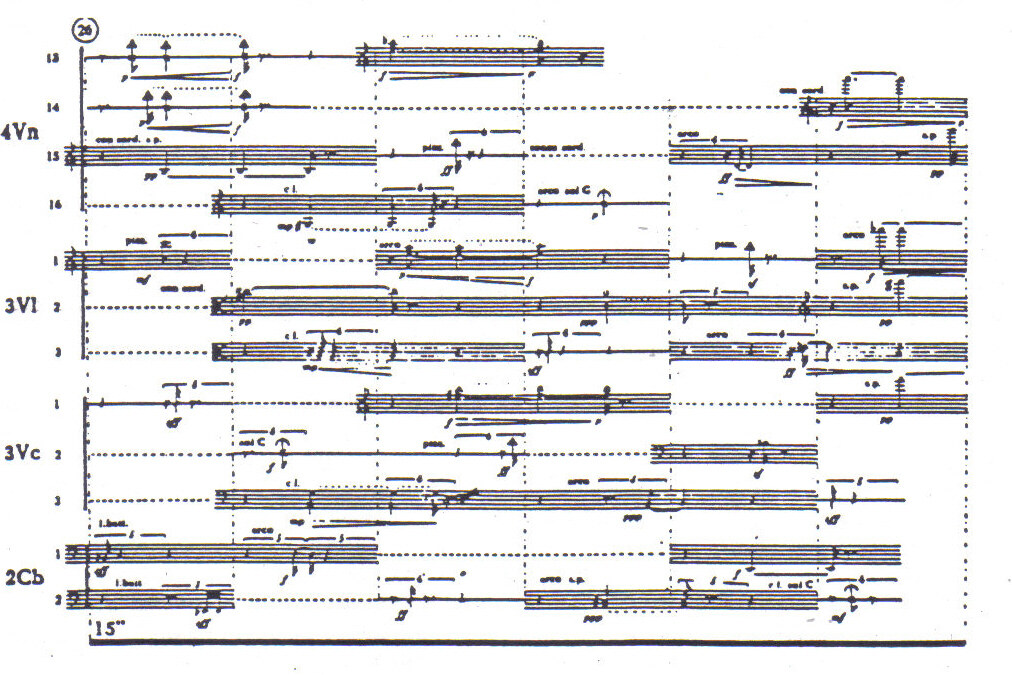
Listen: Threnody, Kraków Philharmonic Orchestra ↗The work's first title was 8'37", that is, its duration. Penderecki wrote it as an abstract study in sound and, after hearing a performance, decided to dedicate it to the victims of Hiroshima. It is written for 52 strings: 24 violins, 10 violas, 10 cellos and 8 double basses. For much of the score, graphic signs stand in place of conventional notes. The players are asked to play the highest note their instrument can produce, to play behind the bridge, or to build dense clusters woven from quarter-tones. After the scream of the high cluster at the opening, the music moves forward not through melody but through changes of texture and density. It was first performed on 22 September 1961 at the Warsaw Autumn Festival, conducted by Andrzej Markowski, and in the same year it placed fourth at UNESCO's International Rostrum of Composers.
9. Krzysztof Penderecki: Polymorphia (1961)
Listen: Polymorphia, Warsaw National Philharmonic Orchestra ↗Polymorphia, for 48 strings, was a commission from North German Radio (NDR) and was first performed on 16 April 1962, conducted by Andrzej Markowski. Penderecki derived part of its graphic notation from electroencephalograms. At a medical centre in Kraków, the brain waves of patients listening to Threnody had been recorded, and these curves were carried over into the score. The music moves back and forth between sliding glissando clusters and drones that thicken on a single pitch. At the end of all this tension the work closes on a pure C major chord. Penderecki later said that this chord was the seed from which the whole work grew.
Film connection: Polymorphia was used in both The Exorcist (1973) and The Shining (1980). In The Shining it is heard in the scene where Jack's typewritten pages are discovered.
10. György Ligeti: Requiem, II. Kyrie (1963–1965)
Listen: II. Kyrie, conducted by Jonathan Nott ↗Ligeti wrote his Requiem for two mixed choirs, soprano and mezzo-soprano soloists, and orchestra. It was first performed in Stockholm on 14 March 1965, conducted by Michael Gielen. Ligeti spent nine months on the Kyrie alone, which lasts about six minutes. The movement is made of twenty separate vocal parts, each going its own way in closely spaced chromatic lines. This is the technique Ligeti called micropolyphony. The single voices cannot be picked out, and what reaches the ear is a mass of sound that slowly swells and then narrows. Ligeti took the vocal polyphony of the fifteenth-century composer Ockeghem as his starting point for this writing. In 2001: A Space Odyssey (1968) Kubrick set this music to the scenes in which the monolith appears.
11. György Ligeti: Lux Aeterna (1966)
Listen: Lux Aeterna, SWR Vokalensemble, Yuval Weinberg ↗Lux Aeterna, written a year after the Requiem, is for sixteen unaccompanied voices: four sopranos, four altos, four tenors and four basses. The text is the part of the Mass for the dead that begins "May eternal light shine upon them". Ligeti gave each voice a different rhythmic subdivision. The voices sing the same line in canon but at different speeds, and the result is a texture Ligeti described as "beatless, floating". After the pressure of the Kyrie, the music here stays almost motionless. That a text about light should sound so cold is where the real tension of the work lies. Kubrick used this piece in 2001 as well, in the scene of the vehicle travelling across the Moon to the excavation site.
12. Giacinto Scelsi: Uaxuctum (1966)
Listen: Uaxuctum, Radio France concert recording ↗The full title of the work is "Uaxuctum: The Legend of the Maya City, Destroyed by Themselves for Religious Reasons". It is written for four vocal soloists, mixed choir, orchestra and solo ondes Martenot. The ondes Martenot, developed in France in 1928 by Maurice Martenot, is an early electronic instrument that produces its sound with an electronic oscillator. In this work it draws a line that rises from between the choir and the orchestra, close to a human voice but not a human voice. Scelsi was a composer who chose to go inside a single sound rather than work with melody and harmony. The sounds tremble around a central pitch in quarter-tones and smaller intervals, while the percussion breaks out in blocks that recall the strokes of a rite. Of all the works in this selection, this is the one that stands closest to the ear of drone and doom.
13. Krzysztof Penderecki: Dies Irae, Auschwitz Oratorio (1967)
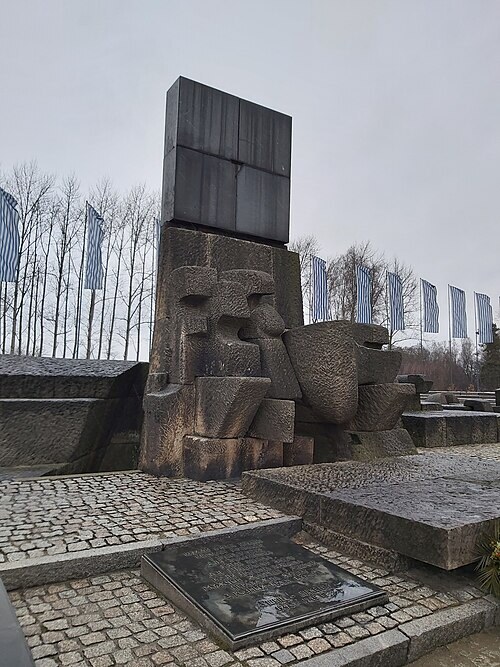
Listen: Lamentatio, part 1 ↗The oratorio was first performed on 16 April 1967 in Oświęcim, at the unveiling of the international monument to those murdered at Auschwitz-Birkenau, and was dedicated to the memory of the camp's victims. It is written for soprano, tenor and bass soloists, mixed choir and orchestra. The texts were drawn from the Bible, from Aeschylus's Eumenides and from contemporary Polish and French poetry translated into Latin, among them a passage by Louis Aragon. The work, about twenty-two minutes long, is in three parts. Lamentatio opens with low melismas in the choir basses, Apocalypsis reaches great eruptions, and Apotheosis dies away on a very faint sound in the double basses. In many places the choir speaks the text rather than singing it.
14. Krzysztof Komeda: Rosemary's Baby, "Lullaby" (1968)
Listen: Lullaby From Rosemary's Baby, Part 1 ↗The Polish jazz pianist Komeda was known for the music he wrote for Roman Polanski's films. The lullaby heard over the opening and closing credits of Rosemary's Baby rests on a wordless melody hummed by Mia Farrow in her own voice. Polanski wrote that Farrow could hum the tune well and that the voice in the credits was instantly recognisable. The music takes the form of a song a mother sings to her baby. Once the listener knows that the film is about a woman who gives birth to Satan's child, the same melody changes its meaning. It is the quietest work in the selection, and it unsettles without any orchestral outburst. Komeda managed to write only one more film score after this one, and he died on 23 April 1969.
15. George Crumb: Black Angels, "Threnody I: Night of the Electric Insects" (1970)
Listen: Night of the Electric Insects ↗The work's subtitle is "Thirteen Images from the Dark Land". At the end of the score Crumb wrote the date "Friday the Thirteenth, March, 1970 (in tempore belli)", that is, "in time of war". He meant Vietnam. The work is written for electric string quartet. The instruments are amplified, and the players also play crystal glasses and tam-tam. Crumb wrote that the amplification was meant to produce "a highly surrealistic effect". The work is divided into three parts, Departure, Absence and Return. With its harsh tremolos and glissandos, "Night of the Electric Insects", which opens Departure, is read as an image of attack helicopters. Later pages quote Schubert's "Death and the Maiden" and the Dies irae.
Film connection: "Night of the Electric Insects" was part of the soundtrack of The Exorcist (1973). The Kronos Quartet was formed in 1973, after its founder heard this work.
16. Galina Ustvolskaya: Composition No. 2 "Dies Irae" (1973)
Listen: Dies Irae, Ludus Gravis Ensemble ↗Ustvolskaya was a student of Shostakovich, and her teacher once told her, "I am a talent, you are a phenomenon". She spent her life in Leningrad, on the edge of official Soviet musical life. The Dutch critic Elmer Schönberger called her "the lady with the hammer" because her writing rests on homophonic blocks of sound brought down again and again. Composition No. 2 is one of the most extreme examples of this writing. It is scored for eight double basses, piano and a wooden cube struck with a hammer. The double basses build dense, heavy clusters in the low register, and the piano drops hard blows on top of them. Some listeners compare the dry, unresonant sound of the cube to a coffin lid. There is no ornament and no soft transition in the music; it moves very slowly, in blocks.
17. Alfred Schnittke: Requiem, "Credo" (1975)
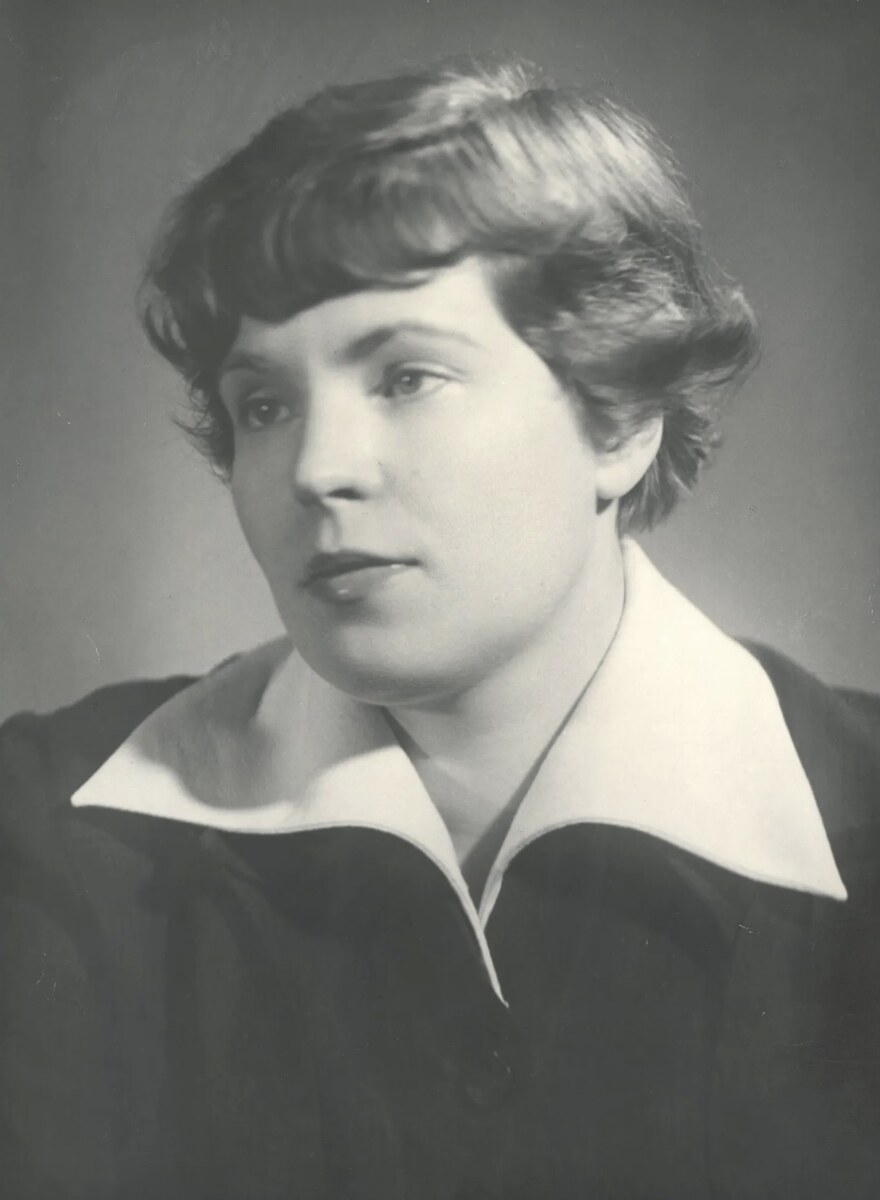
Listen: Credo ↗Schnittke completed his Requiem in 1975, starting from the incidental music he had written for Schiller's play Don Carlos. A Mass for the dead stepped out of a stage play and became an independent concert work. It was first performed not in Moscow but in Budapest, in the autumn of 1977, by the Kodály Choir. The forces are unusual. Alongside three sopranos, contralto, tenor and mixed choir there are trumpet, trombone, six percussionists, celesta, piano, organ, electric guitar and electric bass. The traditional Requiem Mass has no Credo; Schnittke added it to the text himself. It is the movement in which the forces are used most harshly. The organ and the electric instruments drive the choir on, and the choir hurls out the articles of faith with the resolve of a march.
18. Jerry Goldsmith: The Omen, "Ave Satani" (1976)
Listen: Ave Satani ↗Goldsmith wanted to write a kind of black Mass for Richard Donner's film. Working in London with a choirmaster who knew Latin, he inverted phrases taken from the Catholic liturgy. "Ave Maria" became "Ave Satani", and the text went as far as "Ave Versus Christus", a salute to the Antichrist. The result is a song that recalls Gregorian chant but which the choir delivers in clipped, harsh accents. The Latin of the text is not flawless. Phrases such as "Sanguis bibimus" are grammatically wrong. The Omen won the Oscar for Best Original Score, and "Ave Satani" was nominated for Best Original Song.
19. Wendy Carlos and Rachel Elkind: The Shining, "Main Title" (1980)
Listen: Main Title ↗Kubrick's The Shining opens with a long aerial shot that follows a car along a mountain road. Under this shot runs the opening theme in which Wendy Carlos and Rachel Elkind carry the Dies irae onto the synthesiser. The melody sits in a low, synthesised brass sound, over a drone centred on B flat. Around it drift heavily processed vocal sounds and effects whose pitch slides. Some of these effects fall on none of the twelve notes of the piano. Carlos and Elkind had worked with Kubrick before, on A Clockwork Orange, where they arranged Purcell's march. For the rest of The Shining Kubrick relied mostly on existing recordings of Ligeti, Penderecki and Bartók.
20. Alfred Schnittke: Faust Cantata "Seid nüchtern und wachet", VII. "Es geschah" (1983)
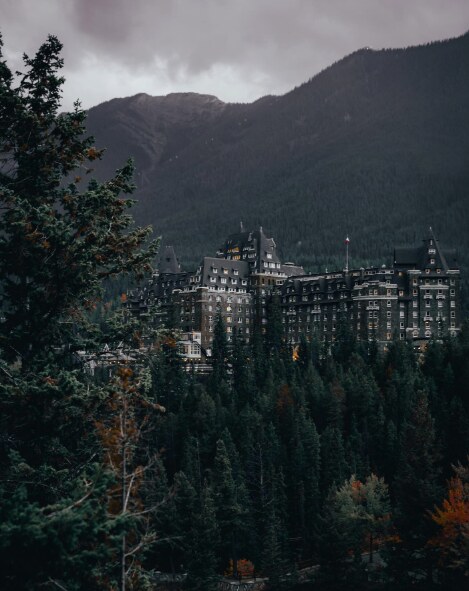
Listen: VII. Es geschah, Malmö Symphony Orchestra, James DePreist ↗Commissioned by the Wiener Festwochen, the cantata is based on the Historia von D. Johann Fausten, published by Johann Spies in 1587. The epilogue is taken from the First Epistle of Peter, and the work's title comes from it as well: "Be sober, be vigilant". Schnittke called the work "a negative Passion" and used the form of the Baroque Passions to tell of Faust's damnation. The Devil is represented by two voices. A countertenor sings him in the sections where he hides himself, a contralto once he is revealed. In the seventh scene, as Faust's terrible death is recounted, the contralto sings the part of Mephisto as a tango. The work note from his publisher, Boosey & Hawkes, describes this section as "an infernal tango". A death scene dressed as dance-hall music is the most disturbing moment of the work.
21. Wojciech Kilar: Bram Stoker's Dracula, "Dracula: The Beginning" (1992)
Listen: Dracula: The Beginning ↗Kilar received an ASCAP award in 1992 for his score for Francis Ford Coppola's film. The opening track accompanies the film's prologue, set in the fifteenth century. When Vlad comes back from the war, he learns that the woman he loves has killed herself, and he turns his back on God. The music is built on a heavy, insistent figure in the low strings and brass. Here Kilar follows the method he also uses in his concert works: repeating a single figure without changing it, and building the tension by adding layers to the orchestra. Although it was written for a Gothic horror film, the music makes it plain that it comes from a composer who grew out of the Polish avant-garde.
22. Wojciech Kilar: Requiem pour le Père Kolbe (1994)
Listen: Requiem pour le Père Kolbe ↗In 1941 the Franciscan priest Maksymilian Kolbe asked to die at Auschwitz in place of a prisoner who had been chosen for the starvation cell. In 1991 Krzysztof Zanussi turned this story into the film Życie za życie (A Life for a Life), and Kilar wrote its music. Requiem pour le Père Kolbe is a symphonic poem for orchestra, drawn from this score in 1994. Kilar was reluctant at first to prepare the concert version. The piece moves slowly, built on repetition, and leans on the method of accumulation Kilar also used in Exodus. From the same film, "Father Kolbe's Preaching" was later used in the score of The Truman Show. Kolbe's death at Auschwitz ties this last work of the selection to the same place as Penderecki's Auschwitz oratorio.
Metal connection: Watain used this piece as their walk-on music at their Istanbul concert.