 Audi tenebras inter cortices
Godspeed You! Black Emperor can be described in terms of post-rock's slowly rising guitars, but the description falls short. The real work of this collective, founded in Montreal in 1994, was to weave an infrastructure around the music: a recording studio, concert spaces, handmade packaging and film reels turning on stage. Godspeed's albums are the most visible products of that infrastructure, but not its only ones.
The tape and the name
The first recording to carry the Godspeed name, All Lights Fucked on the Hairy Amp Drooling, was recorded in 1993 largely by Efrim Menuck on his own, and circulated among a close circle in December 1994 as a tape of 33 copies. For years the tape was considered lost. When it leaked online in 2022, Menuck released it officially on Bandcamp, donated the proceeds and added a short note: the recording was a "retirement letter" and had nothing to do with the band that came after. The note should be taken seriously. To search All Lights Fucked for a sketch of the later Godspeed is to listen to the legend more than to the recording itself.
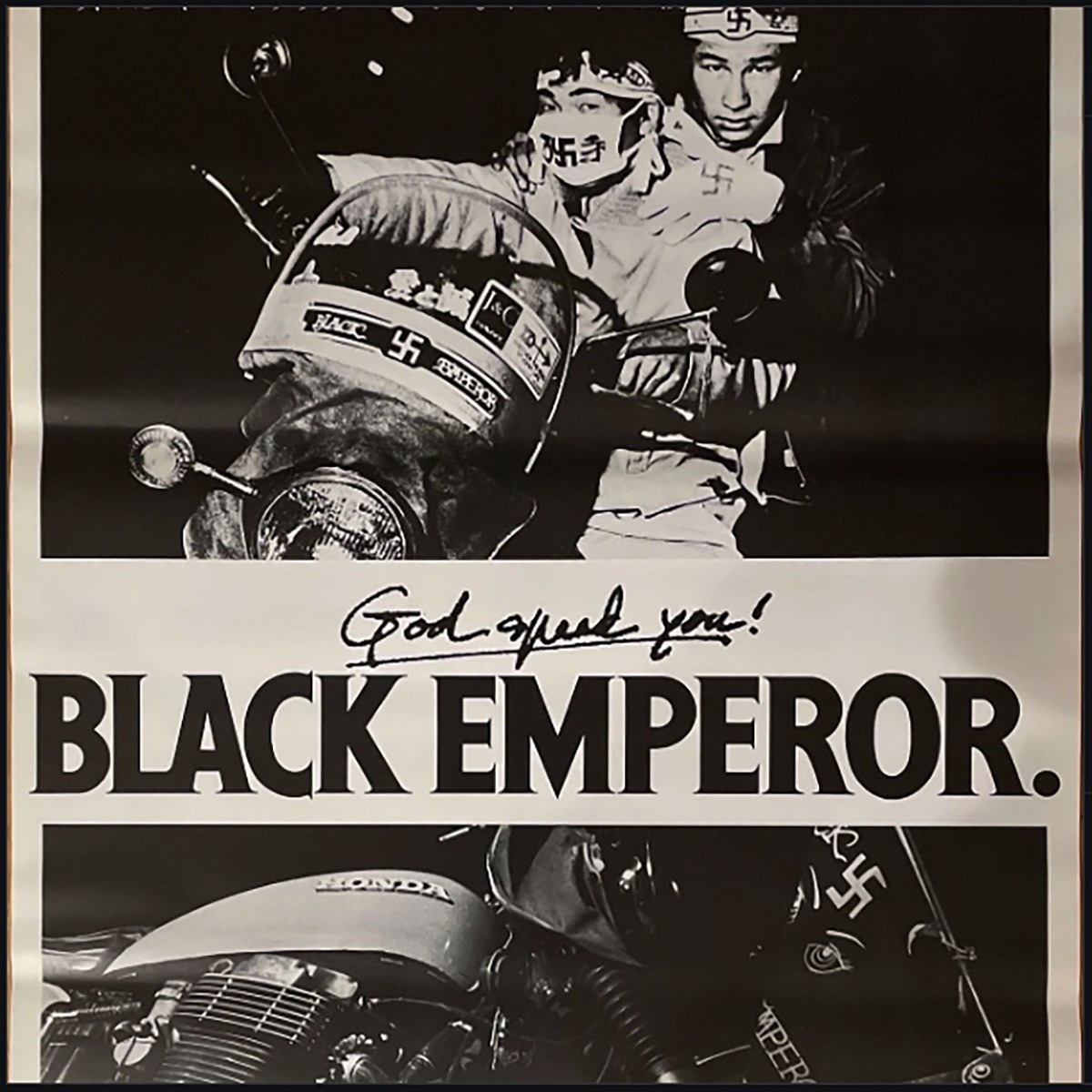
The band proper took shape in 1994 around Menuck, the bassist Mauro Pezzente and the guitarist Mike Moya. The name comes from Mitsuo Yanagimachi's 1976 documentary God Speed You! Black Emperor; the film follows a Japanese motorcycle gang called the Black Emperors. The line-up soon grew. By Menuck's account, all it took to join was to play an instrument and seem like a reasonable person. That is how two drum kits, two basses, strings and tape loops came together on the same stage. There was no frontman at the centre.
The loft on Van Horne
Hotel2Tango began as Pezzente and Kiva Stimac's loft on Van Horne Avenue. When Menuck took over the lease, the place became first a home, then a rehearsal room and an unofficial concert hall. The concerts were stopped when crowds and theft made them impossible to control. Pezzente and Stimac carried the tradition over to Casa del Popolo, which they opened themselves, and to the Suoni Per Il Popolo festival.
The studio grew out of experiments that Menuck and the bassist Thierry Amar began on a four-track Teac tape machine, then a Tascam eight-track. Once the producer Howard Bilerman's equipment was added, this core gradually became a 24-track analogue studio. In the mid-2000s Radwan Ghazi Moumneh joined the partnership and the studio moved a few streets away. The new building also housed Constellation's offices. Bands from other musical circles in the city, Arcade Fire among them, passed through these rooms too.
Constellation itself, though, was founded in 1997 by Ian Ilavsky and Don Wilkie, not by members of Godspeed. The distinction matters. The network around Godspeed was not a structure built by one person or one band; it was made of independent units leaning on one another.
F♯ A♯ ∞ and the flattened coins
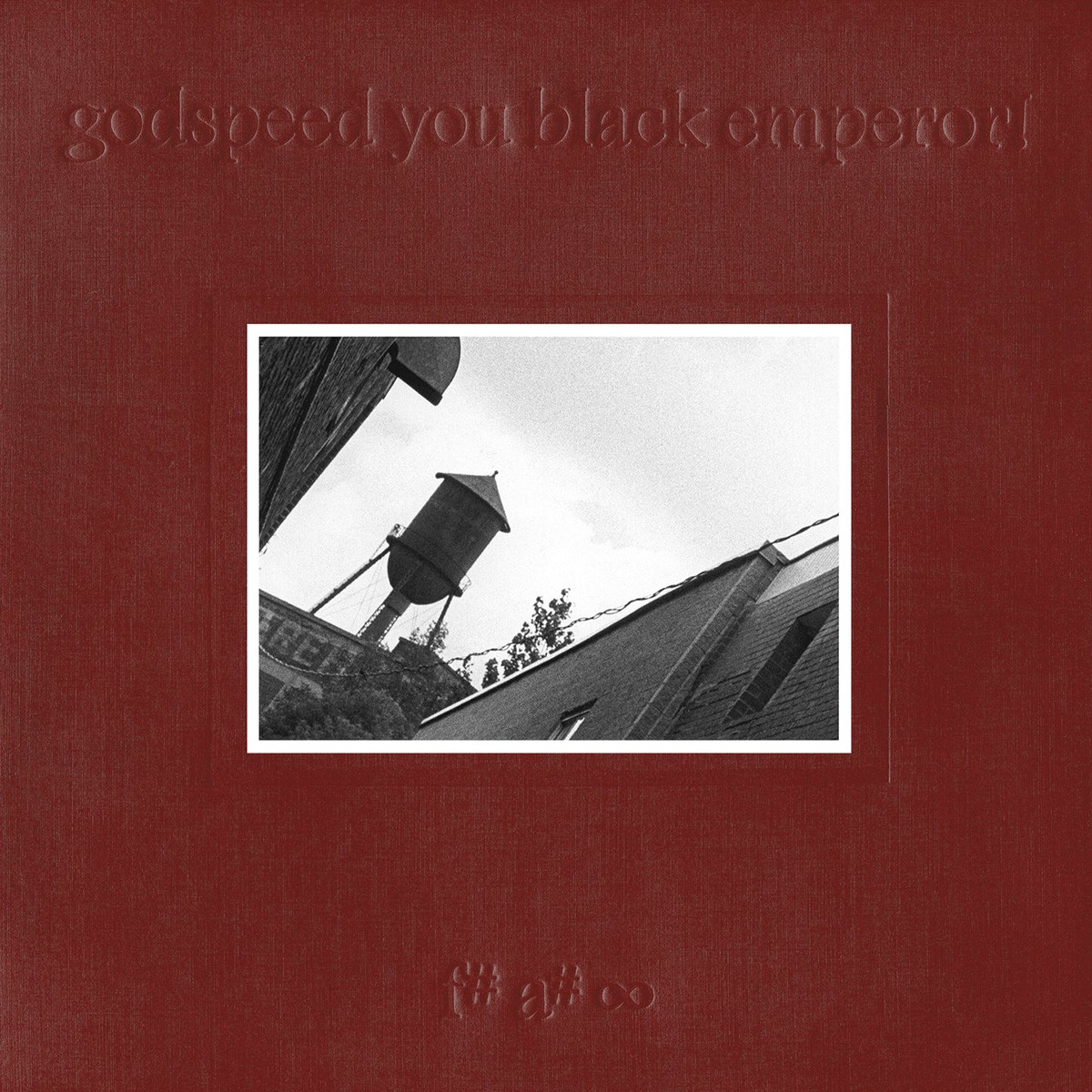
F♯ A♯ ∞ was recorded at Hotel2Tango in May 1997 and released by Constellation on 14 August 1997 as a numbered LP of 500 copies. Every copy was assembled by hand. Inside were original photographs and coins the band members had left on railway tracks for trains to flatten. The CD that Kranky released a year later was an expanded version, including the section later known as "East Hastings". That the same album existed in two physical forms showed from the start that the band did not regard a recording as a fixed object.
The monologue in the opening track, "The Dead Flag Blues", comes from Menuck's unfinished screenplay Incomplete Movie About Jail. The text has a burning car and a city whose flags have died on their poles. The apocalypse here works less like a science-fiction set than like a landscape grown out of a city's cracks. Spoken fragments and field recordings make it clear that this is material the band cut and pasted as much as it played.
The Slow Riot for New Zerø Kanada EP, released in March 1999, consisted of two pieces. "Moya", listed as "Gorecki" on setlists, was an arrangement that took Henryk Górecki's Third Symphony as its starting point. "BBF3" was built on the long, uneasy monologue of a man they got talking in the street, who called himself Blaise Bailey Finnegan III. Most of the lines he recites as his own poem are in fact the lyrics of Iron Maiden's "Virus". Godspeed make no attempt to correct or interpret the recording; they leave it as it is.
Low took the band out on its first American tour. Years later Alan Sparhawk would describe that tour: going on after Godspeed in small venues in the south-east was like standing in an empty crater.
During these years Menuck founded A Silver Mt. Zion with Sophie Trudeau and Thierry Amar. The project was first conceived as an exercise to help Menuck learn to write notation. The first album, He Has Left Us Alone but Shafts of Light Sometimes Grace the Corner of Our Rooms..., brought the voices of Menuck and his bandmates to the fore, unlike Godspeed's wordless world.
Nine days, one Albini session
The liner notes of Lift Your Skinny Fists Like Antennas to Heaven, released in October 2000, set out the conditions of the recording plainly: nine days in February at Chemical Sound in Toronto, with Daryl Smith pressing record; the other tape pieces gathered over four years at Hotel2Tango. The album consists of four pieces of about twenty minutes each, "Storm", "Static", "Sleep" and "Like Antennas to Heaven", and is dedicated to all the prisoners of the world. The packaging carries a graphic chart of each piece's subsections and drawings taken from William Schaff's fanzine Notes to a Friend; Silently Listening. Themes pass from one instrument to another, are cut off by a field recording and return much later, changed. The pieces sound less like the performance of a composition than like the record of a crowded room of people listening to one another for a long time.
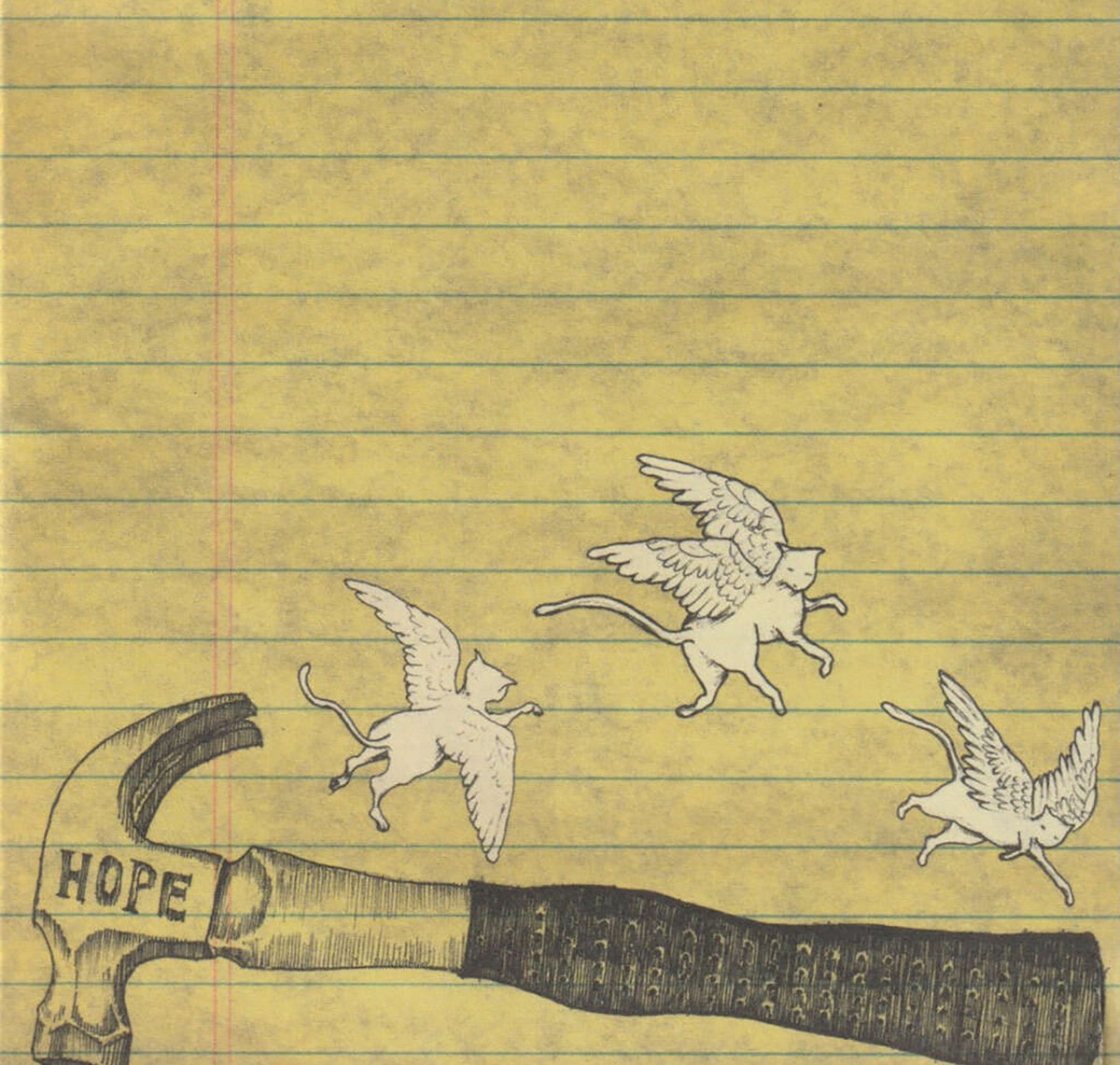
Yanqui U.X.O., which followed in November 2002, was recorded by Steve Albini at Electrical Audio in Chicago and mixed at Hotel2Tango by Bilerman and the band. Albini's approach, built on recording the room as it is, replaced the layered breadth of the previous album with a barer, more physical guitar sound. "Yanqui" is Spanish for Yankee, and "U.X.O." means unexploded ordnance. The front cover has a film still of falling bombs; the inner sleeve has a drawing by the Montreal artist Nadia Moss of a hammer with "HOPE" written on it. The diagram on the back cover drew arrows linking the four major labels of the day to arms manufacturers. The band later explained that EMI had wrongly been shown in the diagram as a subsidiary of AOL Time Warner, and corrected the mistake. The mistake was real; the question the diagram put to the listener, about which system this record had passed through on its way to their hands, kept its force.

Film reels and a prize cheque
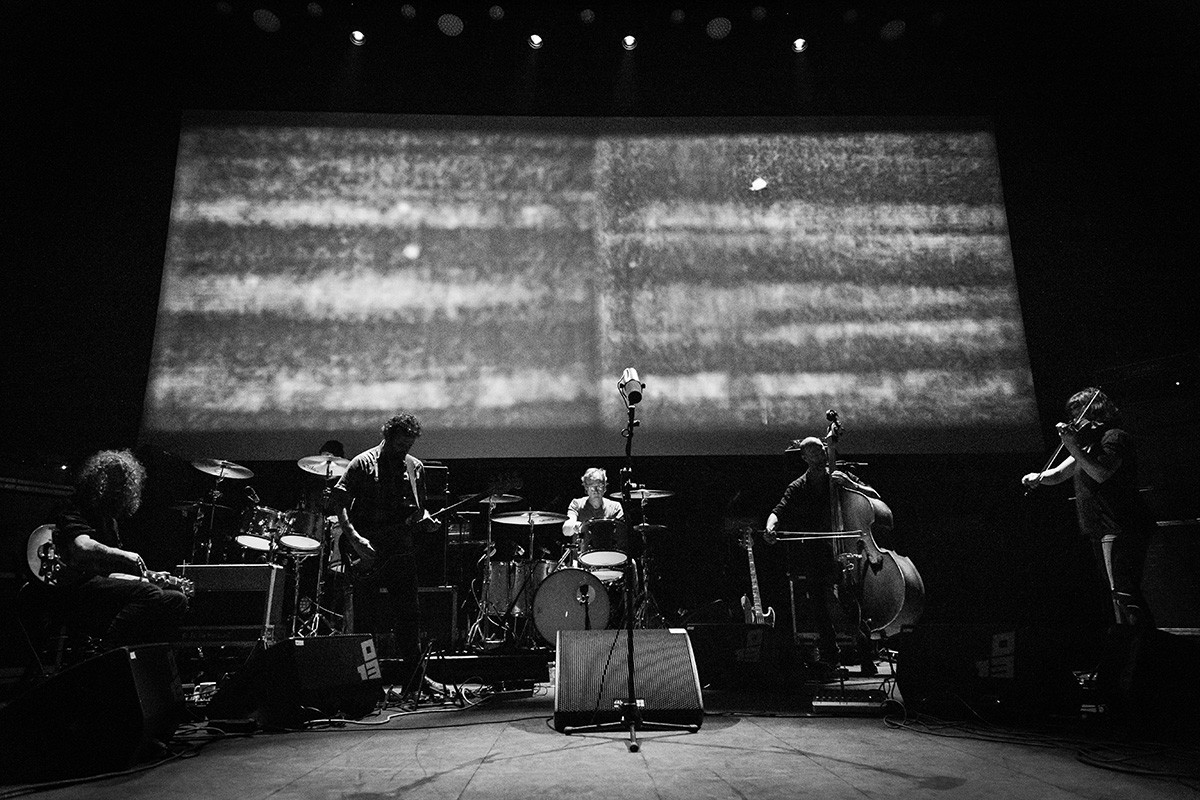
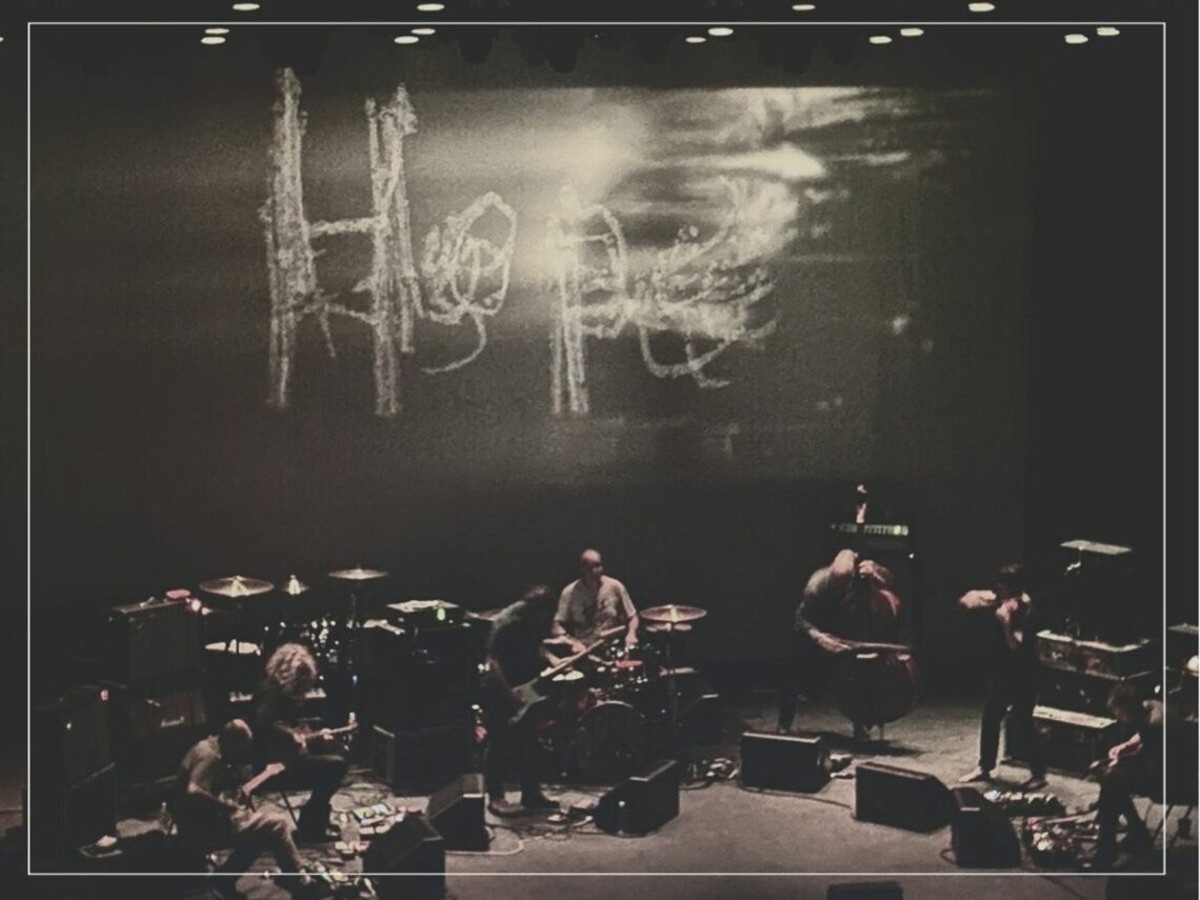
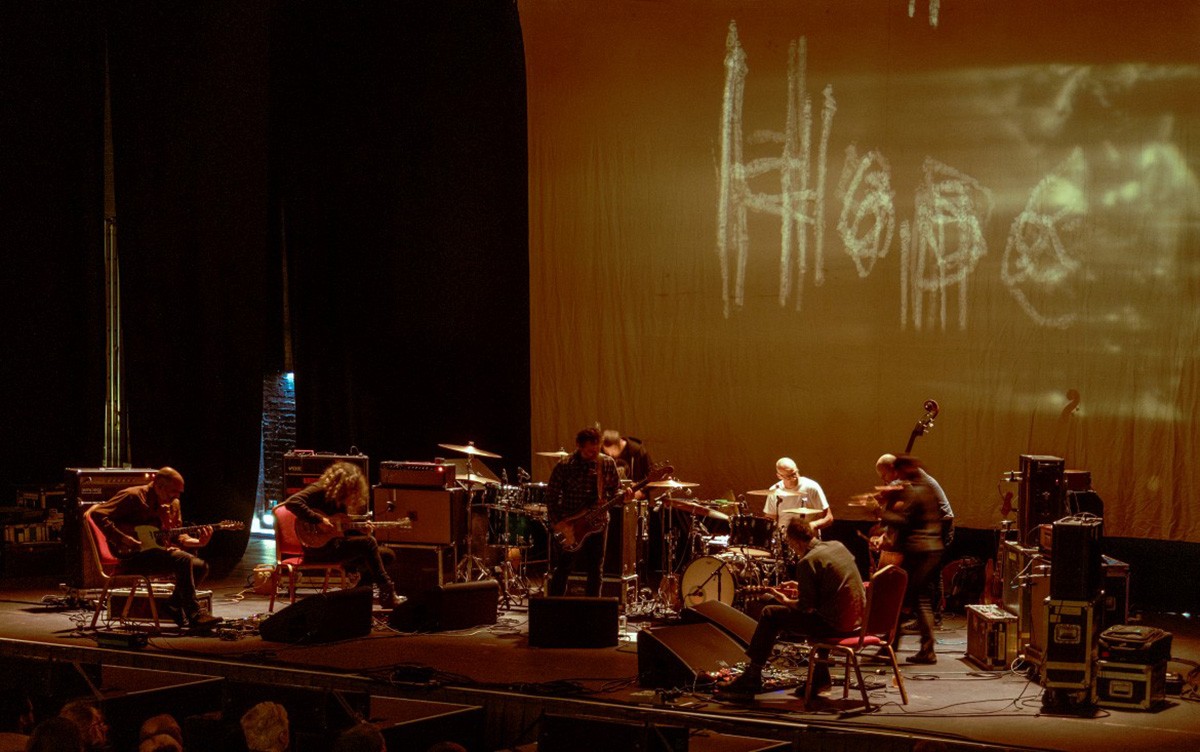
The band went on hiatus in 2003 and reunited in 2010. The return also gave the projections behind the stage a distinct signature: since 2010 the filmmaker Karl Lemieux has worked the concerts with 16 mm projectors. Lemieux says the projections differ every night and on long tours become almost a choreography, run by a hand that waits for the drummer to lift his sticks. He began with two projections side by side and later moved to five projectors lined up like a panorama. The film, like the music, is an instrument played that evening.

'Allelujah! Don't Bend! Ascend!, recorded at Hotel2Tango in April 2011, went quietly on sale at a Boston concert in 2012 and won the 2013 Polaris Music Prize. The band did not attend the ceremony. In a statement they criticised a gala that made musicians compete for a cheque under corporate banners in a time of austerity, and gave the $30,000 prize to programmes teaching music in Quebec prisons. Thirteen years after Lift Your Skinny Fists was dedicated to prisoners, the prize money went to the same people.
The number in the title
Asunder, Sweet and Other Distress (2015) and Luciferian Towers (2017) carried this rebuilt sound forward, and G_d's Pee at State's End! (2021) stayed on the same line. The short text the band wrote for Luciferian Towers described the album as a record made amid a shared mess, while dogs and children were being raised, and said it had all been recorded on a burning motorboat. NO TITLE AS OF 13 FEBRUARY 2024 28,340 DEAD, released on 4 October 2024, wrote its political reference into the title more directly than ever before. The number was the death toll announced in Gaza on that date. The band's announcement asked what gesture could mean anything while small bodies fall, and described the title as a date marker set on top of a growing pile.
The album is again instrumental. The closing track, "Grey Rubble – Green Shoots", says in its title alone what it is trying to do: green shoots rising out of the grey of the rubble. The music does not repeat the news footage; in long, heavy blocks of sound it carries the grief behind that number.
A shortened section of "East Hastings" played over the deserted streets of London in 28 Days Later in 2002, and was heard again in 28 Years Later in 2025. The band did not turn this visibility into a career step. Today the band's official line-up lists, alongside the guitars, basses, drums and violin, two names with the same role written against them: 16 mm projection.