 Audi tenebras inter cortices
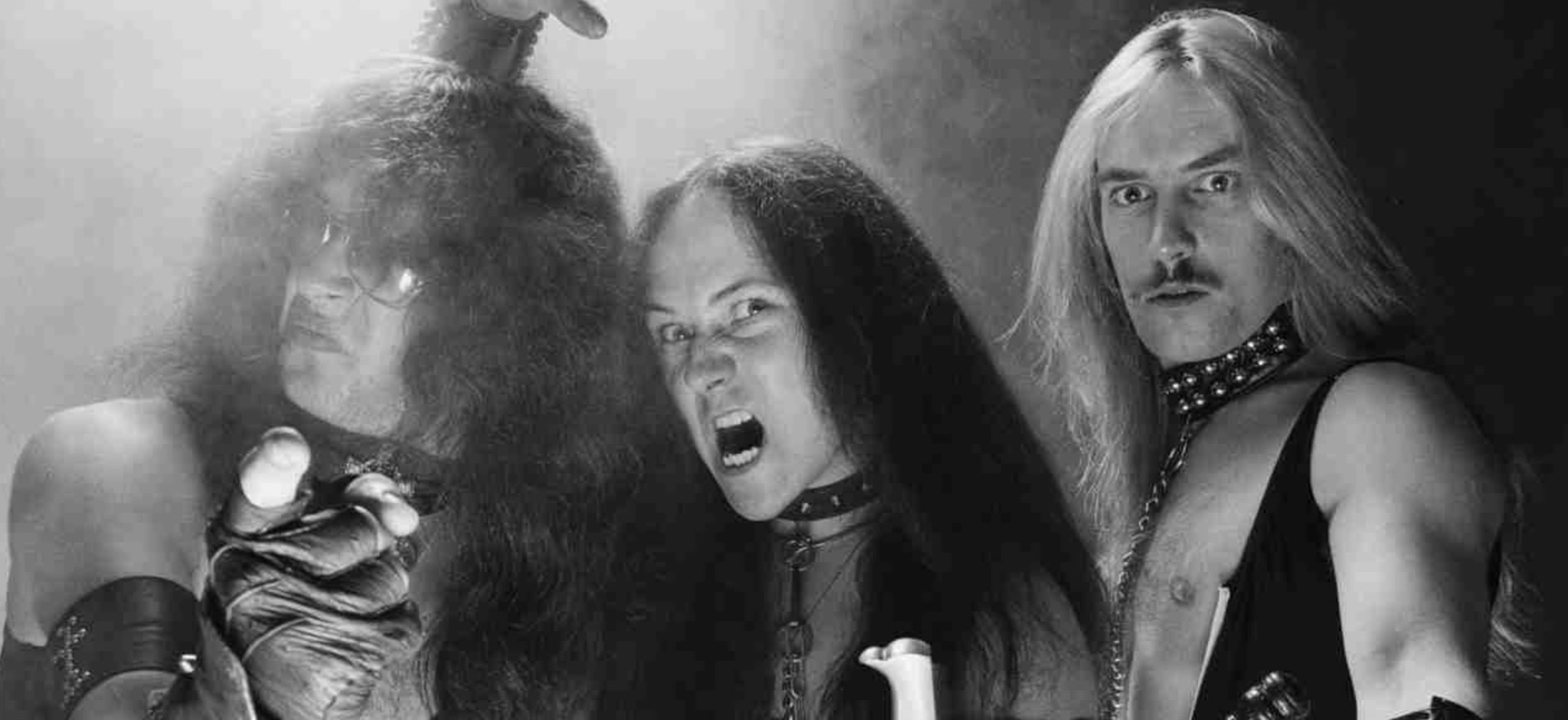
I do not want to turn this page into a board of obituaries, and I would break that rule for only a few names. Venom and Cronos were already among the subjects planned. When the death of Conrad "Cronos" Lant was announced on 1 October 2026, I moved the piece forward.
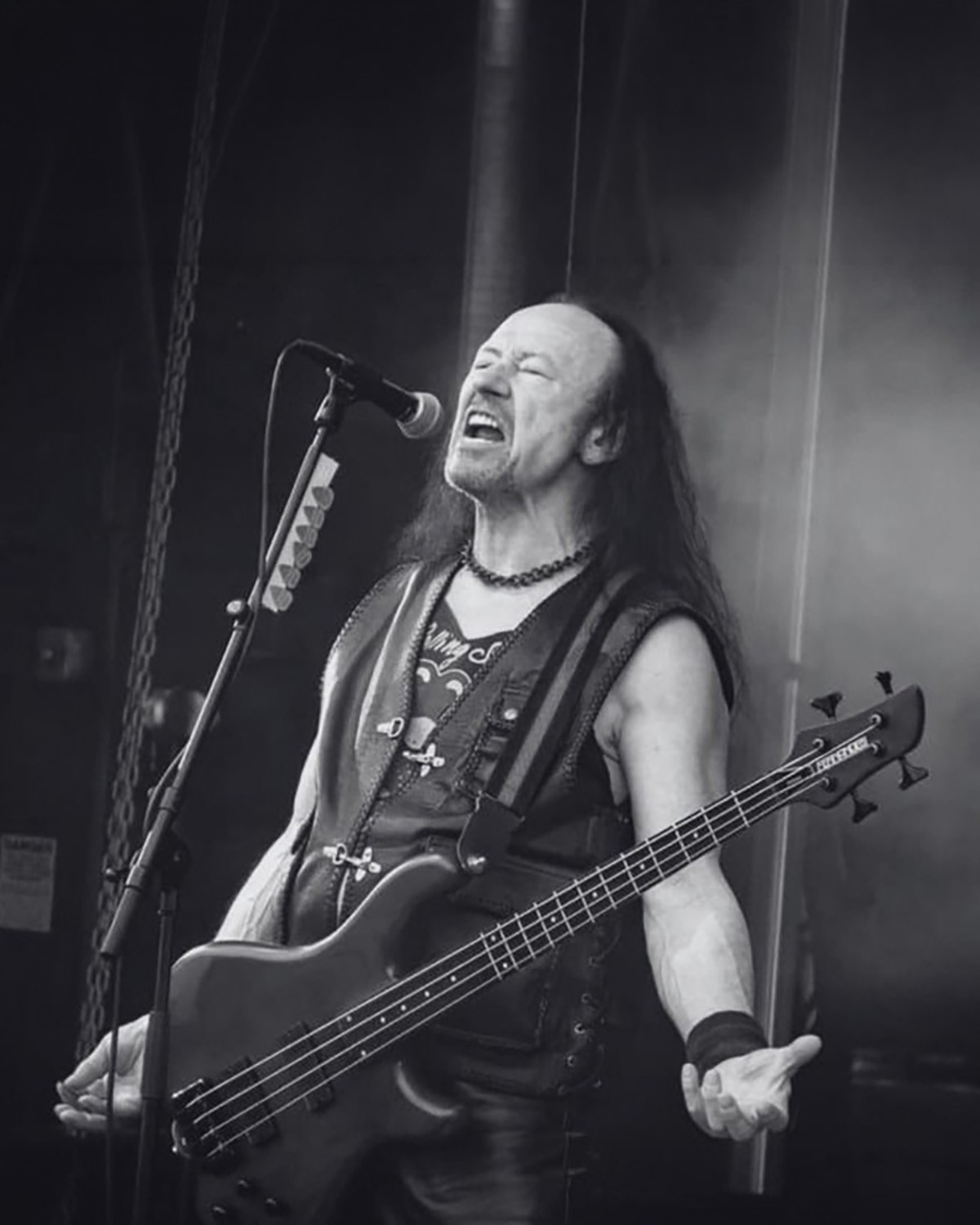
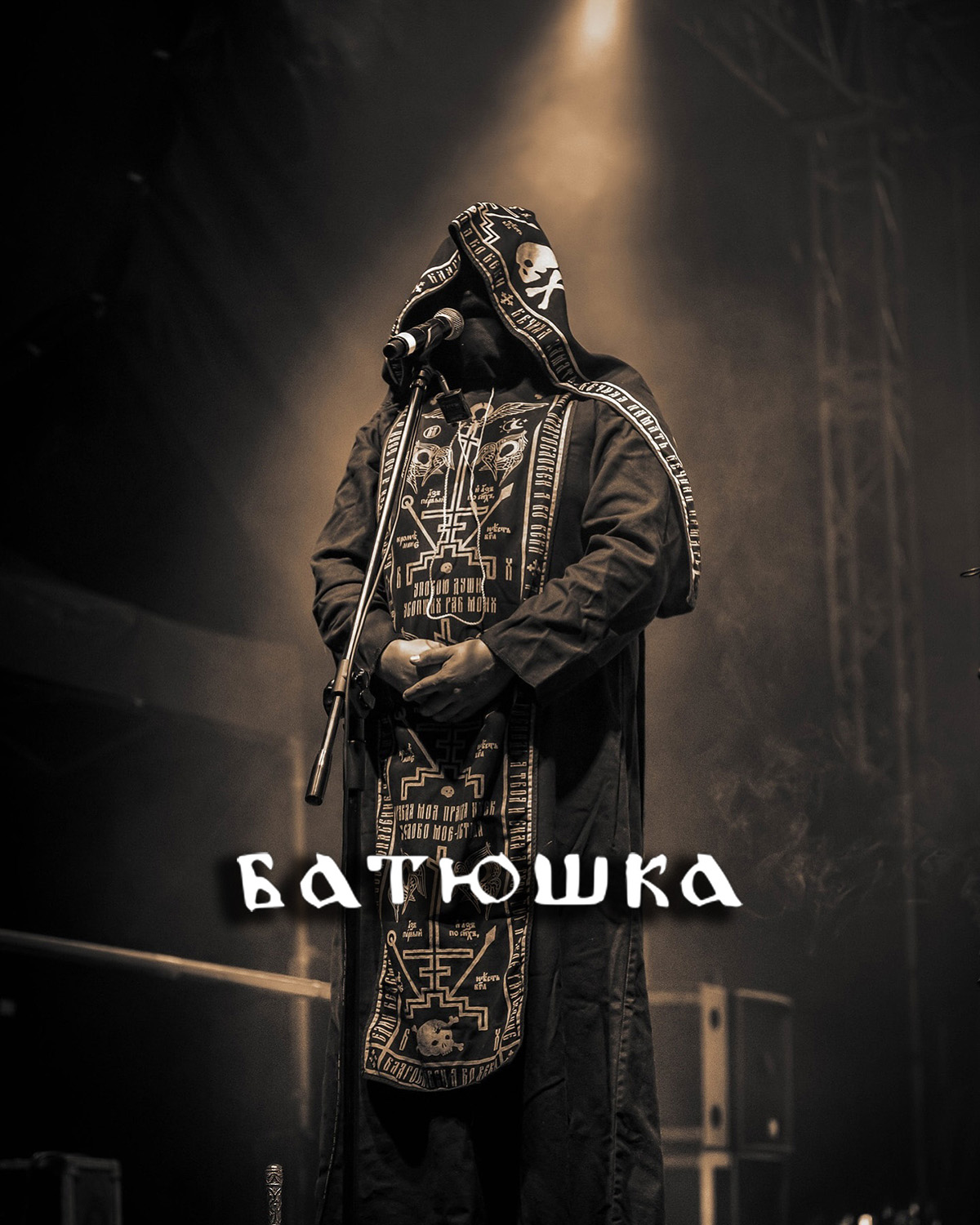
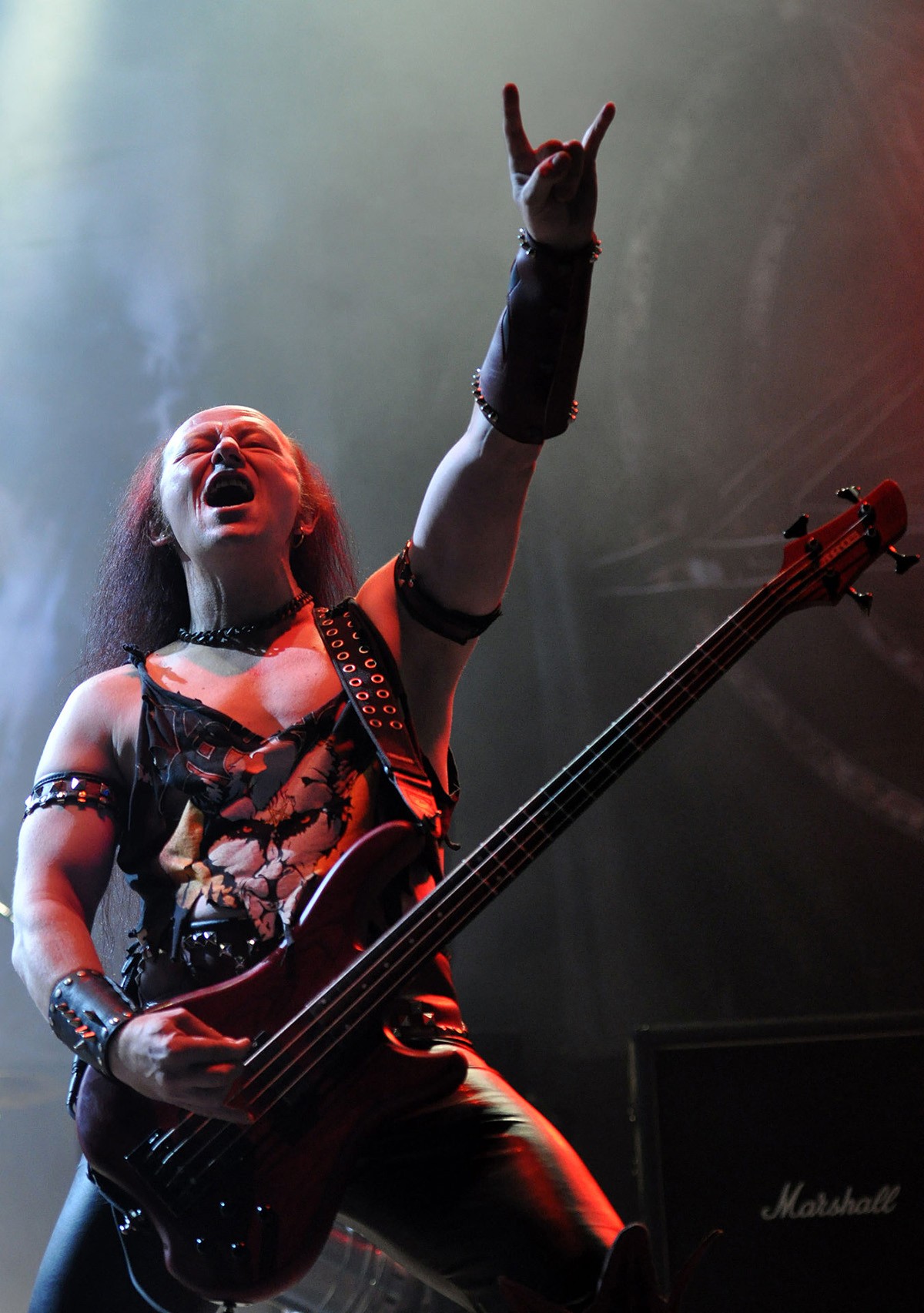
According to Venom's statement, Lant was 63; no cause of death was given. He leaves behind a record that gave a genre its name and a changed measure of what counts as worth noting in heavy metal. To understand that measure, one has to stop listening to Venom with the ears of the Norwegian records of the 1990s. Welcome to Hell and Black Metal have no tremolo riffs and no cold distance. They have riffs rooted in the blues and the swing of rock'n'roll, and at the front stands a showman playing to the audience. Lant explained the difference to Classic Rock: "Ozzy was singing about the Devil. I wanted to be the Devil."
A borrowed bass, a guitar amp
Lant did not found Venom; he joined later. The core of the band was guitarist Jeffrey Dunn's Guillotine of 1978. In August 1979 vocalist Clive Archer and drummer Tony Bray arrived from Oberon. Lant, who had been playing guitar in Dwarfstar, joined that November, again as a guitarist. In February 1980, a week before the first concert in Wallsend, bassist Alan Winston left and Lant took over the bass. He plugged the borrowed bass into his own guitar amp and fuzz pedals. The tone known as the "bulldozer bass" came out of that necessity. A distorted bass run through a guitar amp loses its fullness in the low frequencies, piles up in the mids and enters the same space as the guitar. In my view this is why Venom sounds so crowded for a three-piece and so empty at the bottom.
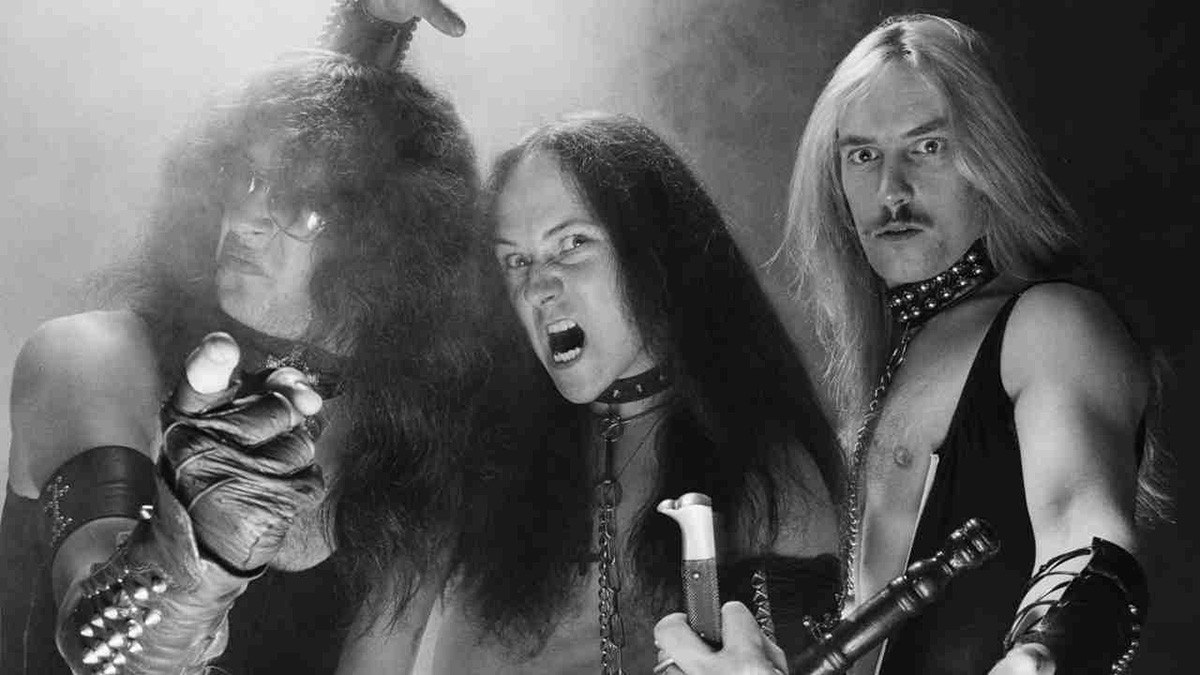
The vocal did not come as planned either. After the six-song demo session of October 1980, made for fifty pounds, Dunn and Bray preferred Lant's voice to Archer's. That Archer's stage name was "Jesus Christ" shows that the imagery later read as solemn occultism was mixed with mockery from the start. The names Mantas, Cronos and Abaddon were taken in the same days.

Used tape, three days
The least discussed part of the story is its infrastructure. After school, through a state-funded programme meant to give young people a trade, Lant joined Impulse Studios and worked as an assistant engineer and tape operator. He pressed David Wood, the owner of the studio and of Neat Records, for a long time to record the band. According to what Mantas told Decibel, Wood asked one day, "Do you have enough songs for an album?", and gave them three days. In August 1981 they recorded with engineer Keith Nichol, on 24-track tape that had already been used for another recording. No new tape had been bought. Mantas had a Marshall, a fuzz pedal and a copy Flying V. The theory he knew amounted to a single pentatonic shape and the power chord.
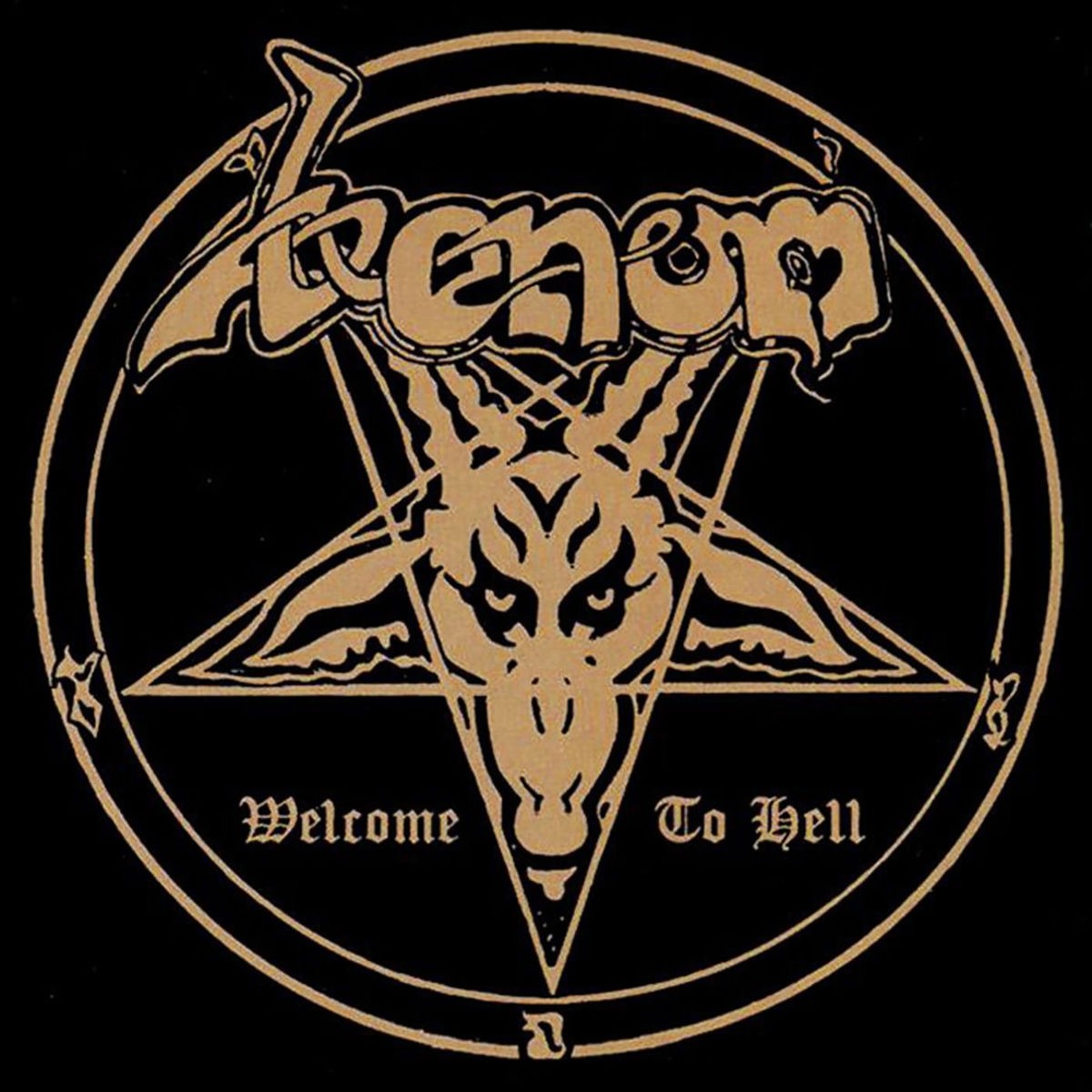
Cronos says they took these recordings for demos and the company said, "We like it like this, this is how we're pressing it." Geoff Barton, who gave the album five stars in Sounds when it came out in December 1981, wrote that the sound had "the hi-fi dynamics of a 50-year-old pizza". The description is apt. There is no room sound around the drums; guitar and bass stand in the middle as a single mass. The stereo width is almost nil. The remaster made from the original tapes for the 2019 In Nomine Satanas box does not change this near-mono stance.
No conclusion such as "they couldn't play, so they were original" follows from this. Technical inadequacy produces nothing by itself. What set Venom apart was that, with those limited means, it could write songs that stuck. "Witching Hour" takes its speed from the insistence of a single riff. "In League with Satan" is built to be shouted along with the crowd. Mantas ties the swing in "Poison" to the big band records his father listened to. Lant's vocal leans on the weight of syllables, not on melody. In 2023 Mantas said that if he wrote the "Witching Hour" riff today he would probably press the "delete" button. The first two albums were recorded before that reflex of elimination had formed.
Six days of recording, one day of mixing
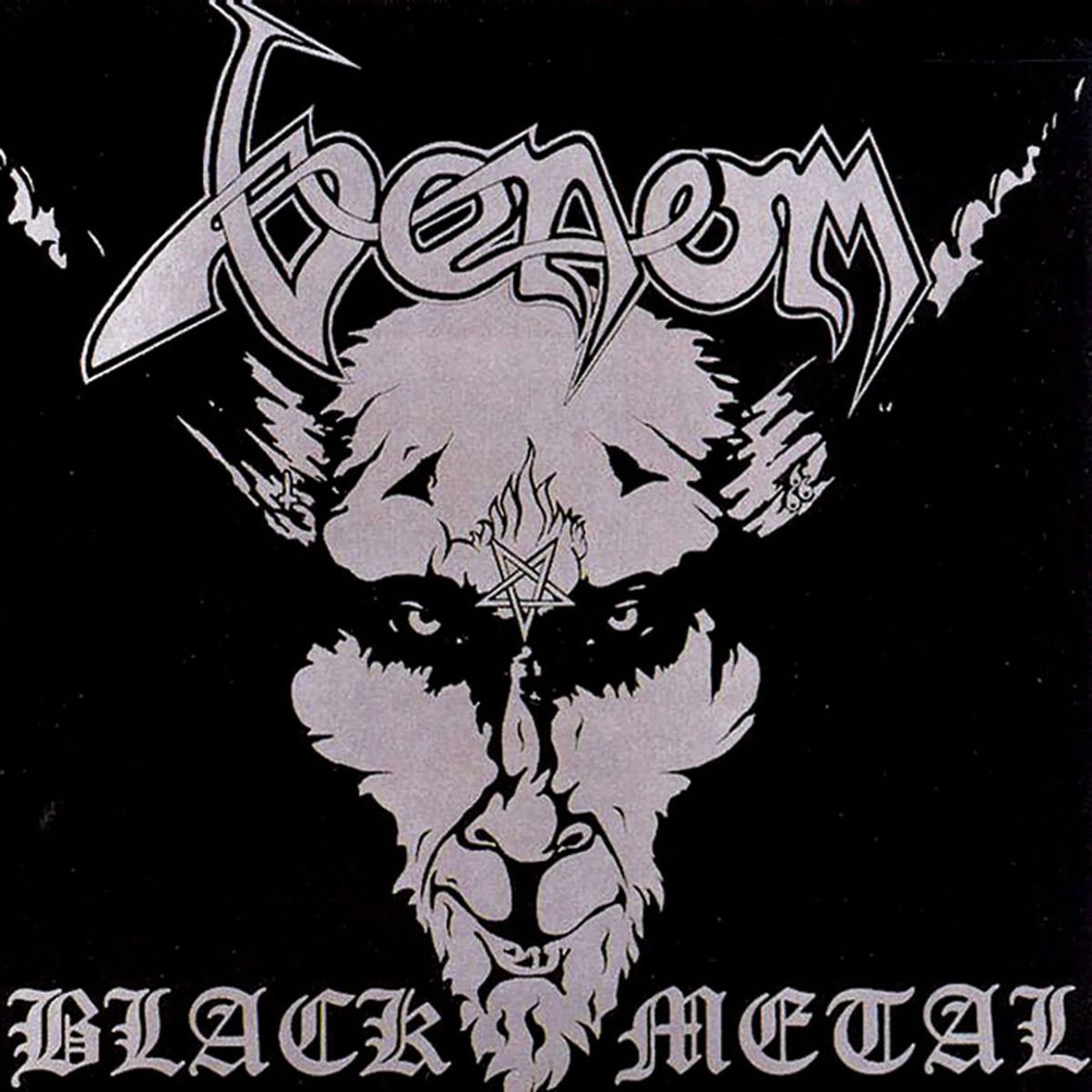
Black Metal, released in November 1982, was made in the same studio, again with Nichol, this time with six days of recording and one day of mixing. The difference can be heard. The solos were added afterwards and the vocals sung again. The noise at the opening comes from the days Abaddon worked in a steel factory. Lant was looking for an unsettling sound to start the album, and Abaddon suggested metal scraping on metal. Large pieces of steel were carried into the studio, clamped in a vice and cut with a chainsaw. The record was cut so that this sound starts the moment the needle touches the vinyl.
For the sound of the burial in "Buried Alive", Cronos has two separate accounts. In 2010 he spoke to The Quietus of a coffin with a microphone inside it. He described to Metal Hammer cardboard boxes lined up in a stairwell, each with a microphone inside, and mud thrown onto them with shovels. The second is more detailed, but no independent source says which is true. The title track came out of Lant's suggestion, "let's play it as fast as we can, for a laugh". He says he came up with the words "black metal" to set the band apart from the ordinary heavy metal of the time. That the phrase became the name of a genre was the work of later bands.
Role and humour
Lant's Satan was a part he played; it cannot be read as a statement of faith. In The Quietus he said that when an actor does the same thing nobody makes a sound, but when a musician does it he gets into trouble. In 1995 he told Voices from the Darkside that the band took its work very seriously but left room to laugh at itself. The note on the sleeve of Welcome to Hell is an example of that room: if the record is scratched or warped, you are asked to throw it away and buy a new one. He also ties "Teacher's Pet" on Black Metal to his childhood admiration for Status Quo. The absolute consistency between faith and music that later black metal circles looked for does not fit Venom.
It is also Lant who says he drew the covers of the first two albums himself. The goat's head inside the pentagram was plain enough to stay legible on a photocopy and a T-shirt print. Even so, it would be wrong to count Venom as the work of one man. The middle section of "Countess Bathory" is, in Mantas's own words, a salute to Judas Priest's "The Ripper".

A twenty-minute song, the book that never came out
One side of At War with Satan, released in April 1984, is taken up by a single track of nearly twenty minutes. Lant told Guitar World that behind it lay his admiration for Rush and a wish to do something like 2112. In the same interview he also describes how decisive watching the Sex Pistols was for him. This tension between punk and progressive rock explains Venom's character well. He had written the story in his school years. The sleeve was designed to look like a leather-bound book, because a text of about a hundred pages called The Book of Armageddon was to be published with the album. The book never appeared. All we have of its existence is Lant's own statement.

A year later the title track of Possessed entered the PMRC's "Filthy Fifteen" list on grounds of occult content and became material for the US Senate hearing of September 1985. This was not a ban but pressure to label. Lant says he found it very amusing. Venom's influence was working from somewhere else at the time. Metallica opened for Venom in the US in 1983 and on the Seven Dates of Hell tour in Europe in February 1984. According to Lant, Mayhem and Burzum had also sent him their first demos.
Afterwards
The classic trio did not last long. Mantas left in 1986, Lant moved in the late 1980s to a band bearing his own name, and Venom carried on for three albums with Tony "Demolition Man" Dolan. The reunion of 1995 produced Cast in Stone in 1997 but did not last. In 2022 Lant put the chance of the old line-up getting back together at "less than zero". In the early 1990s, meanwhile, he went to college and worked as an aerobics instructor. In the early 2000s a rock that fell on his neck while he was climbing in Wales kept him from playing bass for a long time; in that period he learned Photoshop and worked for a computer company in Newcastle. He also tells for himself that he dyed his hair red with henna because of his admiration for Kate Bush.
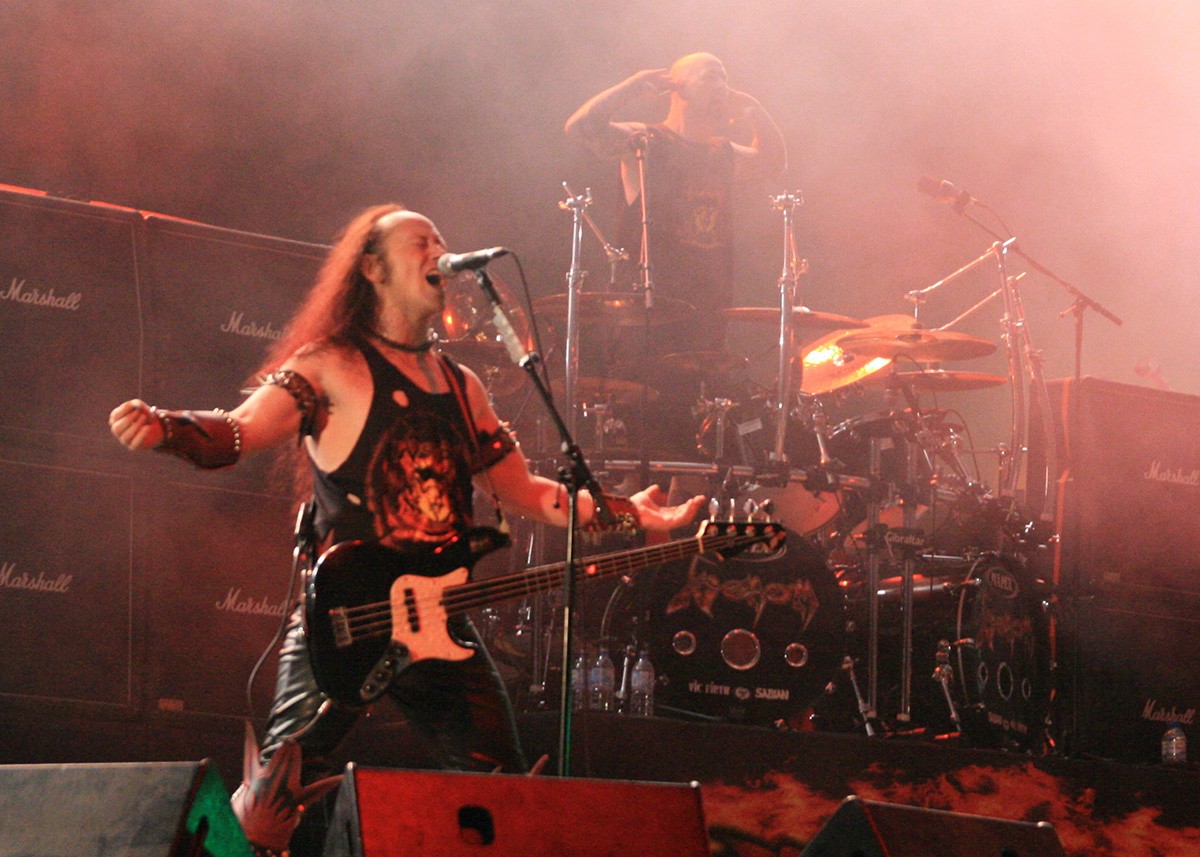
The last album, Into Oblivion, came out on 1 May 2026, with Rage on guitar and Danté on drums. The first single was called "Lay Down Your Soul", and it returned, more than forty years later, to the call in the chorus of Black Metal. In his farewell message Mantas wrote that, despite the turbulent past, he remembered the "one for all, all for one mentality" of the first years. Lant's son Nathan borrowed the words of the same song: "He has laid down his soul, and his music will live on."
- A note on sources
- Assessments of the sound (bass tone, drum sound, stereo image) are editorial judgement.
- The death announcement and statements
- Kerrang!, Metal Hammer/Louder, Decibel, Consequence, 1 October 2026.
- Nathan Lant: "He has laid down his soul, and his music will live on."
- Mantas's message: Blabbermouth and Loudwire ("one for all, all for one mentality").
- Early chronology
- venomcollector.com (Eternal Support)
- Geoff Barton, "The True Story of Venom", Classic Rock/Louder, 7 January 2019.
- The Welcome to Hell recording
- Mantas, Decibel, 6 December 2021 ("do you have enough songs for an album?").
- Mantas, Blabbermouth, 31 October 2023 ("press the 'delete' button").
- Geoff Barton, Sounds, 1981: "the hi-fi dynamics of a 50-year-old pizza".
- The Black Metal recording
- John Doran, Metal Hammer/Louder, 28 September 2024.
- Paul Elliott, Metal Hammer/Louder, 14 December 2022 ("six days of recording, one day mixing", "less than zero").
- John Doran, The Quietus, 14 January 2010.
- Humour, covers, the book
- Frank Stöver, Voices from the Darkside #9, 1995.
- The reference to "The Ripper": Mantas, Voices from the Darkside, 6 October 2022.
- Rush and the Sex Pistols
- Jeff Kitts, Guitar World, 19 November 2008.
- Life offstage
- Dave Everley, Classic Rock/Louder, 1 October 2026 ("Ozzy was singing about the Devil. I wanted to be the Devil.").
- Other
- The PMRC "Filthy Fifteen" list and the Senate hearing of 19 September 1985.
- Review of the In Nomine Satanas remaster: The Audiophile Man.
- Into Oblivion: MetalTalk and Consequence.