 Audi tenebras inter cortices
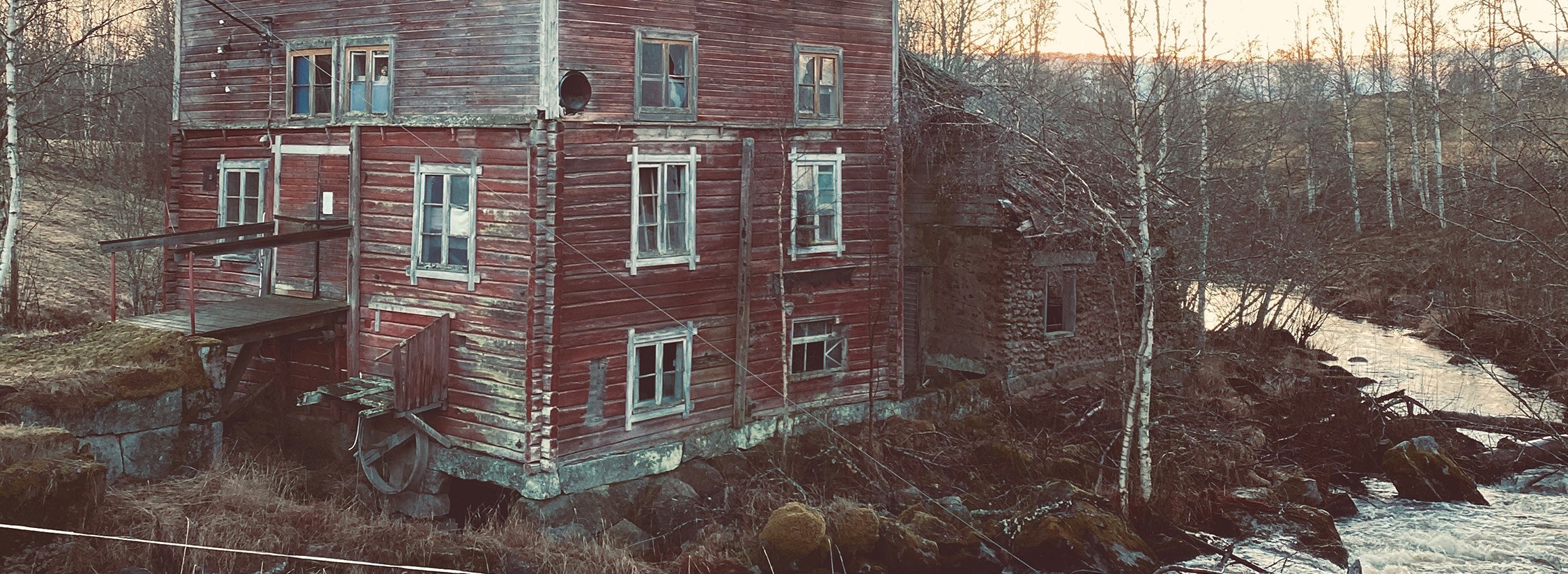
All Tomorrow's Darkness is Liminal Sky's first album; even so, it sounds less like the excitement of a beginning than like the weight of something carried for a long time. Producer Jaime Gomez Arellano and guitarist Daniel Knight had played together before, in Messenger. Liminal Sky is not a continuation of that band; it gives a new form to the darkness that had built up within the same partnership. By Gomez's account the album took five years to finish, and for him the recording marked the close of his years in England. The album came out on Karisma Records on 19 June 2026 and runs to fifty-six minutes.
Grief, insomnia and a grey sky
Beneath the album lie grief, insomnia, Gomez's years of clinical depression and the stillness of the pandemic. Its core is made up of tracks the duo recorded on their own, cut off from the outside world, at Orgone Studios in the English countryside; additional recording took place at The Friary Studios in Bedfordshire and at The Smokehouse in London. The band's press text says the fields outside the window and the unchanging grey sky seeped into the songs like an instrument. Something in the recording bears this out: the darkness sounds less like a subject for songs than like weather you live inside.
The duo form the album's musical backbone. Knight plays guitar, bass and keyboards; Gomez plays drums, guitar and keyboards, and they wrote and arranged all the music together. Production, recording, mixing and mastering are entirely Gomez's work. That ear, known from records by Ghost, Opeth, Paradise Lost and Ulver, is the album's most defining element. Despite a guest cast of more than ten people, the album does not come apart, because every contribution sits within the same approach to the mix. The guitars, which the press text calls "widescreen", are the album's main material; the vocals, in most places, are set inside those guitars rather than pushed to the front.
McNerney and the slow loss
Mat McNerney, known from Hexvessel and Grave Pleasures, sings on six of the nine tracks and wrote nearly all the lyrics; Knight contributed some lines. The lyrics and vocal arrangements took shape in Finland, together with Gomez and Knight. At the emotional centre of the album is McNerney's mother. She slipped away slowly with Alzheimer's and died not long ago. The grief here does not begin with a sudden death. It stretches over years of witnessing the unravelling of a person's memory and personality while she is still alive. That is also why McNerney's lyrics hold no definitive farewell.
The opener, "Some Other Time", was written in the shadow of two losses: Gomez losing someone close to Covid, and the illness of McNerney's mother. The band describe it as a song about "the pain of love without saying goodbye". Lars Horntveth of Jaga Jazzist plays saxophone, synths and lap steel, and they open the track up beyond the classic post-rock mould. As the guitars widen, the saxophone does not decorate the melody; it opens a thin crack inside the sound. Horntveth plays on four tracks of the album in all.
Kristoffer Rygg of Ulver sings on "A Solitary Future". The delivery is not as distant or estranging as it is in Ulver; the voice comes from afar and almost seeps out of the space itself. The solitary future of the title suggests less a new beginning than the emptiness a person is left in, alone, after all the losses.
An Ulver session
The album's most intense track, "In Some Secret Universe", is in fact a small Ulver gathering. Tore Ylwizaker's piano, Ole Alexander Halstensgård's keyboards and Ulver's live percussionist Anders Møller all appear on the same track, joined by Alicia Nurho's violin and viola. Ylwizaker died in August 2024, and the label presents this piano as one of his last recorded performances. The piano has not been turned into a memorial gesture. It appears as a brief figure and withdraws; at times its presence is only noticed afterwards. The track itself opens onto the thought that the lost person lives in another, unreachable universe. This universe is not a picture of an afterlife; it is more like a region memory can no longer reach. "Forget Me Not", which follows straight after, voices the wish not to be forgotten more directly.
"Penance", the first track Gomez finished, is tied to his experience of depression. Karin Park of Årabrot brings a vocal broader and more physical than McNerney's inward, cracking voice. The album's world does not change; a harsher face of the same darkness comes into view. On Rygg's second track, "The Weight of Heaven", the voice does less to bring the lyrics forward than to hang like a shadow trembling inside the music. Here Rygg does not only sing; alongside Møller's percussion he also contributes percussion and effects. Here the closeness to Ulver is felt most clearly, but Liminal Sky's language stays more direct and more personal.
"Algebra of Unknowing" is one of the tracks with the densest lyrics. The wish to set up an equation in the face of loss calls up the desire to solve pain with logic, but the calculation yields no result. As the layers of guitar and keyboard multiply, the answers do not grow clearer. The images of sea and parting reach their most concentrated form in "Oar on the Mooring"; there is movement in the wave-like advance of the guitars, but this movement leads nowhere. The closing title track opens with a ceremonial vocal introduction by Daniel O'Sullivan, who is also a member of Ulver. In McNerney's lyrics the darkness reaches from the future into the past, as far as the childhood home. The threat is not far away; it has settled inside memory and inside the house.
Rises without a summit
Liminal Sky use the wide guitars and slow build-ups of classic post-rock, but they do not carry every track to a grand finale. Some sections rise and pull back; others stay in their own darkness without reaching a peak. This is the album's strongest choice. Depression sounds here less like a dramatic outburst than like the same thought refusing to move for a long time. It is no accident that Talk Talk's Spirit of Eden appears on the label's "for fans of" list; the room given to silence and emptiness is familiar from that record.
The choice has a cost. Because most of the nine tracks move at a similar emotional temperature, the borders between them blur on first listen. Angry Metal Guy's review also notes that the plain songwriting makes the album easy to listen to, but that some instrumental ideas repeat. The album flows less like separate songs than like one long night. The character of individual tracks weakens; the effect of the whole grows stronger. All Tomorrow's Darkness is not a collection to pull singles from but a record that asks you to stay in the same inner climate from beginning to end.
The cover is part of this climate too. Gomez took the photograph in a desolate landscape in Sweden, while listening to the album's first demos. A lone house stands in the frame. Life has not withdrawn entirely, but it is distant; you have to look carefully to notice it. Light appears on the album the same way: it is not enough to dispel the darkness, but for a short while it lets you find your bearings.
The album does not take refuge in a story of rebirth after loss. It accepts that one cannot go on as the same person, and asks whether it is still possible to make music from there. Gomez says he has started writing the next album, but adds that this record has not let go of him: "Every sound still feels connected to a difficult chapter in my life."
- Credits and recording details
- Liminal Sky Bandcamp page
- Discogs (CD edition)
- The Progressive Subway (August 2026)
- Press text and quotations
- Karisma Records press text (March 2026): Gomez's quote and the description of "Some Other Time", given here in the original English.
- Reviews
- Angry Metal Guy (June 2026)
- RockmusicRaider (July 2026): the detail about the house on the cover