 Audi tenebras inter cortices
Bovver Boots: From Pain to Rebellion, from Rebellion to the Shop Window
"Bovver" is the English word "bother" (as in trouble) said in a London working-class accent. In Britain in 1969 the word took on a new meaning: skinhead gang fighting, violence on the street. The same year two new compounds were recorded for the first time: "bovver boy", a youth from the gang, and "bovver boot", the heavy, laced, often steel-toed boot on his feet. In March 1970 Nik Cohn, writing in the New York Times about Britain's new youth movement, spoke of these boots as the means of delivering kicks to the ribs of someone lying on the ground.
This is not the story of a single brand. "Bovver boot" is the name of a type of boot; Dr. Martens is its best-known example, but other brands that came out of the same shoemaking district, often from the same factories and on the same lasts, are also part of this story. The story itself traces an arc: from a doctor's aching ankle to the working-class work boot, from there to the uniform of the skinhead, the punk and the Oi! kid, and finally to the shop window of a fashion brand traded on the stock exchange.
Pain
The story begins with a war and a skiing accident. Klaus Märtens was a doctor in the German army during the Second World War. In 1945, skiing in the Bavarian Alps while on leave, he injured his ankle and found the army's standard boots too hard on his healing foot. While recovering he designed himself a boot of softer leather with a sole that absorbed impact. When the war ended, materials were scarce. In 1947 in Munich, Märtens ran into an old university friend, the engineer Herbert Funck; that same year, in Seeshaupt, the two began making their first soles by moulding waste rubber collected from Luftwaffe airfields.
The first customers bore no resemblance to the boot's later image. In the first decade, eighty per cent of sales went to women over forty; housewives on their feet all day were looking for the same comfort Märtens had wanted for his ankle. By 1952 sales had grown enough to call for a factory in Munich. In those years the boot was a product that eased pain, not a street identity. Rebellion would come much later.
Northamptonshire
In 1959 Märtens and Funck decided to market their product abroad. Northamptonshire, in the middle of England, had been the country's shoemaking centre for centuries. R. Griggs, the Griggs family firm that had been making work boots in the village of Wollaston since 1901, saw an advertisement in a footwear trade magazine and bought the rights to manufacture in the United Kingdom. Griggs anglicised the name to Dr. Martens and reworked the boot. The heel was reshaped to fit better, grooves were cut into the edge of the sole, and the stitching that joins the sole to the upper was coloured yellow. The sole was named "AirWair", and a black and yellow heel loop reading "With Bouncing Soles" was added to the back of the boot.
The first boot in Britain came out on 1 April 1960: an eight-eyelet ankle boot in cherry red smooth leather. Its model number was the date itself, 1460. A year later the three-eyelet shoe followed as the 1461. Even today these two models account for more than half the company's revenue. In its early years the boot belonged neither to punk nor to the skinhead. It was for postmen, policemen and factory workers: a light, durable, comfortable work boot.
It is also a mistake to think of Dr. Martens as the product of a single company. According to Tredair's brand history, until 1983 Dr. Martens-branded boots were made by many manufacturers in Northamptonshire and elsewhere, who shared the work between them. Among them were White & Co. in Earls Barton, George Cox, NPS in Wollaston, Hawkins, GB Britton and WJ Brookes, later the subject of the Kinky Boots documentary and musical; in Australia, Blundstone was also among those making boots under the brand. In 1983 Griggs obtained exclusive rights to the brand from its owners in Munich. After that, the other factories had to carry on under their own names.
Solovair and the other factories
The oldest of these factories is NPS. It began in Wollaston in 1881 as a cooperative founded by five shoemakers; in the village it was known as "the Duffers", and its first big job was making boots for the army. By NPS's own account, Griggs had the patent but not the technology to join the sole to the upper. In 1959 NPS made the first sample air-cushioned boots for Griggs using the Goodyear welt method, that is, joining the sole to the upper with a strip stitched to both. For thirty-five years NPS made these boots under licence as "Dr Martens by Solovair"; "Solovair" meant "sole of air". Sources differ on when the licence ended; NPS registered the brand in its own name in the mid-nineties. In 2006, when the company ran into financial trouble, the local businessman Ivor Tilley bought it. Today, in the same factory, NPS makes Solovair alongside boots for brands such as Gripfast, George Cox, Vegetarian Shoes, Grinders and Tredair. A Solovair is told from a Dr. Martens by the green and black loop on the back of the boot and the words on it: "Made in England since 1881".
Tredair's story is similar. White & Co. in Earls Barton registered the Tredair brand in 1976 and sold its boots first as "Dr Martens Tredair" and, after 1983, simply as "Tredair". In the midsole the company used its own patented foam-injection system, springier than Dr. Martens' felt. The Earls Barton factory closed in 2006 and production moved to other factories in the area. Grinders is a brand that ties itself directly to skinhead and punk culture; by its retailers' account, it had its best years in the late eighties and early nineties.
Townshend's boots
The boot's arrival on stage is usually credited to Pete Townshend, guitarist of The Who. According to Martin Roach's book Dr. Martens: The Story of an Icon, Townshend started wearing the boots at gigs in 1966; he said they were ideal for running and jumping about on stage. For Townshend, who came from a working-class family, the choice was also a statement of belonging. Years later he would mention Dr. Martens in "Uniforms", a song about the dress codes of youth cultures.
The fighting boot
The culture's real owners, though, were the skinheads of the late sixties. The skinheads grew out of the "hard mods", who had broken away from mod culture with a tougher, more working-class look, and at first they wore heavy black army-surplus boots. Over time the yellow-stitched Dr. Martens became the boot of choice. A 1969 article on skinheads reported that these youths deliberately chose unfashionable clothes, that their heavy boots were usually two sizes too big, and that these were sometimes called "bovver boots". In a fight, steel-toed boots became weapons. As violence grew on the football terraces, fans were warned that they would have to take their boots off to get into matches.
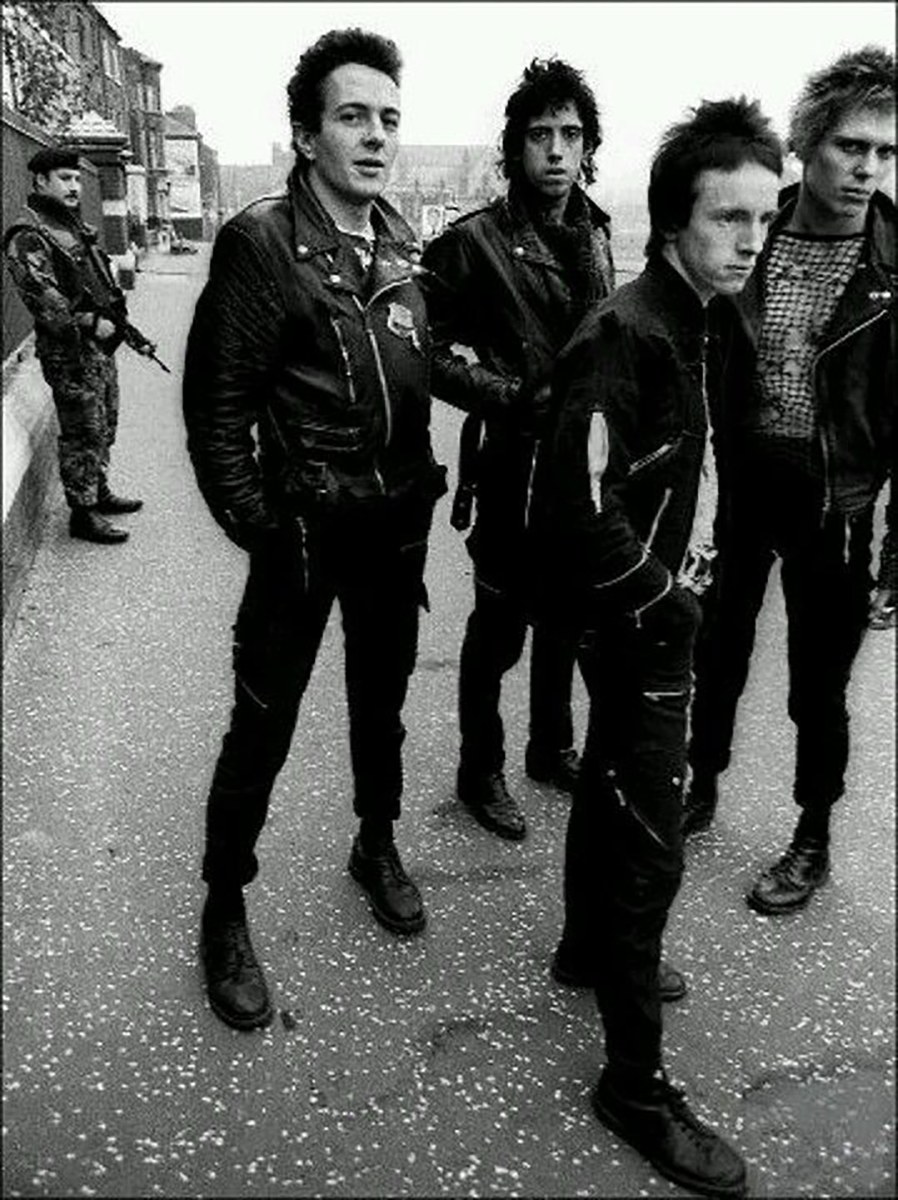
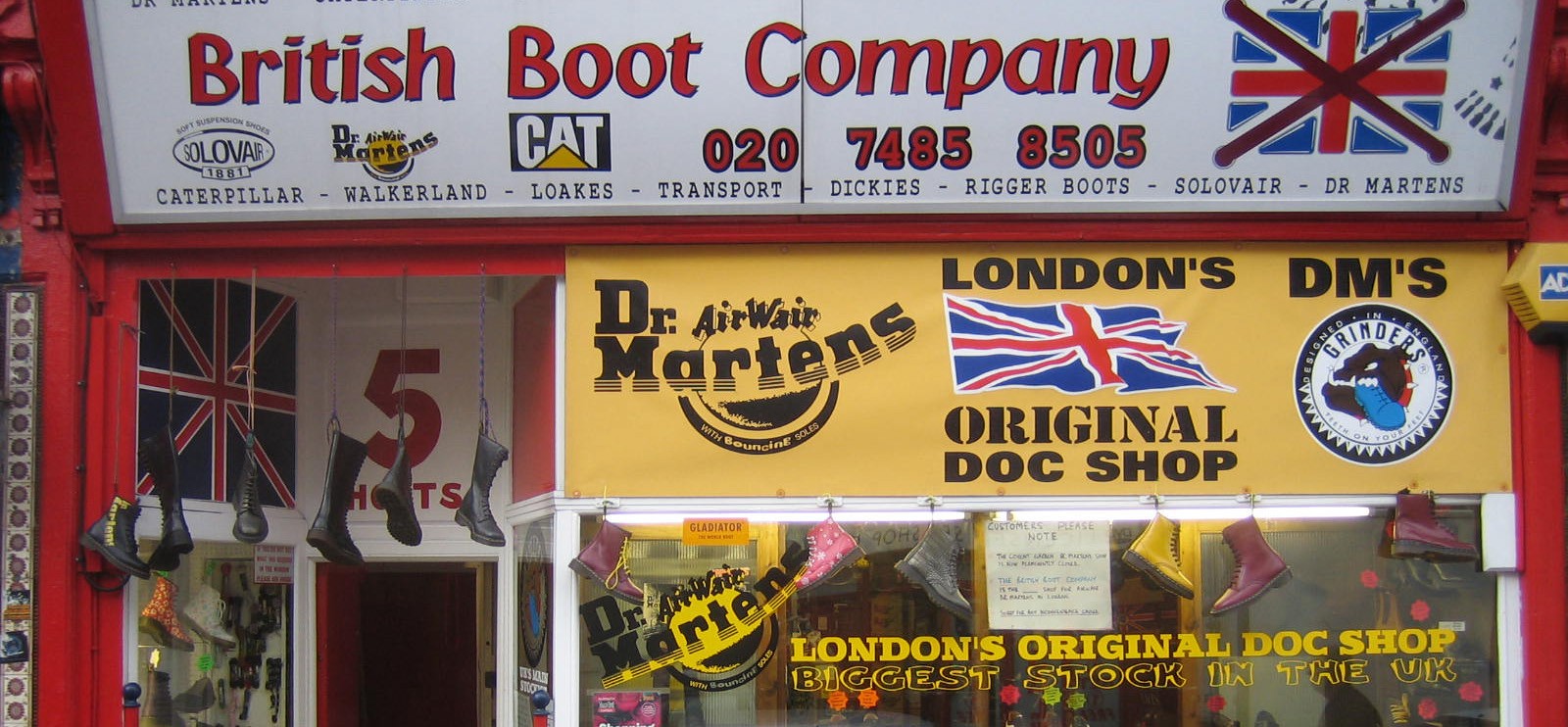
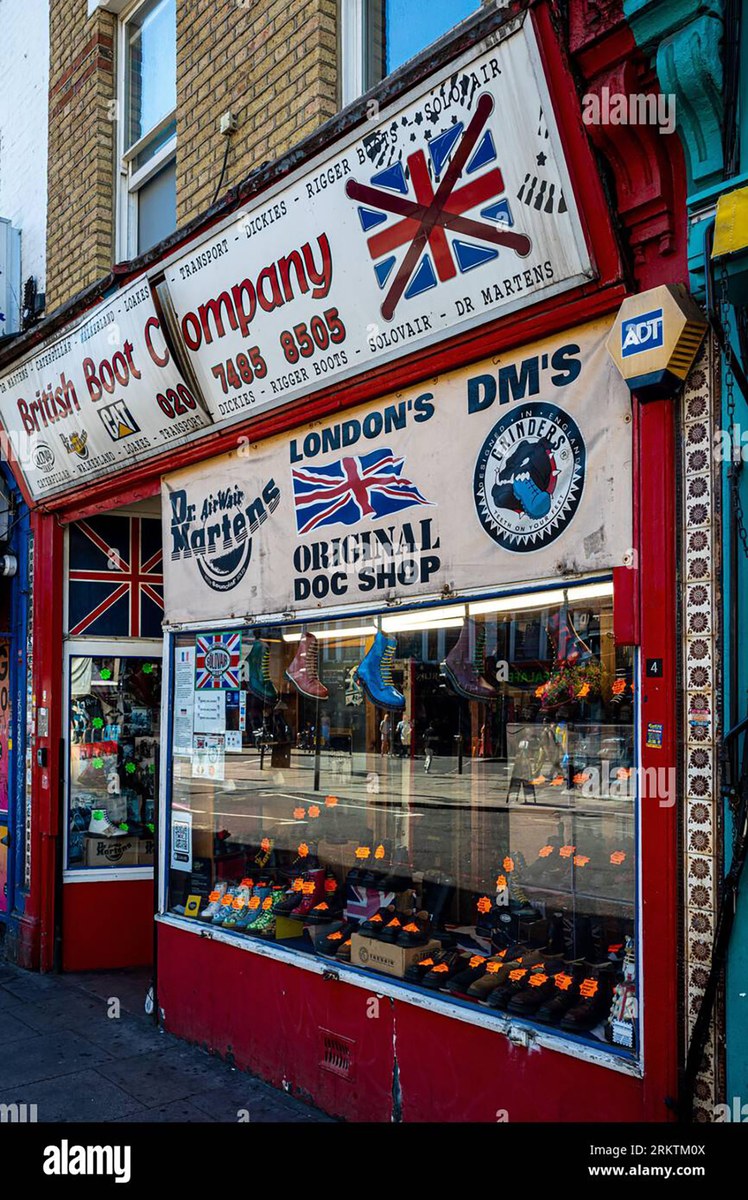
The London centre for these boots was a shop called Holts in Camden Town. Founded in 1851, the shop first sold hobnail boots to the Irish labourers working in the area; it became one of the first shops in Britain to sell Dr. Martens and later changed its name to the British Boot Company. In the late seventies and early eighties it became a place where skinheads and punks from all over the world came to buy bovver boots or the thick-soled shoes known as "brothel creepers". The owner, Alan Roumana, let customers he liked write the names of their bands or gangs on the walls. Members of The Clash, Sex Pistols and UK Subs were regulars; Roumana grew close to the North London Invaders, who would later become Madness. That writing is still on the walls today.
The punk boot
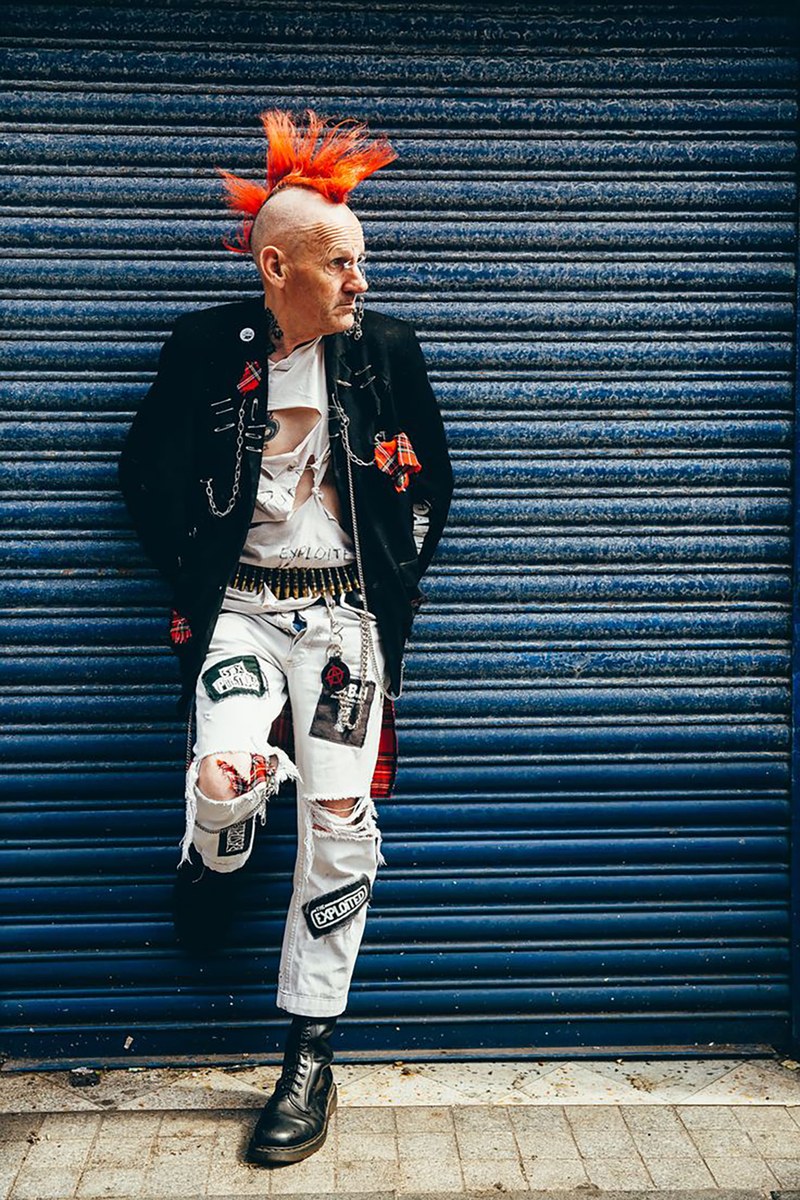
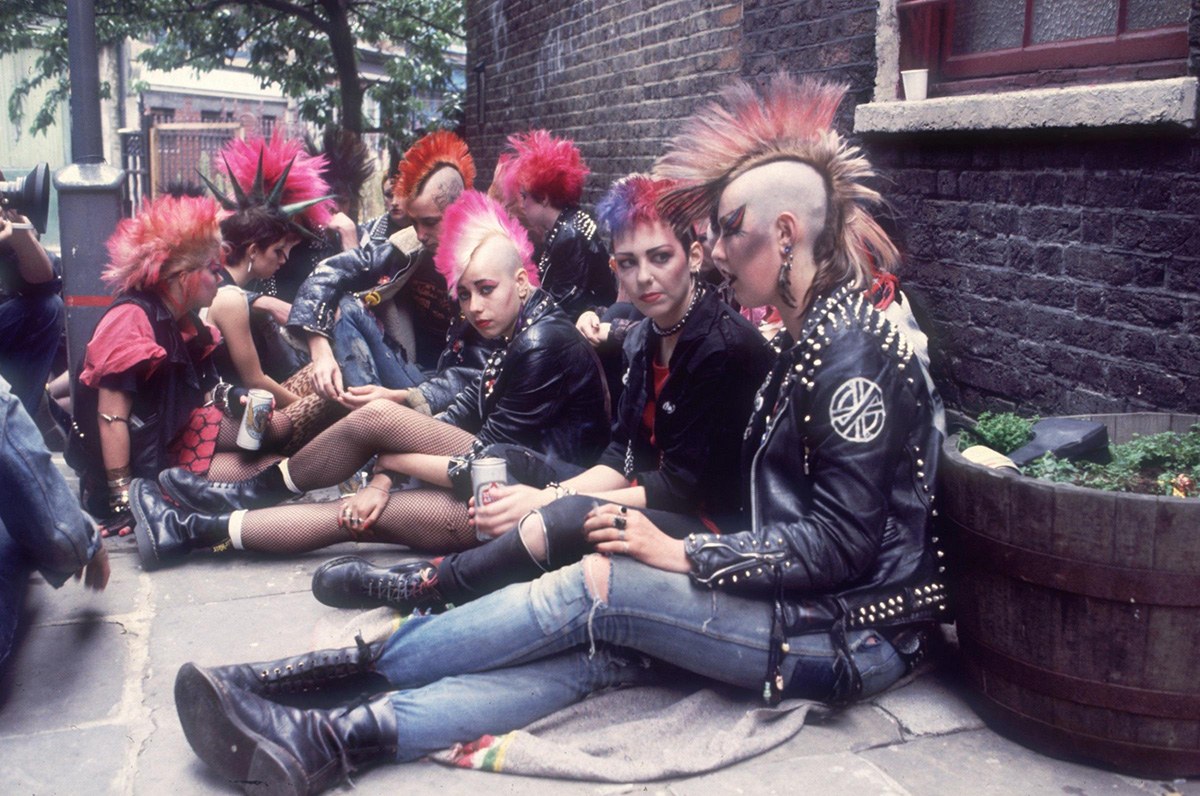
Punk inherited the boot from the skinheads, but changed its meaning. For the skinhead the boot was part of a working-class uniform, carefully blacked and polished. In punk the same boot was worn with a torn jumper, leather trousers and dyed hair, less as a class identity than as an attitude. Bands like The Clash and Sex Pistols wore Dr. Martens on stage. In the eighties goths, and in the nineties grunge fans, added the same boot to their own uniforms. Every subculture inherited the same boot and wrote its own meaning onto it.
The language of laces
The most talked-about and most misunderstood detail of the bovver boot is the colour of the laces. The ADL and the Southern Poverty Law Center, two organisations in the United States that monitor the far right, say much the same on the subject. According to the ADL, the boots are worn by racist and non-racist skinheads alike, but racist skinheads often use white or red laces to present themselves as "white power" skinheads. Lacing straight across like the rungs of a ladder, so that the laces never cross over each other, is also common in these circles. In some racist groups white or red laces have to be "earned" through violence. The SPLC's glossary likewise defines white laces as a "white power" sign and red laces as a sign that blood has been spilled for the movement. The ADL also records a term that grew out of the boots' use in violence: "boot party", for attacks in which several people together kick someone on the ground.
But the code was never universal. The ADL itself stresses that symbols must always be read in context and that very few carry a single meaning. Red laces were read as a neo-Nazi sign in some places, while elsewhere they stood for a socialist or anarchist stance. In some accounts yellow laces appear as the colour of anti-racist skinheads; in others they have no particular meaning at all. The same colour could carry opposite political meanings from one city to the next. For most people, though, a lace was a lace, left as it came out of the box, and meant nothing. That is why, even today, the colour of someone's laces is no reliable way of telling who they are.
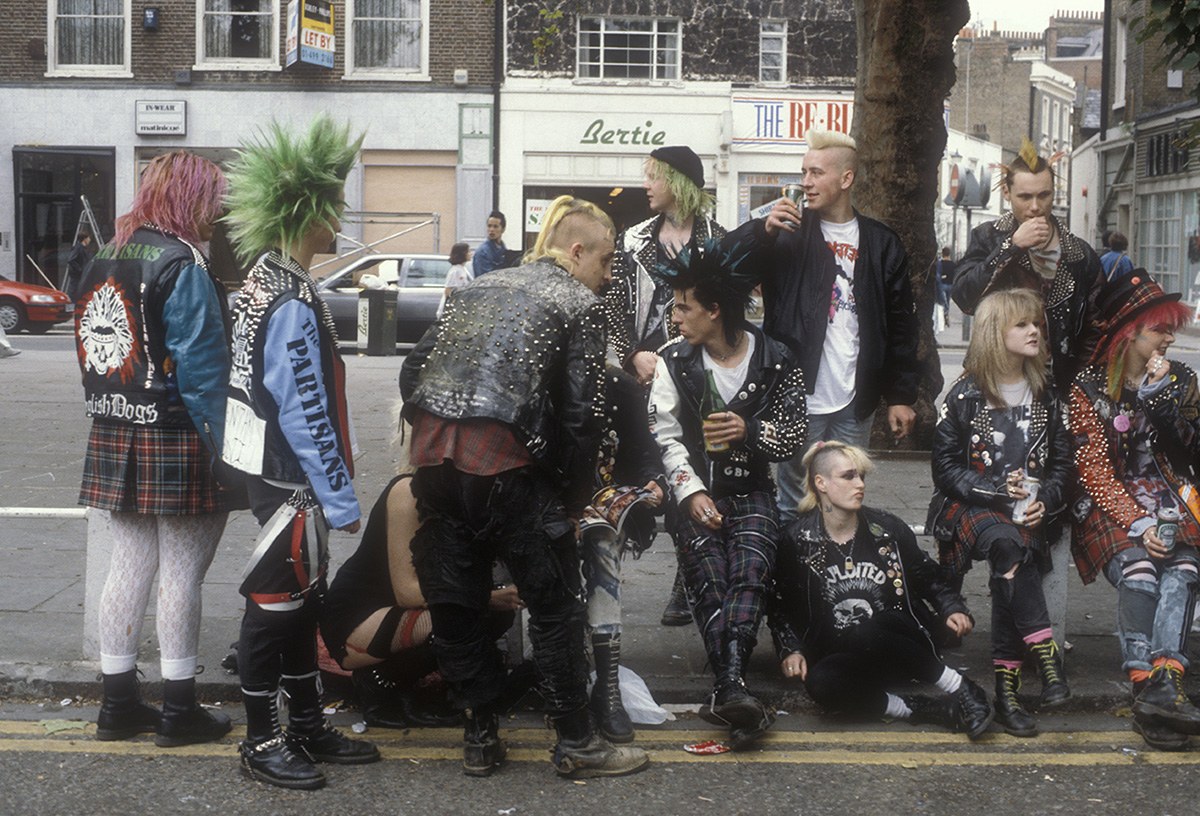
Anti-racist skinheads built an identity of their own as well. In 1987 in New York, Marcus Pacheco came up with the name Skinheads Against Racial Prejudice (SHARP). The aim was to take back skinhead culture's multiracial roots, in the British working class and in Jamaican music, from the neo-Nazis trying to claim it. In 1989 Roddy Moreno, singer of the Welsh Oi! band The Oppressed, met SHARP members in New York; back in Britain he designed a new SHARP logo inspired by the Trojan Records logo and carried the idea to British skinheads. SHARP skinheads called racist skinheads "boneheads". Both sides wore the same shaved heads, the same braces and often the same boots; the difference usually lay not in the clothes but in the badges, the music and the fights.
The break: 2003
By the end of the nineties the boot had become a worldwide fashion item, and that success had a price. Sales collapsed in the early 2000s and in 2003 the company was brought to the brink of bankruptcy. The answer was to stop most of its production in England and move it to China and Thailand. The Cobbs Lane factory in Wollaston carried on making a small "Made in England" line. According to Tredair's history, customers in this period assumed Dr. Martens had always been a single company and showed no interest in the small brands still making boots in England.
In 2007 an advertising campaign put the brand's relationship with the subculture to the test. In a series of ads made by Saatchi & Saatchi, Sid Vicious, Kurt Cobain, Joe Strummer and Joey Ramone floated in heaven wearing nothing but a sheet, with Dr. Martens on their feet. Courtney Love, Cobain's widow, called the ads "despicable". Dr. Martens apologised and terminated its contract with the agency. Using dead punk and grunge icons for sales had made it plain that the subculture's memory was now marketing material.
The stock market
The following decade saw the brand reborn as fashion. In 2013 the Griggs family sold the company to the private equity firm Permira for about £300 million; according to MoneyWeek, however, actual ownership of the brand stayed with the Griggs family, and Permira acquired the right to use it in perpetuity. Under Permira the number of shops and online sales multiplied. In January 2021 the company floated on the London Stock Exchange. At 370p a share, the listing valued the company at £3.7 billion, and the offer was eight times oversubscribed. According to Fortune's report that year, the company was selling about 12 million pairs a year, and the 1460 alone made up 42 per cent of sales.
The rise did not last. Less than three years after the flotation the share price had fallen below 100p. A run of profit warnings, warehouse problems in the United States and complaints about quality after production moved to factories overseas came to dominate the company's agenda. In the same period the boot had become an established fashion piece; there were collaborations with luxury designers, and "lace code" guides and videos guessing people's identity from their lace colour circulated on social media. The boot once barred from the terraces was now sold in shopping centres all over the world.
The wall in Camden
The bovver boot's value in the subculture came from its toughness, from the pain it put you through until it fitted the foot, and from the fact that who wore it meant something. For the skinhead of 1969 the boot was a uniform, worn even when it was two sizes too big. Today the same boot stands in a fashion catalogue in dozens of colours and styles. Like every object that passes from subculture to trend, the boot lost the distinction it once carried as it spread; who wears it no longer says anything.
Yet the two ends of this story still stand side by side. Dr. Martens' global headquarters and design studio are today in London, in Camden Town. In the same neighbourhood, the walls of the British Boot Company, once called Holts, still carry the band and gang names that skinheads and punks wrote there in the late seventies, with Alan Roumana's permission. And in Wollaston, NPS still stitches boots on the lasts and machines it used for the first air-cushioned boots more than sixty years ago; this time they carry its own name.
Source note
- Brand history
- Wikipedia: Dr. Martens, Solovair, Tredair, Bovver boot, British Boot Company entries
- NPS Solovair's official history
- Northants Live (2020 and 2021)
- The British Boot Company's own website
- Word history
- Word Histories (2022)
- Wiktionary: Nik Cohn's New York Times article, 29 March 1970
- Townshend
- Fortune (May 2021), drawing on Martin Roach's book
- Laces and the far right
- ADL Hate Symbols Database: "Boots and Laces"
- SPLC: "Racist Skinhead Glossary"
- SHARP
- Wikipedia
- DIY Conspiracy: interview with Marcus Pacheco (2026)
- The advertising crisis
- Marketing Week
- The company and the stock market
- MoneyWeek (September 2024)
- Fortune (2021)
- FashionNetwork (April 2024)
- IG (November 2023)
- NeTT (2026)