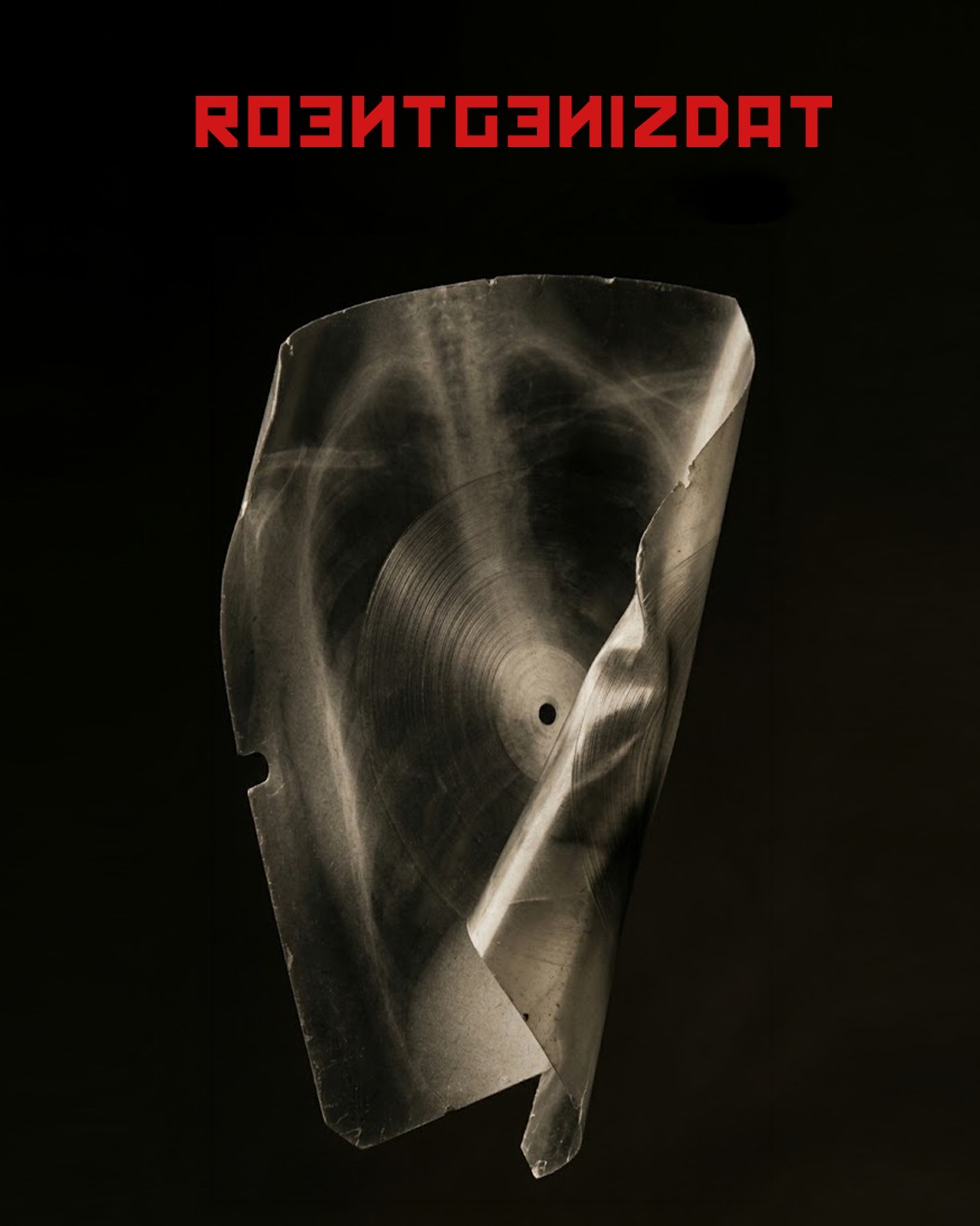
 Audi tenebras inter cortices
Magnitizdat: A Copy of a Copy of a Copy
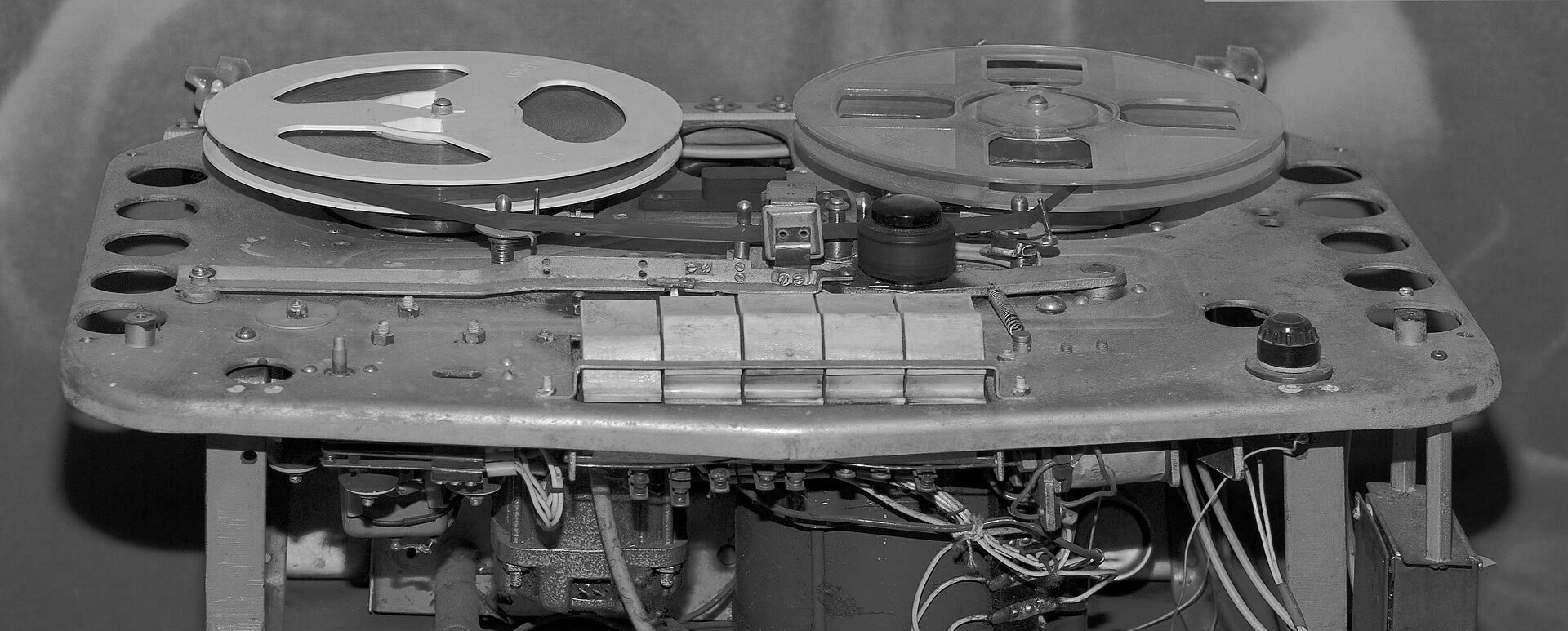
In one of his poems the bard Alexander Galich said that banned writers and singers had neither a stage nor an applauding hall. All they had was an Erika typewriter that made four copies and a Yauza tape recorder. That, for Galich, was enough. The poem sets two tools of Soviet underground culture side by side: text multiplied on the typewriter, samizdat, and sound captured on tape, magnitizdat. The word was a joking coinage built from "magnitofon" (tape recorder) and "izdatelstvo" (publishing house).
The two tools differed in a way that does not appear in Galich's poem but changed everything. Historians note that it was forbidden to make more than six typewritten copies of a document for distribution; copying tape had no legal limit at all. The state controlled the printing presses, but it allowed citizens to own reel-to-reel tape recorders. What is more, only the performer on a recording was held responsible for its content. According to the anthropologist Alexei Yurchak, magnitizdat slipped out of state control because the technology was so widespread and stayed within the private sphere. The Soviet state had raised a legal wall against samizdat but, without realising it, had never built one for tapes.
From bones to tape
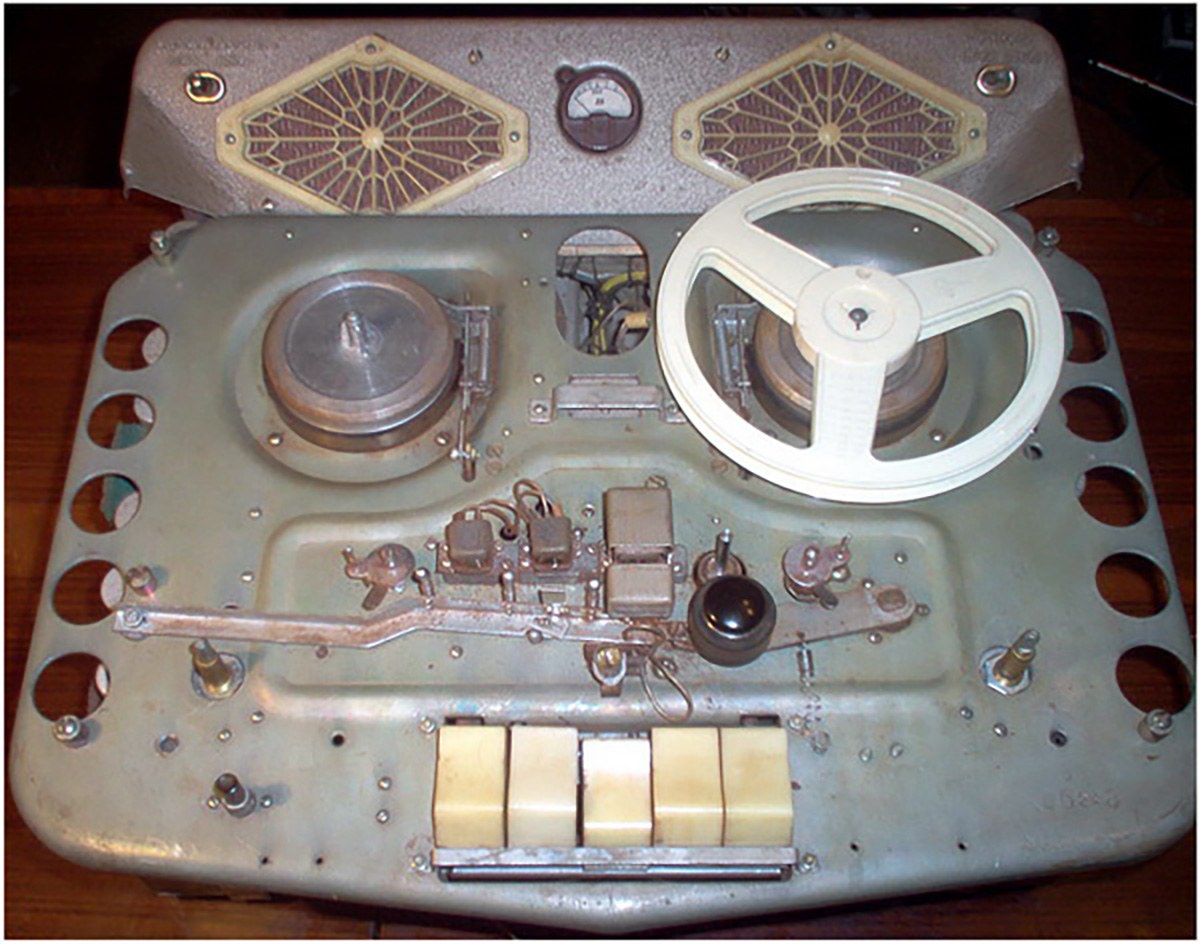
In the forties and fifties forbidden music was cut into X-ray film. In the sixties the tape recorder took over. The first Soviet tape recorders, models such as the Elfa-6 and the Dnepr-3, came onto the market at the end of the fifties, but production was limited. According to figures cited by the musicologist J. Martin Daughtry, domestic tape-recorder production rose from 128,000 in 1960 to more than a million in 1970. On top of this came the Japanese machines that Soviet sailors brought back from abroad and sold in second-hand shops.
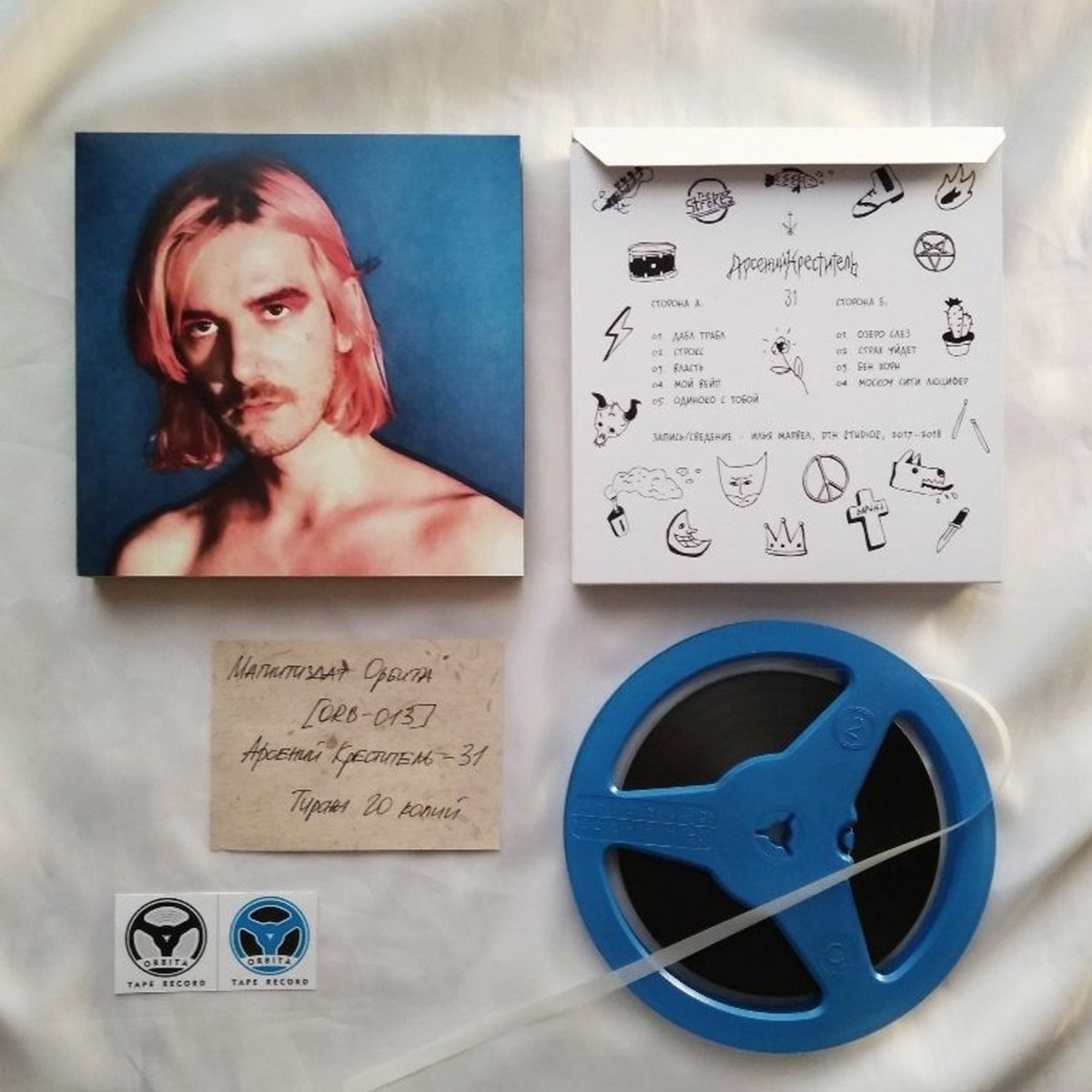
Rudolf Fuks was one of the names linking the two eras. A leading maker of X-ray records, Fuks had given blood again and again to raise the money to have a recording machine built for himself. Stephen Coates makes an English pun of it: Fuks gave blood to make "bones". Fuks's real fame came in the decades that followed. He was the producer of Arkady Severny, known for his prison and underworld songs. Severny's tapes were heard all over the Soviet Union in the seventies.
The concert in the flat
The first magnitizdat recordings were not music albums but home concerts. Bards such as Bulat Okudzhava, Alexander Galich, Vladimir Vysotsky and Yuli Kim sang with their guitars to small audiences in flats and cabins, and someone in the room ran the tape recorder. The lyrics criticised Stalin, the labour camps and everyday Soviet life. The recordings were copied and copied again among circles of friends and spread from one end of the country to the other. Some were carried to the West by tourists and émigrés and broadcast on Radio Liberty. Since shortwave broadcasts were also taped at home, a song could leave the Soviet Union and come back in from the West.
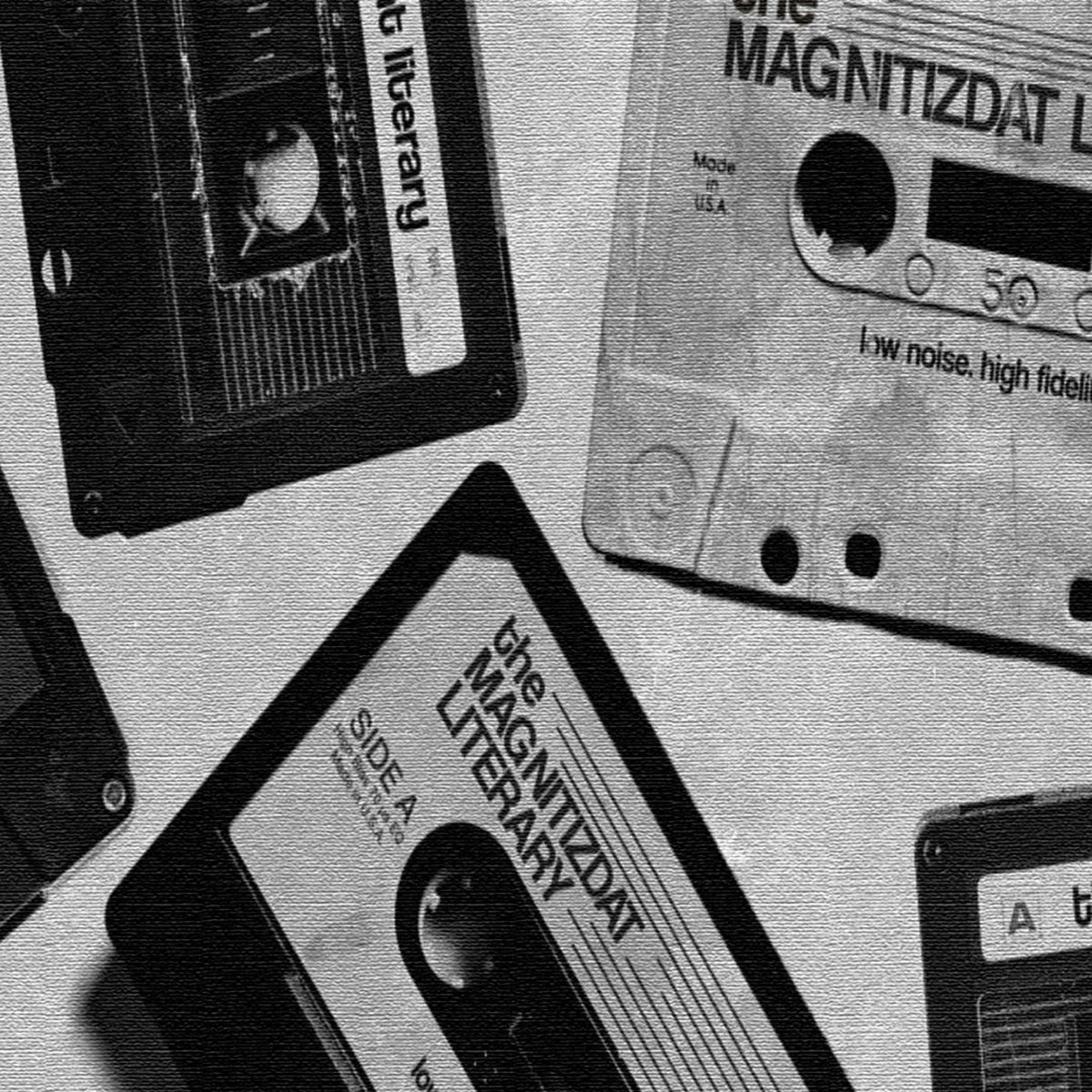
How these recordings sounded mattered as much as what was on them. Recorded with a single microphone at home concerts, they carried the room itself. Then the copying began. Each transfer from one machine to the next filed the high frequencies down a little more and raised the hiss a little more. Listeners at the time had a saying that you could tell how loved a song was by how bad its recording sounded. The best-loved songs reached the listener only as a recording of a recording of a recording.
The system had a strange flexibility too. The musicologist Vladimir Frumkin, who organised and recorded bard concerts in the sixties and later emigrated to America, thought it worth trying to leave the country with a few magnitizdat tapes, which shows that the state viewed magnitizdat differently from samizdat. No one would have dreamed of crossing the border with a banned Solzhenitsyn manuscript. A reel of tape, though, sat in a grey zone.
Records never released
Vysotsky's story is the most striking example of this grey zone. In 1968, with its managers' permission, Melodiya pressed a record of the songs from a film he had acted in. The first pressing sold out at once; record shops placed new orders directly with the factories, without Melodiya's permission. Even so, the official cultural institutions largely ignored Vysotsky, and most of his songs circulated on tape throughout his life. In 1980 this generation came to a close. Arkady Severny died on 12 April, Vladimir Vysotsky on 25 July, while the Moscow Olympics were under way. Both voices were everywhere in the country, thanks more to tape than to the official record racks.
The studio at the House of Pioneers
At the end of the seventies Leningrad rock bands moved beyond live concert recordings and began to record tape albums, known as "magnitoalbom". The sound engineer Andrei Tropillo put this on a regular footing. In 1976 Tropillo tried to set up a small record factory in a room he rented from the geophysics department of Leningrad University, where he worked, and then turned the idea into a studio. He took a part-time job at the House of Pioneers in Leningrad's Krasnogvardeysky district, teaching young people sound recording and guitar. The job gave him access to the institution's studio and to equipment thrown out by other institutions. In the evenings, once the children had gone home, and during the summer holidays, Tropillo opened the studio to the city's rock bands.
Between 1979 and 1985 albums by Akvarium, Zoopark, Kino, Alisa and Mashina Vremeni were recorded in this unofficial studio. These recordings carried the AnTrop logo, formed from the first syllables of Tropillo's first name and surname. Over time a collective grew up in the studio. Musicians who played in fixed line-ups at concerts moved freely between bands on record, and when a member did not turn up someone else took his place. The pianist Sergei Kuryokhin was a regular guest of this collective. Kino's first album, 45, was recorded in this studio in 1982, produced by Akvarium's leader Boris Grebenshchikov, and distributed as magnitizdat.
Magnitizdat is often described as a decentralised flow that left no trace. Tropillo's method calls for a correction to that picture. According to the Norwegian musicologist Yngvar Steinholt, when Tropillo finished an album he prepared about ten master copies on reel-to-reel tape and handed them to recording cooperatives. The cooperatives copied the tapes again and sent them on to other cooperatives, other cities. The system had a centre: the studio of a children's club. The scattering began only after that point.
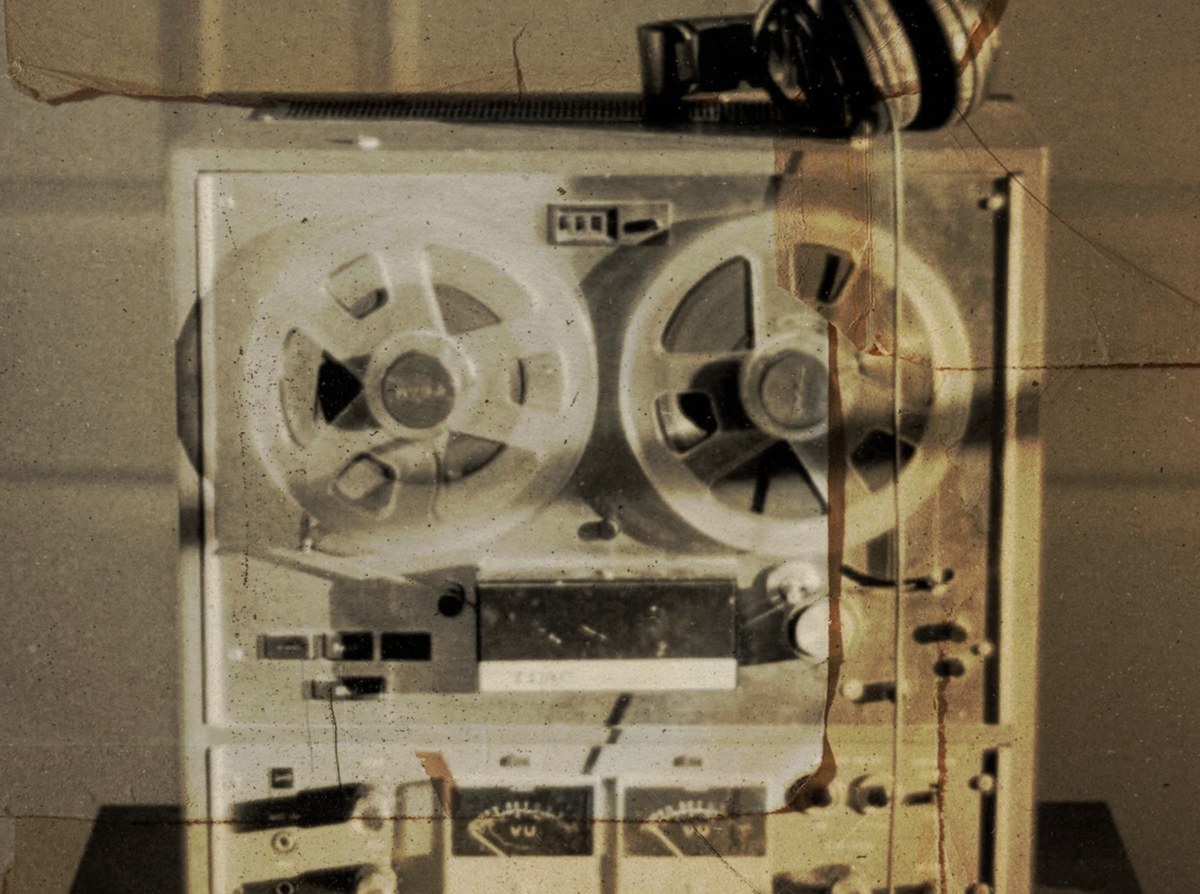
In 1986 some of these tapes reached an unexpected place. AnTrop recordings that the American singer Joanna Stingray had taken out of the Soviet Union were released in America on the Red Wave compilation. The following year, in 1987, Tropillo was hired by the Leningrad branch of the state record company Melodiya. The man who had spent years recording unofficial albums on the equipment of a state studio was now inside the institution that pressed those albums as official records.
One microphone, one flat
Punk arrived by the same route. The first punk recording in the Soviet Union is thought to be a single-microphone tape of a concert the Leningrad band Avtomaticheskie Udovletvoriteli gave in Moscow in 1981. In Omsk, Yegor Letov recorded his band Grazhdanskaya Oborona's albums in his own flat with minimal equipment and sent the tapes to acquaintances all over the country. They in turn made new copies. The Siberian punk bands that followed Letov's lead limited live playing to flat concerts and made all their recordings on reel-to-reel machines. There was no trace of studio polish on these recordings, but that was never the aim: the tape was the only proof that the band existed.
A list for the discos
The state could not control the tapes, but it tried to control the places where they were played. Yurchak's book reproduces a document, approved in 1985 by the Komsomol committee of the Nikolayev region in Ukraine, that gave an "approximate list of foreign groups and performers whose repertoires contain ideologically harmful works". The document's aim was to tighten control of discotheques. Read today, the charges on the list look absurd: Pink Floyd for distorting Soviet foreign policy; Talking Heads for spreading the "myth of the Soviet military threat"; Julio Iglesias was on it for neo-fascism. Various shortened versions of the list also circulated in other regions. Bans of this kind could stop a song being played in official venues, but not the same song passing from one tape recorder to another.

The state's more effective answer was not to ban but to absorb. Historians note that the spread of magnitizdat reduced attendance at official concerts and record sales; after a while the state concert agency Rosconcert moved to give professional status to the unofficial rock band Mashina Vremeni. In this way the underground's most popular band was brought onto the official stage.
A recording with no original
Magnitizdat's strangest consequence was that it blurred the idea of an "original". Dozens of recordings circulated of a bard singing the same song in different flats on different evenings. One copy of a tape might be missing a song, another might have a different song slipped in. Track orders and titles could change with every transfer. The listener was also the copier; anyone who pressed the record button on a tape recorder became a link in the chain of distribution. The musicologist Daughtry describes this spread as "rhizomatic" and draws a line of continuity between it and today's internet practices.
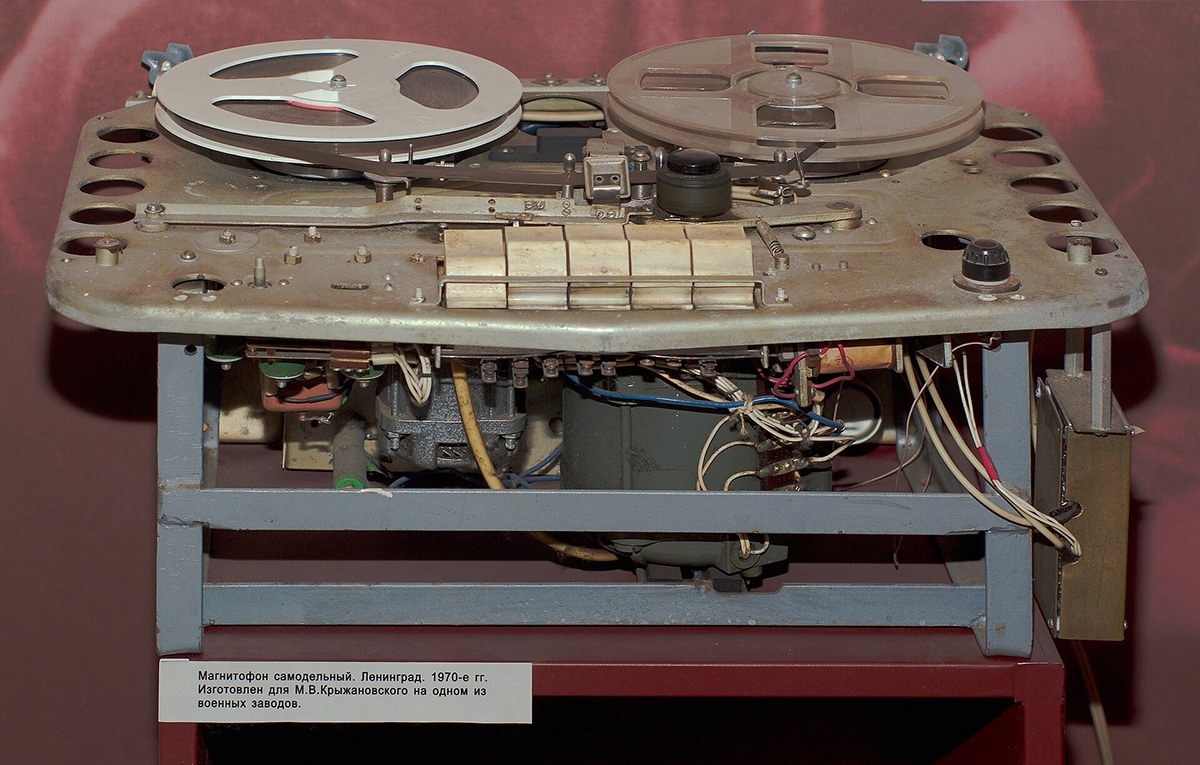
But it would be wrong to generalise this uncertainty to all of magnitizdat. In bard songs the weight lay in the words, and the words could be carried from copy to copy even as the sound degraded. Tropillo's recordings, on the other hand, entered circulation as albums, with the AnTrop logo and a fixed running order. Magnitizdat was both an anonymous flow and a distribution network for albums with known authors; which of the two prevailed depended on who the recording came from.
End of the reel
In the second half of the eighties perestroika cleared the way for underground music. In the nineties the markets of the former Soviet countries filled with legally sold recordings, and magnitizdat's reason for existing disappeared. In the 2000s the internet began doing the same job far faster. What remained was whatever could survive of those tapes, and a hiss grown a little thicker with every new copy.
The Yauza tape recorder in Galich's poem still stands as the starting point of this story. Galich was forced to leave the country in 1974 and died in Paris in 1977. His songs did not leave the country with him; they went on playing on thousands of tapes, in flats he would never see.
Source note
- Academic sources
- J. Martin Daughtry, "Sonic Samizdat", Poetics Today (2009)
- Alexei Yurchak, "Gagarin and the Rave Kids" (1999) and Everything Was Forever, Until It Was No More
- Yngvar Steinholt, Rock in the Reservation (2005)
- Polly McMichael, Popular Music and Society (2009)
- Gene Sosin, "Magnitizdat" (1975)
- Global Informality Project: magnitizdat and roentgenizdat entries
- Tropillo and AnTrop
- Wikipedia: Andrei Tropillo, AnTrop, Magnitizdat entries
- Wikipedia: Mashina Vremeni entry
- Fuks and Severny
- The Moscow Times (May 2015)
- Wikipedia: Arkady Severny
- Vysotsky
- Wikipedia
- The 1985 list
- Snopes (January 2025), fact-check drawing on Yurchak's book
- Open Culture
- Galich's poem
- bards.ru: "Мы не хуже Горация" ("We're no worse than Horace").