 Audi tenebras inter cortices
Roentgenizdat: Jazz on the Ribs
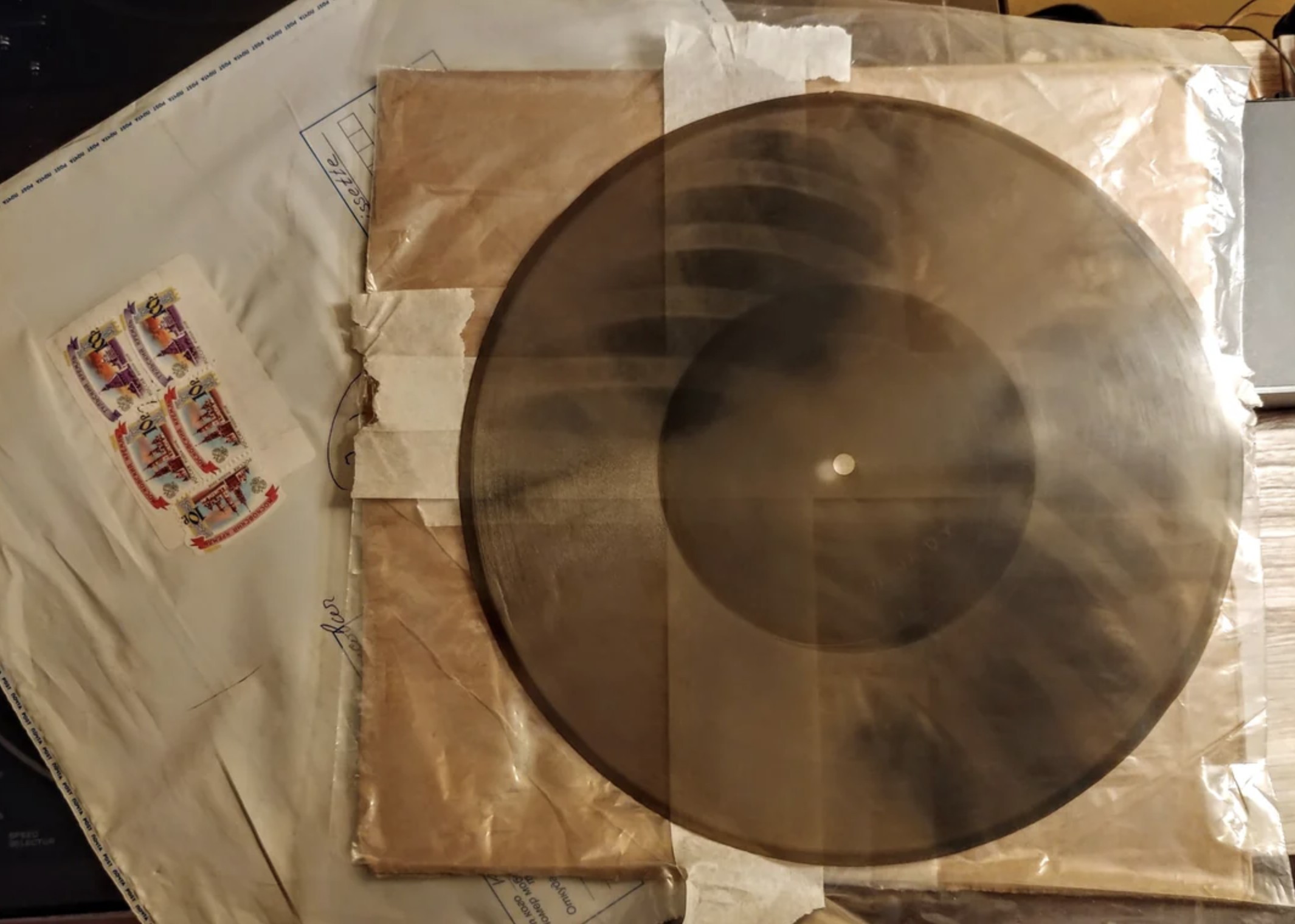
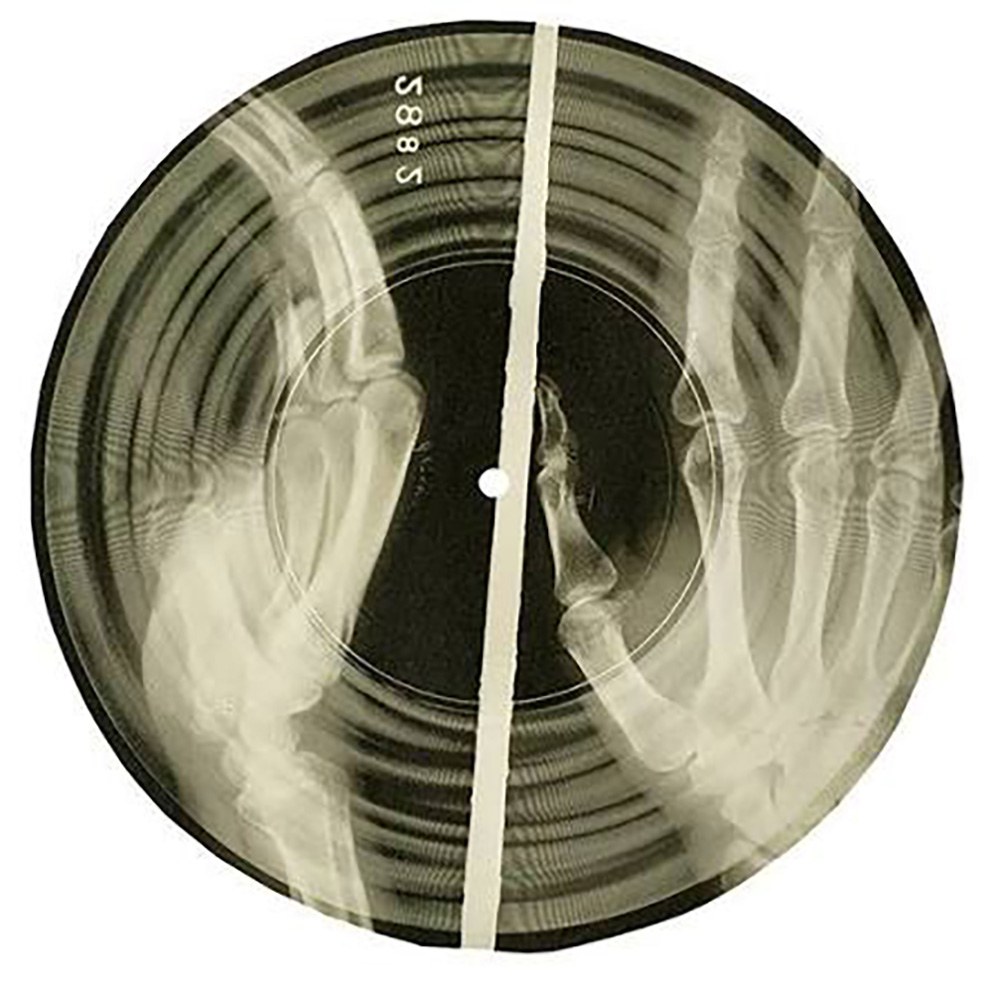
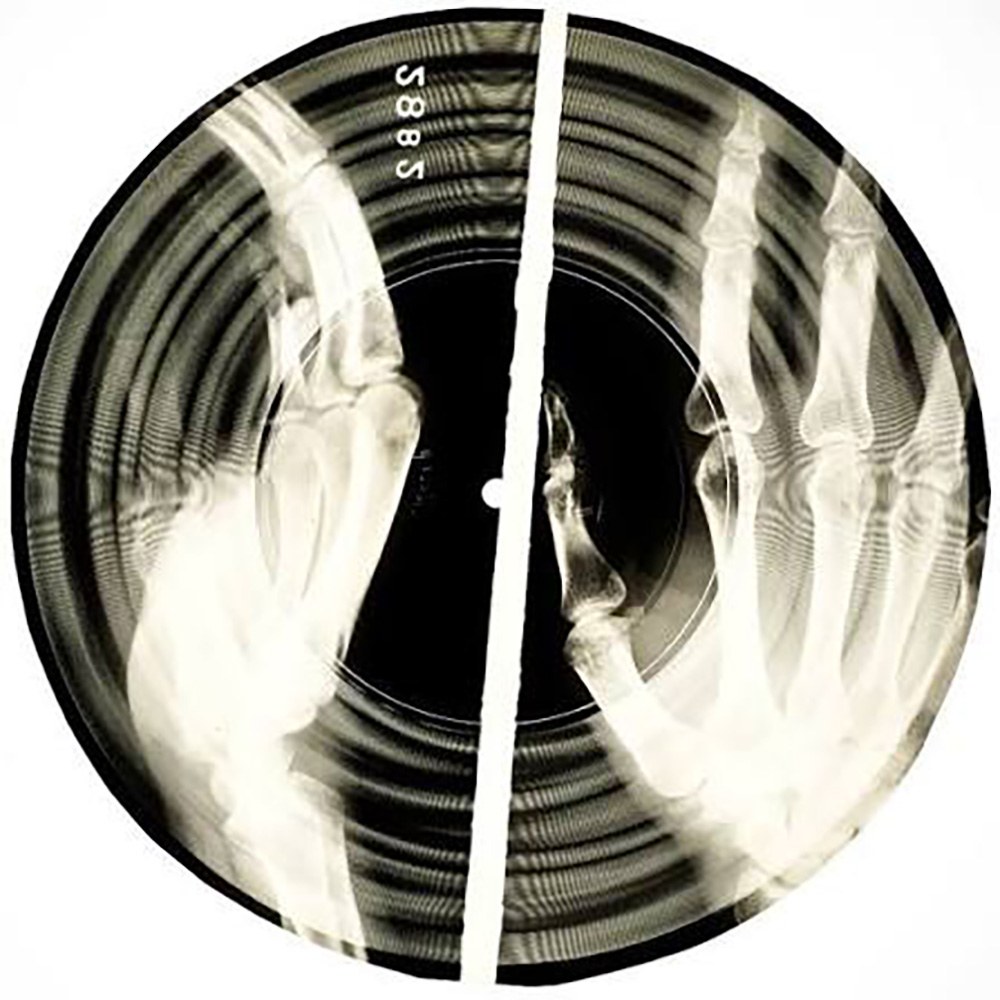
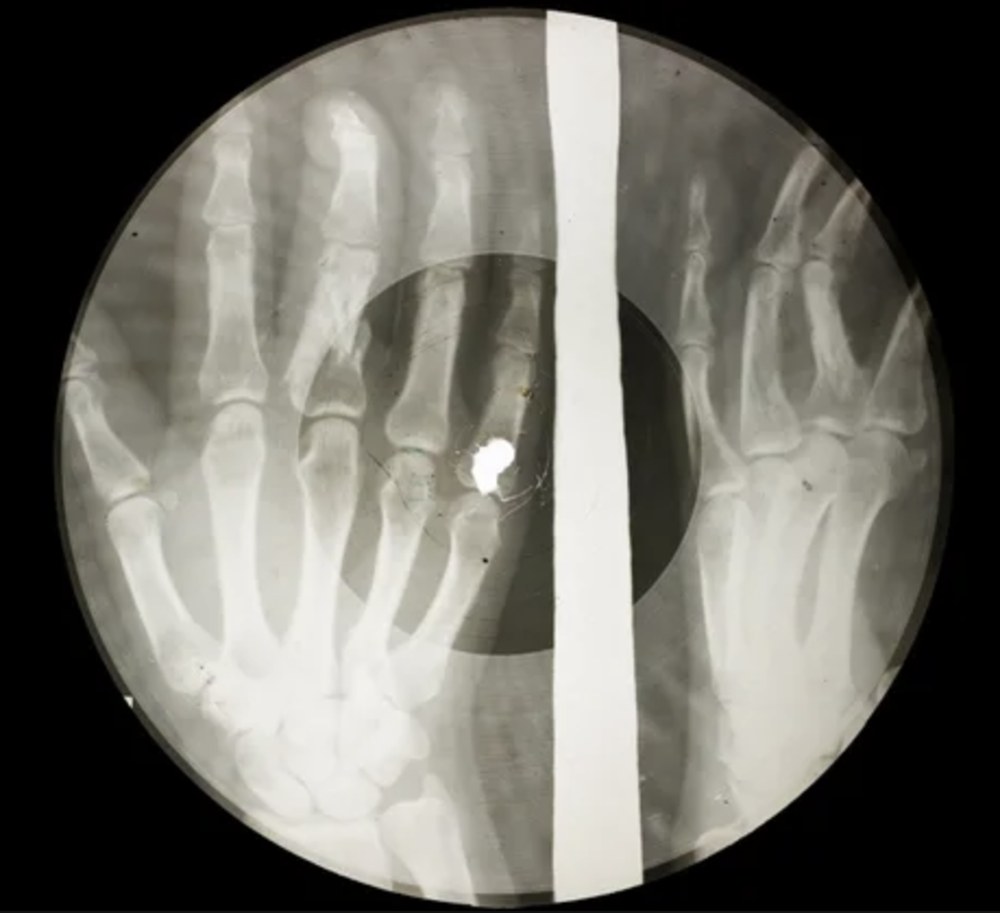
The English musician Stephen Coates was on tour in Saint Petersburg with his band The Real Tuesday Weld when he came across a strange object at a flea market: a thin, translucent sheet of X-ray film cut roughly into a circle. On the film were the bones of two hands, and over the bones a fine record groove. The seller brushed off his questions, and his Russian friends did not know what it was either. When Coates took the film back to London and put it on a turntable, Bill Haley's "Rock Around the Clock" came out from between the bones of the two hands.
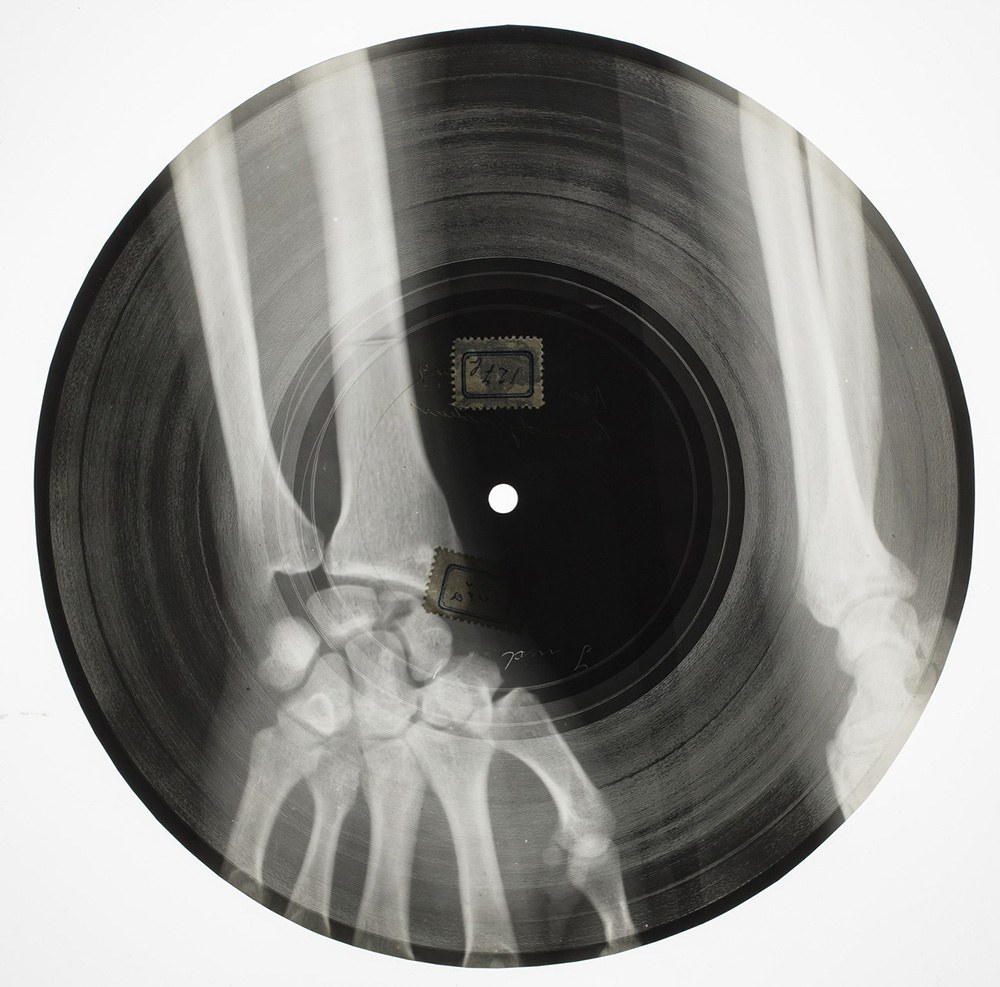
The object has a name: roentgenizdat, "X-ray publishing". In Russian they were also called "rebra" (ribs), "jazz on bones" or simply "bones", and from the late forties to the early sixties they were the strangest carrier of forbidden music in the Soviet Union. This is not a simple story of piracy. Here the sound the state wanted to control travelled on a surface that showed the inside of the body. But the familiar account needs a correction: most of the music on the bones was not Elvis.
Spoils of war
The story begins in Leningrad in 1946. According to Coates's research, the first record-cutting lathe in the city was a German-made Telefunken, probably brought home from the war as booty, that stood in the back room of a shop belonging to a man called Stanislav Filon. Filon used the machine to cut forbidden records. Two young music lovers dropped into the shop almost every day: Ruslan Bogoslovsky, not yet twenty, and his friend Boris Taigin. The two worked out how the machine functioned and built their own copies from parts salvaged from old gramophones and tools such as drills. The partnership, known as Golden Dog, is remembered as the first underground X-ray record label. The know-how soon spread from Leningrad to Moscow, Kyiv and Odessa.
The story's roots may go back further still. Bone Music, the book Coates later published, contains new material that places the origins of X-ray records in Hungary in the thirties. The first machine in Leningrad, a spoil of war, gives the story an ironic beginning: the circulation network of forbidden music was built on copies of a German machine taken from a defeated enemy.
Why X-rays
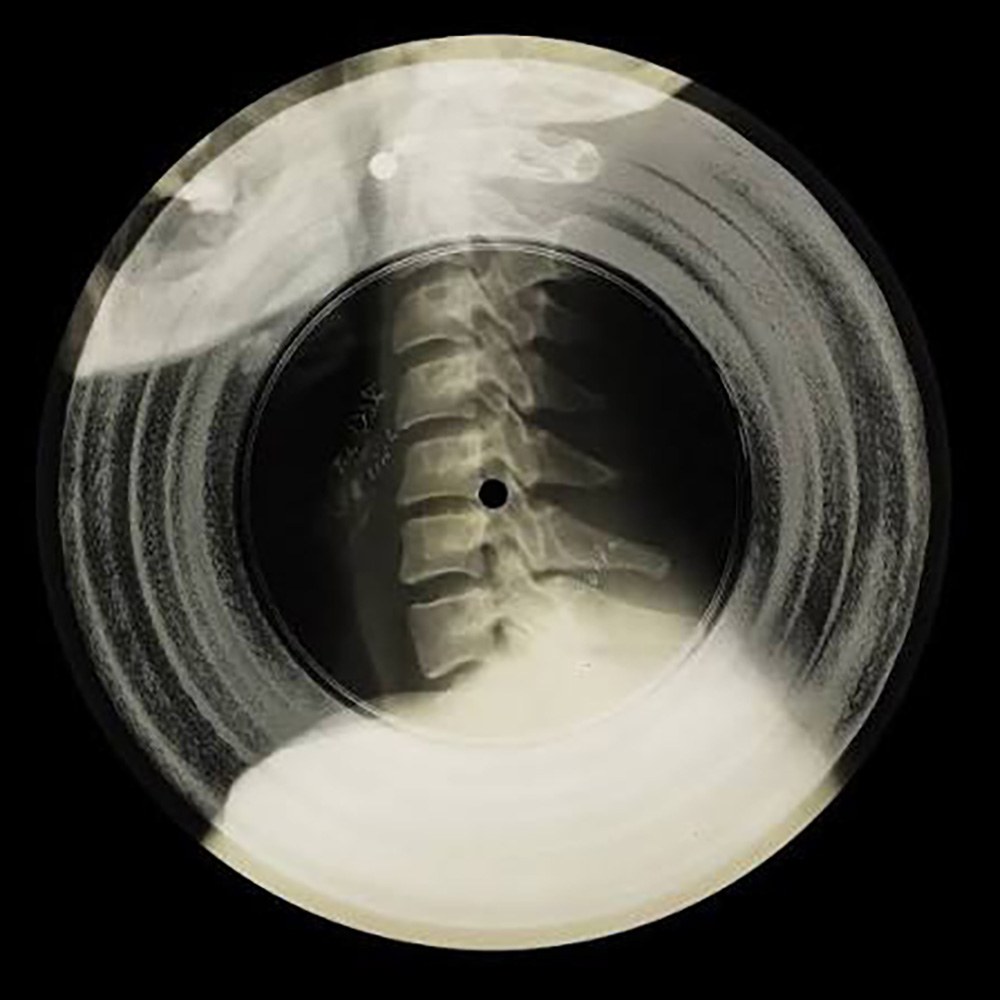
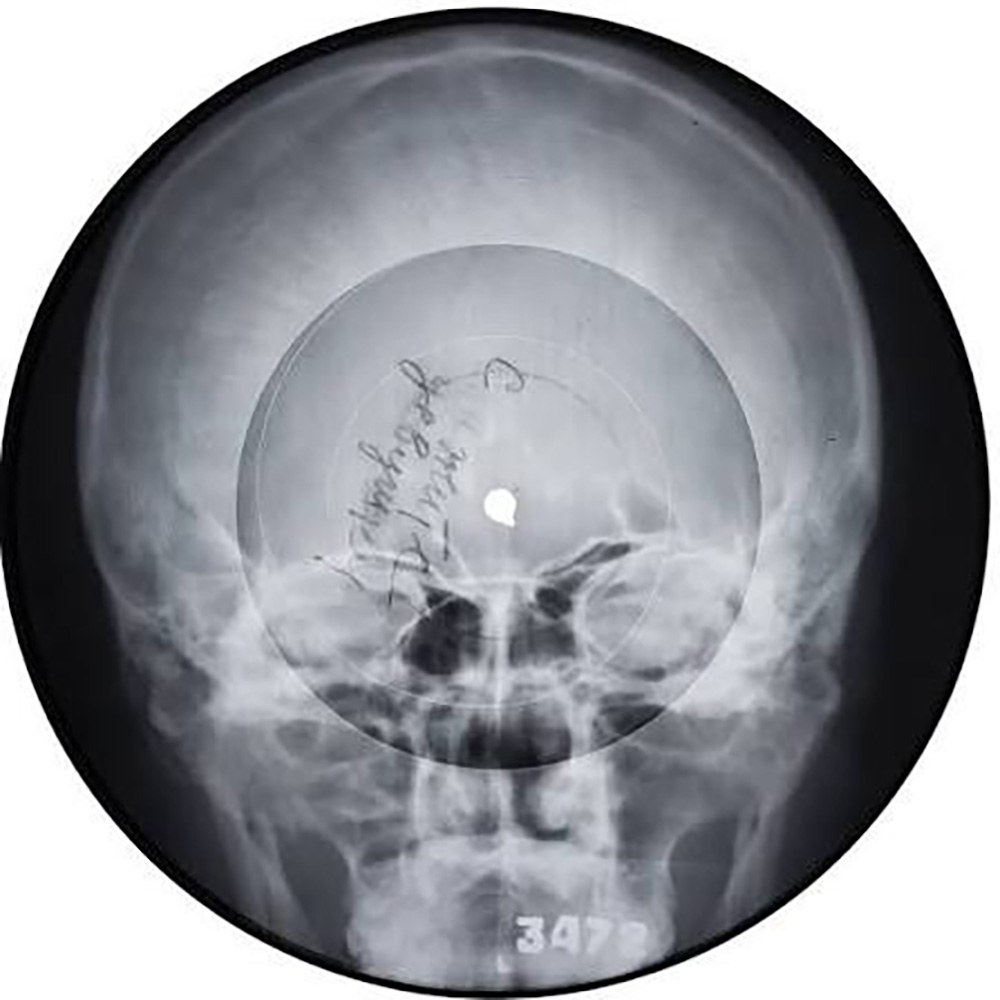
Making records took material, and vinyl was scarce in the Soviet Union. The first attempts were made on specially coated paper, but the paper did not survive more than a few plays. The solution lay in hospital rubbish. According to a radiology article drawing on Coates's book, the authorities wanted used X-ray films thrown away after a year because they were flammable. The recordists collected stacks of film at hospital back doors for a few roubles or a bottle of vodka. The material was plentiful, cheap and flexible enough to carry a record groove.
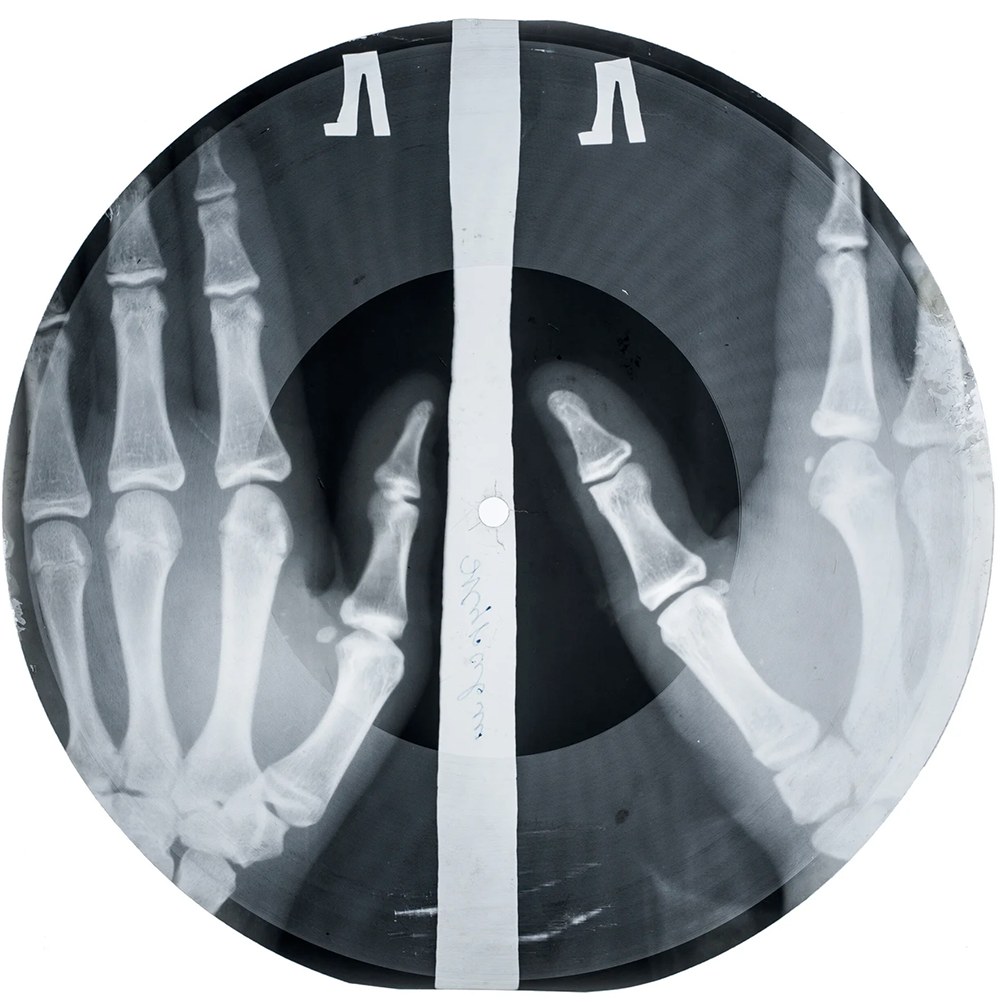
The film was cut roughly into a circle. In the familiar account passed on by the writer Anya von Bremzen, the cutting was done with nail scissors and the centre hole burned with a lit cigarette. Coates is sceptical of this legend. He writes that he does not believe the cigarette story, because the radiographic film of the time was flammable; on real records the hole is usually irregular, its edges slightly torn and browned. The recording was single-sided. According to the rock historian Artemy Troitsky, a one-sided X-ray record sold on the black market for one to one and a half roubles and lasted a few months; a real two-sided vinyl record cost five.
The sound on the bones
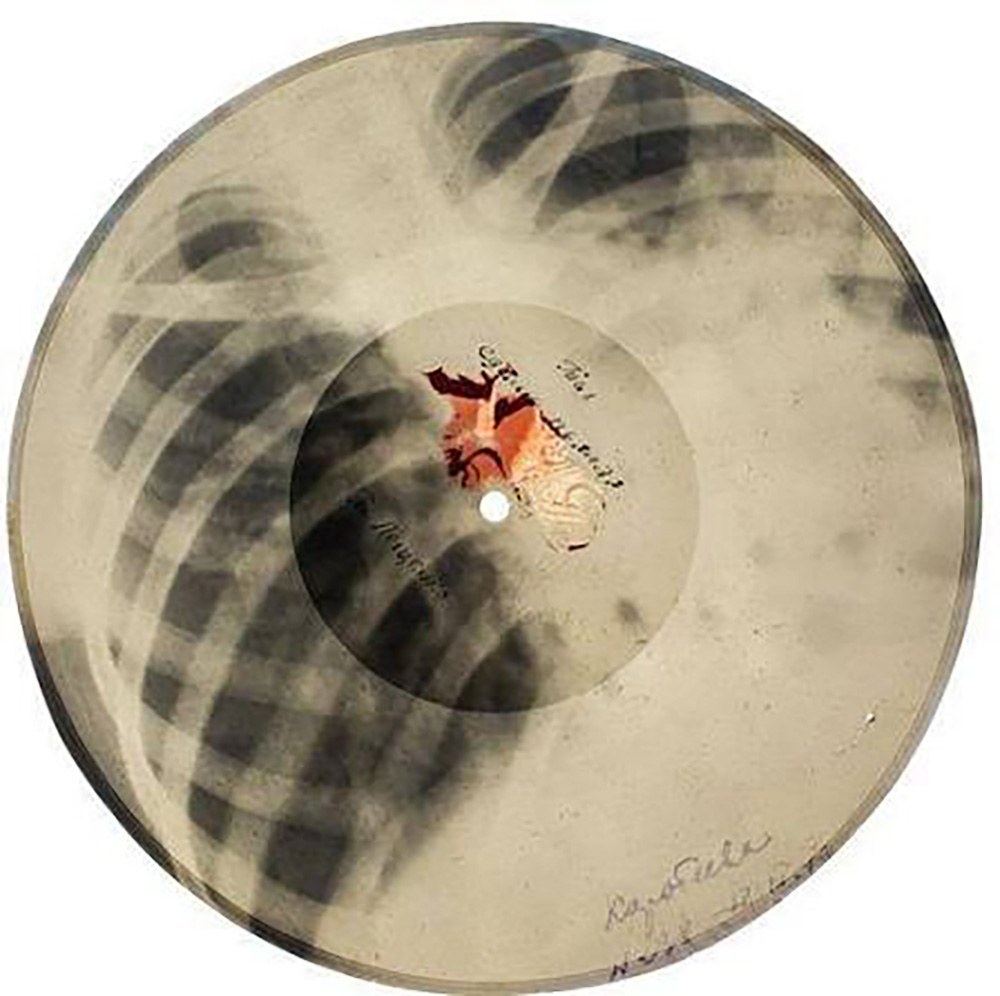
Everyone who describes how these records sounded comes to the same verdict: badly. Because the groove was cut into thin film, the surface was fragile, and the steel-needled gramophones of the day wore the film down in a few plays. Sound quality was a lottery; some copies were intelligible, others lost in the hiss. Yet for someone who could hear the song no other way, this crackling copy was the song itself. Coates describes these records as ghosts of the music Soviet citizens secretly loved, riding on photographs of their insides. The image was pure chance: a foxtrot spun over a lung, a love song over a broken hand.
What was really forbidden
The roentgenizdat story as told in the West is usually built around jazz and rock'n'roll. Duke Ellington, Ella Fitzgerald, Bill Haley, Elvis Presley and later the Beatles really were on these films. But Coates says that a large part of the recorded music, perhaps most of it, was forbidden Russian music. At the top of the list were émigré singers. Pyotr Leshchenko and Alexander Vertinsky had left the country after the revolution; whatever they sang, their work counted as the work of traitors. After them came tangos, gypsy romances, foxtrots and the prison and underworld songs known as "blatnyak". These songs were not openly anti-regime, but they were considered "low culture", incompatible with the ideals of socialist realism.
The most poignant name in this repertoire is Vadim Kozin. One of the best-loved singers of the thirties, Kozin was sent to the Gulag; after his release he was a broken man and began burning his own records, and his friends had to hide their copies from him. While his voice was being erased from official circulation, it survived on the bones. Coates makes the connection deliberately: in 2019, for his Bone Music programme on BBC Radio 3, he had the Russian band Mumiy Troll record a Kozin song directly onto X-ray film. In 2016 Marc Almond had recorded Kozin's "Druzhba" the same way at the Rough Trade shop in London.
The most visible customers for these records were the stilyagi, the city youth who adopted Western clothes and dances and stood out in their brightly coloured outfits. "Chattanooga Choo Choo" was one of their favourite songs. But the real importance of roentgenizdat was that it put Western jazz and the Russian songs the state had erased on the same material, inside the same street seller's coat.
Camp, amnesty, camp again
The work came at a heavy price. Bogoslovsky and Taigin were caught in 1950 and sent to Siberia with five-year sentences of hard labour. They were freed in the amnesty that followed Stalin's death in 1953. Bogoslovsky, the story goes, did not sit idle in the camp: he had found a way to separate the layers of the film and transfer images onto the clear surface. After his return he went back to work and was caught again. In the fifties and sixties he served three prison terms in connection with the recording business. Years later Taigin would say of his friend: even today, when we can have as much music as we want, we should bow before this man who laid the first stone of our musical freedom.
The state refined its methods too. A law passed in 1958 banned the home production of recordings "of a criminal hooligan tendency"; the law was aimed squarely at the stilyagi. In 1959 the largest roentgenizdat network was broken up and its leaders went to prison. The Komsomol set up "music patrols" that went among young people looking for forbidden records. Some sources also say that the security services put fake recordings on the market to kill demand, but there are no reliable details of what those fakes contained.
After the reel-to-reel
Technology, more than state repression, finished off the X-ray records. In the early sixties reel-to-reel tape recorders began to enter Soviet homes. Tape ran longer, sounded better and was far easier to copy. The circulation of forbidden music moved to the tape network called magnitizdat; twenty years later the recordings of the Leningrad Rock Club, of Kino and of Siberian punk would pass from hand to hand through that network. The music on the bones lasted about fifteen years and left very few copies behind, because no one had made them to be kept. You listened to a film for a few months, threw it away and bought a new one.
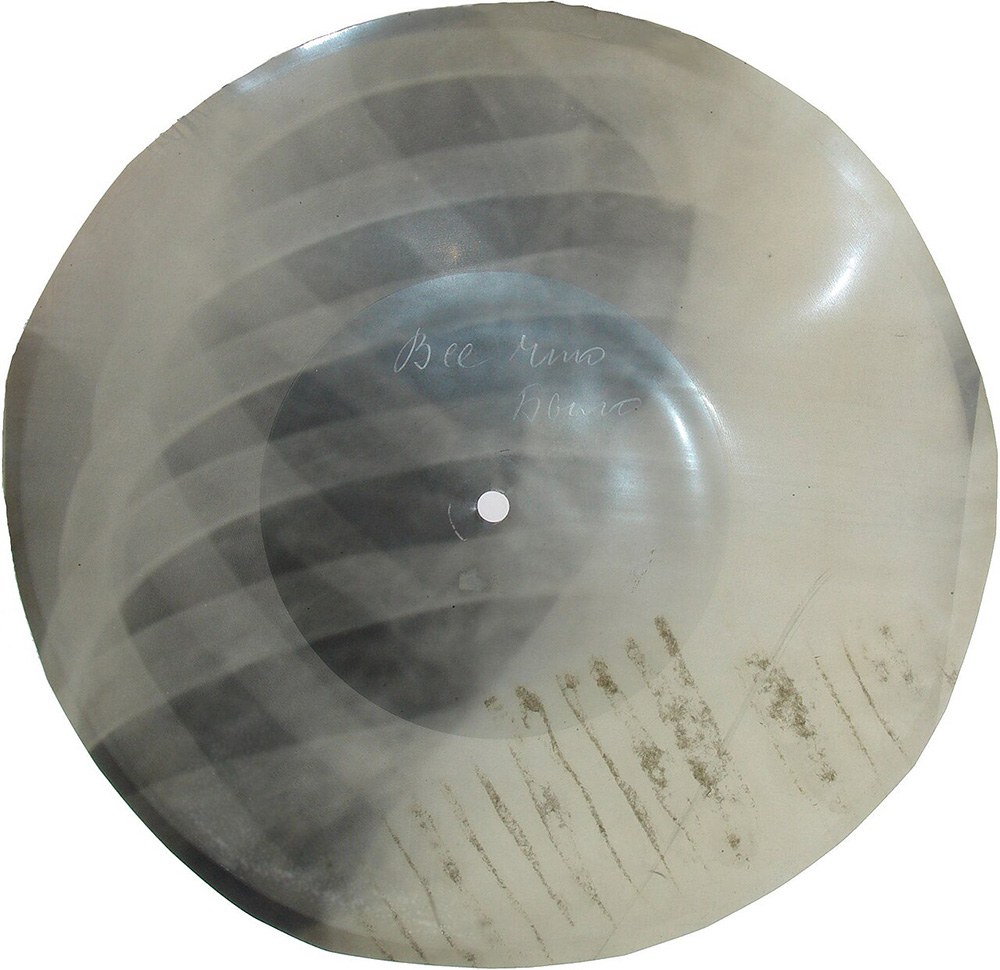
Today collectors hunt these records down. That is why there are so many fakes. Coates wrote a guide to recognising a real X-ray record. The first place to look is the centre hole. On real records the hole is hand-made, irregular and worn; on modern fakes it is perfectly round, as if from a hole punch or a laser. The second clue is the content. According to Coates, if the song on a record is unknown, an obscure Russian folk song or the work of an émigré singer, it is most likely genuine. Elvis on the bones is not enough to show that a record is old.
Source note
- Main source
- Stephen Coates and the X-Ray Audio Project: Coates's book Bone Music, x-rayaudio.com blog posts (Vadim Kozin post, 2016; Bogoslovsky profile "Ruslan Bogaslovsky's Criminal Record", 2021; guide to fake records) and the Roentgenizdat documentary.
- News and magazine articles
- Vice (2024)
- National Geographic
- Hyperallergic (November 2025)
- Dan Fox, review of Bone Music (February 2023)
- Atlas Obscura
- 99% Invisible (2019)
- Decoded Magazine (May 2026)
- Smithsonian (2015)
- Other sources
- Wikipedia: "Ribs (recordings)" and "Vadim Kozin"
- Cincinnati Children's Hospital radiology blog: the disposal of films, drawing on Coates
- Quotations
- Taigin's words about Bogoslovsky: paraphrased from Coates's blog.
- Coates's descriptions: paraphrased.