 Audi tenebras inter cortices
Steppe Underground: Metal in Central Asia
In the centre of Tashkent you pay a dollar at an unmarked door and climb to the upper floor. Inside it is dark and smoky; on stage a band is thrashing its guitars, and in front of it a few dozen young people are headbanging. A piece published by The Oxus Society in 2020 described the place as Uzbekistan's last rock bar. The building right next door was the headquarters of the State Security Service, successor to the Soviet KGB. The police no longer seemed interested in young people. Only a few years earlier, things had been different.
The history of metal is usually told from Scandinavia, and Central Asia has almost no place in that story. The scene is small, its documentation is scattered and English-language sources are few. But a common assumption also needs correcting: the Soviet collapse did not end rock and metal culture in the region. The nineties were this music's liveliest years in both Tashkent and Bishkek. The real unravelling came later, and its causes were as political as they were economic.
Earthquake, uranium and bootleg records
Tashkent's rock story begins with an earthquake. The quake of 26 April 1966 destroyed the city's old mud-brick fabric; the workers who came from every corner of the Soviet Union to rebuild it brought streets with names like Moskovskaya, Belorusskaya and Kievskaya, and a new cosmopolitan culture. In 1976 the first bands, such as Kibergi and Sinkhron, took to the stage playing songs by Western groups. Uzbek rock took a different path from the Russian scene: it was born in dance halls and quietly adopted by the party. Student bands were sent all over the country to entertain workers during the cotton harvest.
The strangest example of this was "Uchkuduk", a song by Yalla, the much-loved eighties band. The song climbed the Soviet charts; it took its name from a new town built in the middle of the desert for uranium miners. The planners had used a rock song to draw young people to that remote town. In those same years a factory in Tashkent was pressing bootleg records. It survived the Soviet collapse, and in the early nineties Uzbek markets filled with fake Metallica and Nirvana albums. Young people swapped records on a pedestrian street in Tashkent known as "Broadway". Viktor Tsoi had also played a concert in Tashkent a few months before his death.
A gig a week
The nineties were the peak of this scene. The "Flower Children" festival, held in Tashkent between 1998 and 2001, brought together more than fifty bands. The city had hundreds of bands, on a scene that ran from punk to thrash metal. The picture in Bishkek was similar. Ars, guitarist of the Kyrgyz death metal band Kashgar, told Echoes and Dust in a 2019 interview that until the early 2000s the city had three rock clubs and you could go to a good metal show almost every week. Today almost no one outside Kyrgyzstan knows names like Necronomicon, Neocrima, Odyn's Nocturnal North and Extremistic Negative Clan.
In Kazakhstan, the scene's longest-running name is Holy Dragons, a heavy metal band formed in Almaty on 11 September 1992 as Axcess and renamed in 1997. The band still keeps to the sound of the eighties. "Underground: Kazakhstan Rock Music, Part One", a compilation released in Almaty in 2004, is one of the few recordings that document the local underground of the period.
Devil's music
In Uzbekistan the unravelling began in 2005. After the Andijan massacre and the Western sanctions that followed, the authorities began to regard Western culture with suspicion. The "Creating Legends" festivals of 2005 and 2006 were the last large open-air events. In 2009 the secret police raided a rock concert and detained listeners and musicians. In 2011 state media declared rock music "satanic".
The details in the Oxus piece amount to an almost technical description of how a scene is silenced. Plain-clothes police sat in the front row at concerts and wrote down every band's lyrics. Musicians later learned that the security services kept a ranking of bands considered a threat to national security. From 2012 every band was required to buy a stage licence costing roughly two thousand dollars a year; lyrics also had to be submitted to a special committee for approval. There was no need for a ban: the licence fee was enough to wipe young bands off the stage. One of the few venues left was the Ilkhom, the first independent theatre in the Soviet Union. Its founder, Mark Weil, had been stabbed to death by religious fanatics in 2007.
By the time Islam Karimov died in 2016, little of the scene remained. According to Oxus there were only about ten bands in the capital; in Samarkand and Fergana the scene had vanished altogether. The emigration of the Russian-speaking population also shrank the audience, since most bands sang in Russian or English. Oxus makes one observation that matters here: Uzbek rock was never a protest movement, but it was an indispensable channel of self-expression for minorities.
Kyrgyz in Leipzig
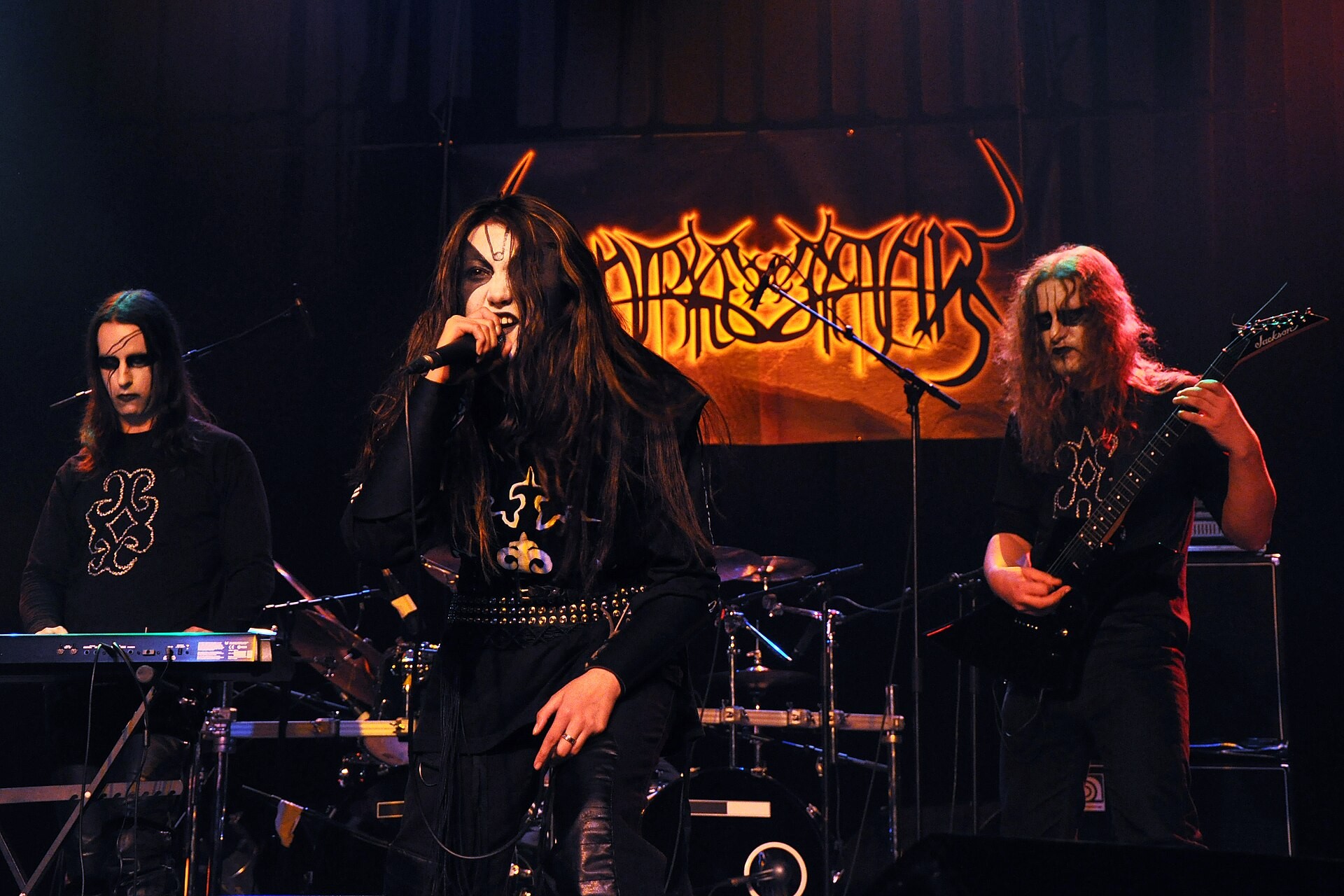
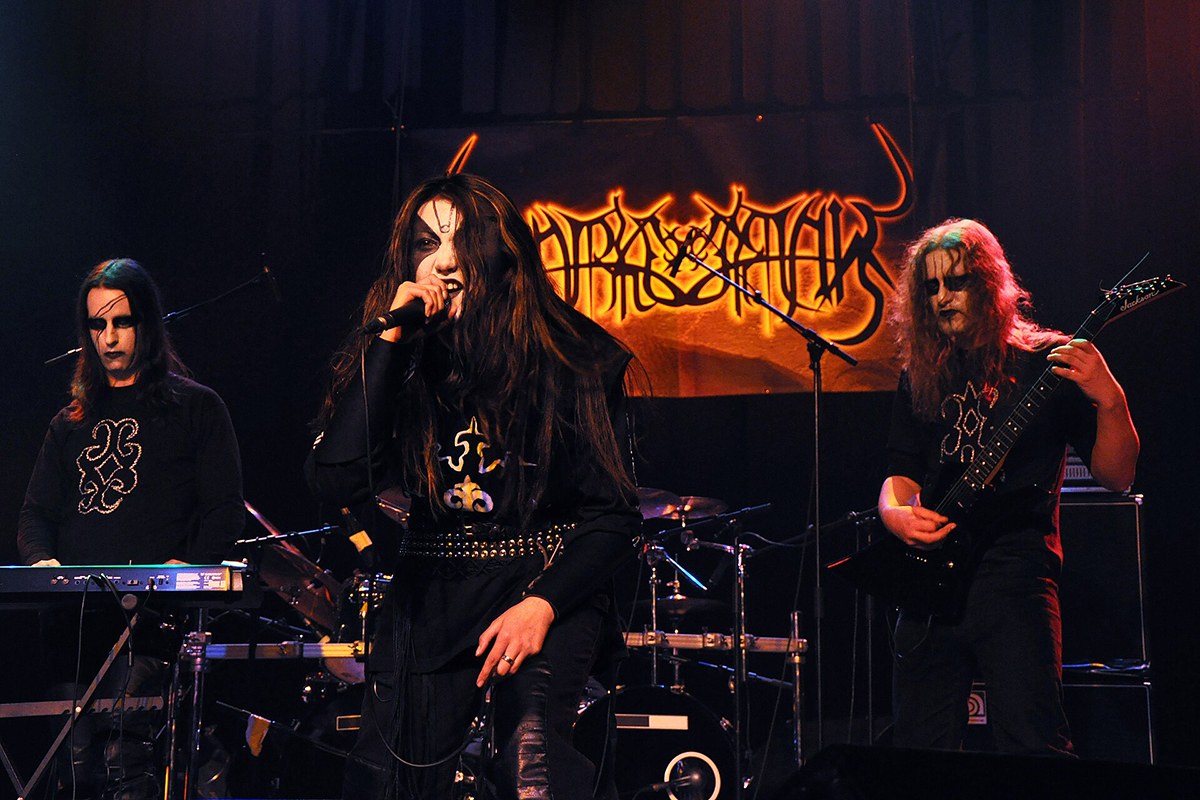
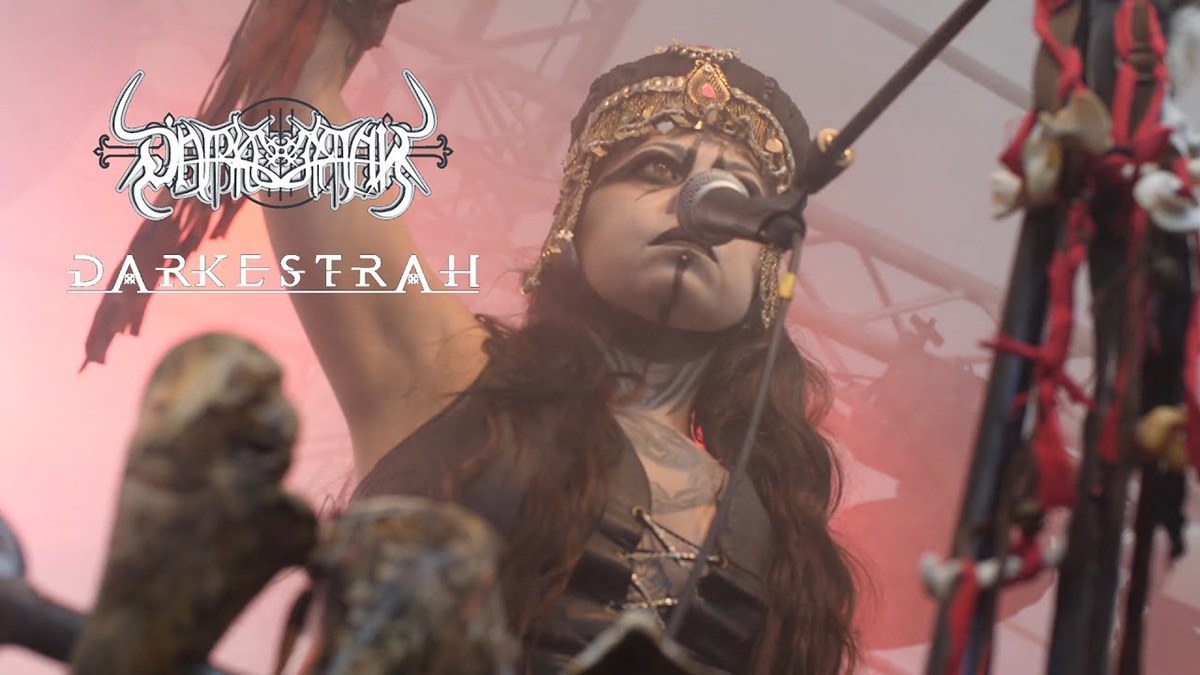
The region's best-known metal band, Darkestrah, was founded in Bishkek in 1999 by the drummer Asbath. The first album, Sary Oy, was recorded in Bishkek in February 2003 and was based on a Kyrgyz tale about three nature sisters. In 2016 Asbath told The Black Planet that making the record had been almost impossible in Kyrgyzstan at the time. The band moved to Germany in the early 2000s and works in Leipzig today. It records at Echolux, the studio of Andy Schmidt of Disillusion.
Darkestrah's sound joins the tremolo guitars of black metal with Kyrgyz instruments: the three-stringed komuz, the temir komuz jaw harp, the bowed kyl kyyak, and throat singing. Its themes draw on Tengrism and shamanism, on Genghis Khan, on the Silk Road and on Manas, regarded as one of the longest epics in the world. The joint record Akyr Zaman, released in 2016 with the Saudi black metal band Al-Namrood, shows how different the metal map of this part of the world can look from the one the West knows. Nomad, released on Osmose on 29 March 2024, saw the band return to a female vocalist.
Darkestrah's emigration is often told as proof that making metal in Central Asia is impossible. Ars disputes this reading. He says he knows Asbath, that Asbath and the vocalist Kriegtalith went to Europe because they had the chance and wanted to, and that had they stayed they would have kept playing black metal in Bishkek too.
Kumtor and the mankurt
Kashgar was formed in 2014, at a time when, as Ars tells it, there were no active metal bands left in the city, only a few metalcore groups. Their first album was recorded between July 2015 and February 2016 at The Base studio in Bishkek; Ars did the recording and the mix, mastering went to Achilleas Kalantzis in Greece, and the vinyl came out on the German label Manifest of Hate. Ars says most new bands today record with a direct signal and plug-ins, whereas Kashgar worked with a real Yamaha drum kit, Peavey heads and Marshall cabinets. Blauth, one of the band's founders, wanted the recording to stay raw and lo-fi; the result landed somewhere between the two.
Kashgar's lyrics take Central Asian metal's relationship with mythology a step further. The first album had Erlik, Tengri's evil creature; Albasty, the female demon who steals the breath of the sleeper; and Konurbay, the enemy in the Manas epic. Later songs turned to the present. One is about the Kumtor gold mine, 3,700 metres up: Ars worked with a team of glaciologists studying the glaciers around the mine and saw one glacier almost entirely destroyed. Another draws on the mankurt legend told by Chingiz Aitmatov: the person whose memory is wiped and who is turned into a slave. Another is about ala kachuu, the custom of bride kidnapping. Here steppe mythology is not a source of nostalgia but a way of describing the present.
There is one more detail in Kashgar's story. Ars says none of the band's members is ethnically Kyrgyz, that Kyrgyz people generally do not consider them truly from Kyrgyzstan, but that they were born and raised on this land and know it as their homeland. The Tengrist imagery and the references to Manas can also be read less as the direct expression of an ethnic identity than as a claim to belong to a shared land.
Kuturgan
There is no official censorship of metal in Kyrgyzstan, but there is a social stigma. According to Ars, most people see distorted guitars and harsh vocals as "devil's music"; the country has not a single rock radio station, no record label or booking agency, and local sound engineers do not know how to record metal. Kuturgan Fest, founded in 2017, was the answer to this gap. The festival, whose name means "wild" in Kyrgyz, brought the Hungarian band Ektomorf in 2018 and announced Sepultura as the headliner for 2019. Audiences came from cities as far away as Osh.
Alexander Degtyariov, a Bishkek musician Novastan spoke to in 2024, describes, on a smaller scale, how the scene keeps going. More than a hundred people came to his birthday concert in November 2023 at Bar56, the meeting place of the city's metalheads. In his view the scene in Kazakhstan, Almaty especially, is both bigger and richer; Kyrgyz musicians struggle to buy equipment while their Kazakh counterparts can often find better. Uzbekistan, meanwhile, has begun to open up under the new government.
Whose steppe
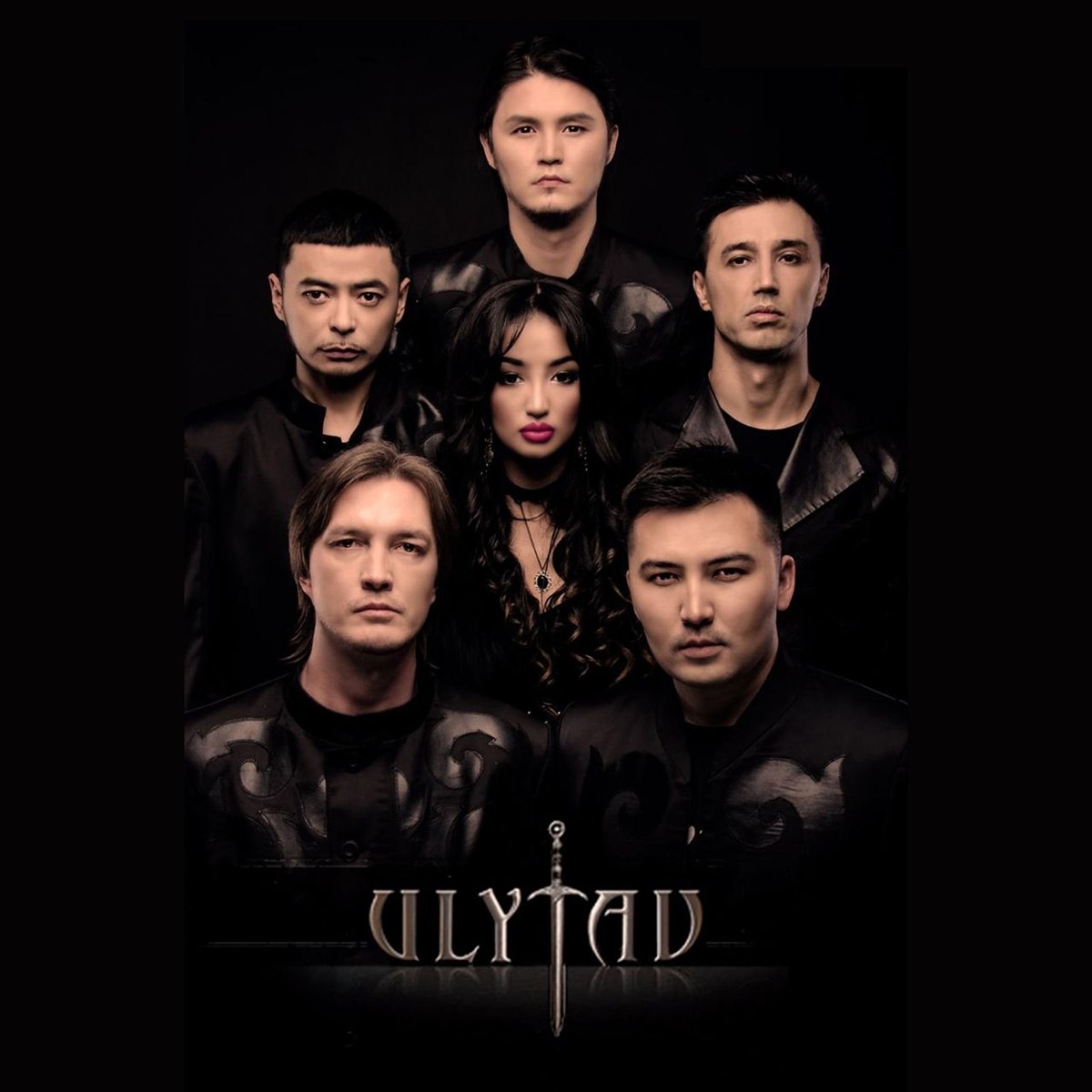
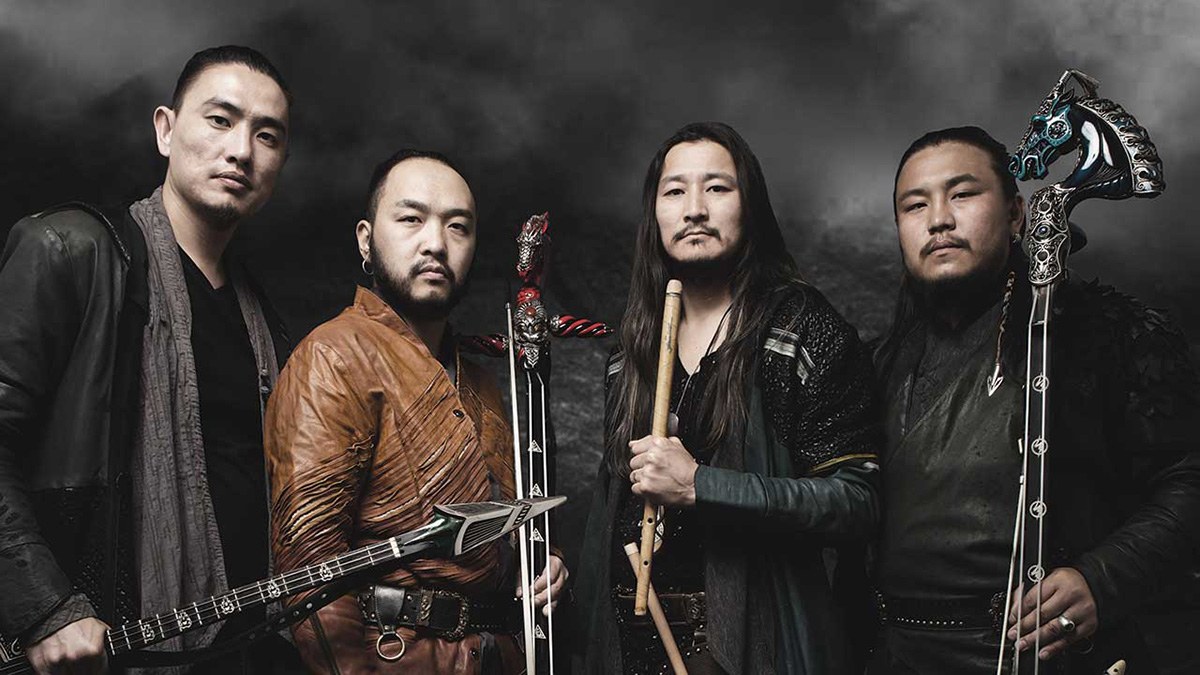
For anyone looking at Central Asian metal from outside, the strongest draw is the image of the steppe. Ulytau, formed in Almaty in 2001, is an instrumental trio that combines electric guitar with violin and the two-stringed dombra; it takes its name from the Ulytau region, considered the mythical birthplace of the Kazakh nation. Even Holy Dragons have a song called "Tengri". Flyin Up from Tashkent mix post-metal with Central Asian folk music and Uzbek lyrics.
But the image also has a commercial side. Nature Ganganbaigal, founder of Tengger Cavalry, a Mongolian folk metal band formed in Beijing that later moved to New York, said he wanted to introduce Mongolian and Kazakh folk metal to the world with a compilation called "The Angry Voice of the Steppe"; yet all five bands on it were from Beijing and Hohhot. "Steppe metal" is an export label as much as the sound of a place. An ethnographic study of musicians in Kazakhstan describes a similar tension: some musicians turn to Kazakh for authenticity, others sing in Russian or English to reach a wider audience. In Turkmenistan and Tajikistan it is almost impossible today to speak of a documented metal scene; the region's most closed countries are the ones that have left the fewest recordings.
Thirty years after Tsoi's Tashkent concert, in February 2020, the Uzbek band Electrooko released a new single. Tsoi had sung "I want change". Electrooko's song was called "Nothing Will Change".
Source note
- Uzbekistan
- Nikita Makarenko, "Rock in Uzbekistan: A Voice of Diversity", The Oxus Society (September 2020)
- Human Rights Watch, "EU Imposes Sanctions on Uzbekistan Over Massacre" (October 2005)
- Kyrgyzstan
- Guido Segers, Kashgar interview, Echoes and Dust (February 2019)
- Novastan, profile of Alexander Degtyariov (March 2024)
- UniteAsia (October 2016)
- Darkestrah
- The Black Planet interview (September 2016)
- The Whispering Darkness interview (June 2024)
- Angry Metal Guy
- Metal Archives
- Last.fm biography
- Kazakhstan
- Metal Archives and Wikipedia (Holy Dragons, Ulytau)
- "Not Suitable for Kazakhs? Authenticity and National Identity in Contemporary Kazakhstani Music" (2019)
- Tengger Cavalry compilation
- Vice / Noisey
- Quotations
- The words of Ars, Asbath and Degtyariov are paraphrased from the English originals.